Key Takeaways
- Trenchless technology saves 46-52% on total costs compared to traditional excavation when restoration expenses are included, making it the most cost-effective solution for most sewer repairs while completing projects in 1-2 days instead of weeks.
- CIPP lining works best for structurally sound pipes with cracks, leaks, or root intrusion, creating a seamless 50+ year liner within the existing pipe through existing access points with minimal property disruption.
- Pipe bursting replaces severely damaged pipes by fracturing the old line while simultaneously installing new HDPE pipe that lasts 50-100 years, ideal when pipes are collapsed or need increased capacity.
- Proactive maintenance extends sewer system lifespan from 25 to 70+ years, with regular inspections (annually for commercial, every few years for residential) and hydro-jetting every 18-24 months preventing costly emergency repairs.
- Traditional excavation remains necessary only when pipes have completely collapsed with significant structural issues, or when existing materials are incompatible with trenchless technologies—situations representing less than 20% of sewer repairs today.
Sewer line problems strike without warning, threatening property damage and expensive emergency repairs. While traditional excavation has long been the standard approach, modern trenchless technologies have revolutionized how plumbing services address these critical infrastructure issues. This comprehensive guide explores the key differences between traditional and trenchless sewer repair methods, helping you understand when each approach makes sense for your situation.
You'll discover how technologies like CIPP lining and pipe bursting deliver faster repairs, minimize property disruption, and provide long-lasting results—often at significantly lower total costs than conventional excavation. Whether you're facing an immediate sewer emergency or planning proactive maintenance, understanding your plumbing services options ensures you make informed decisions that protect your property and budget.
What are Trenchless Sewer Repair Solutions, and Why Are They Better Than Traditional Methods?
Trenchless sewer repair solutions represent a modern alternative to traditional excavation, offering property owners faster, less invasive plumbing services with significant cost advantages. This section examines how these innovative sewer repair methods compare to conventional dig-and-replace approaches.
Introduction to Sewer Repair Solutions
Sewer repair solutions range from routine drain cleaning to complete sewer line replacement. Making informed decisions about repair methods is critical for maintaining a healthy, functional plumbing system while controlling costs. Industry standards recognize three primary approaches: traditional excavation, CIPP (Cured-In-Place Pipe) lining, and pipe bursting.
Each method suits different damage scenarios and pipe conditions. Traditional excavation involves digging trenches to expose and replace damaged sections. CIPP creates a new pipe within the existing one using resin-saturated liners. Pipe bursting fractures old pipes while simultaneously installing new ones. Understanding these sewer repair methods helps property owners avoid the hidden cost of ignoring a small leak that can escalate into major system failure.
Trenchless Sewer Repair: A Modern Approach
Trenchless technology eliminates extensive excavation by working through existing access points or minimal dig sites. CIPP repairs pipes from 0.1 to 2.8 meters (2-110 inches) in diameter across sewer, water, gas, and heating systems. The process inserts a flexible, resin-saturated liner into damaged pipes, then expands and cures it to form a seamless interior pipe.
Pipe bursting creates small entry and exit pits, fractures the old pipe outward, and pulls new HDPE pipe into the cleared space. Traditional methods require digging entire trenches to expose, remove, and replace compromised sections with PVC, ABS, or cast iron pipe. Trenchless sewer repair delivers comparable results with dramatically less property disruption, making it the preferred choice for most modern plumbing services.
The Benefits of Trenchless Technology
Trenchless technology benefits include minimal landscape and infrastructure disruption, reduced environmental impact, and preservation of driveways, gardens, and hardscaping. This approach proves particularly valuable in urban environments where excavation damages sensitive landscaping or existing structures. Property owners avoid restoration costs that often exceed the repair itself.
Speed advantages are substantial. CIPP completes most repairs within one day versus days or weeks for traditional excavation. Pipe bursting requires 1-2 days compared to extended timelines dependent on soil conditions and pipe depth. Lower labor and equipment costs deliver long-term savings. CIPP liners last 50+ years, while HDPE pipe bursting installations achieve 50-100 year lifespans. Both create corrosion-resistant, structurally independent pipelines with improved flow capacity. This eco-friendly process generates minimal waste while supporting the benefits of regular drain cleaning programs that extend system longevity.
What Are the Different Sewer Repair Methods Available?
When sewer line problems strike, understanding your repair options is essential for making informed decisions. The two primary approaches—traditional excavation and trenchless replacement—each serve specific situations based on the extent of damage, pipe condition, and property constraints. Here's what you need to know about each method.
Traditional Sewer Line Repair Methods
Traditional sewer repair relies on excavation to access and replace damaged pipes. While this method has been the industry standard for decades, it comes with significant considerations that property owners should understand before proceeding.
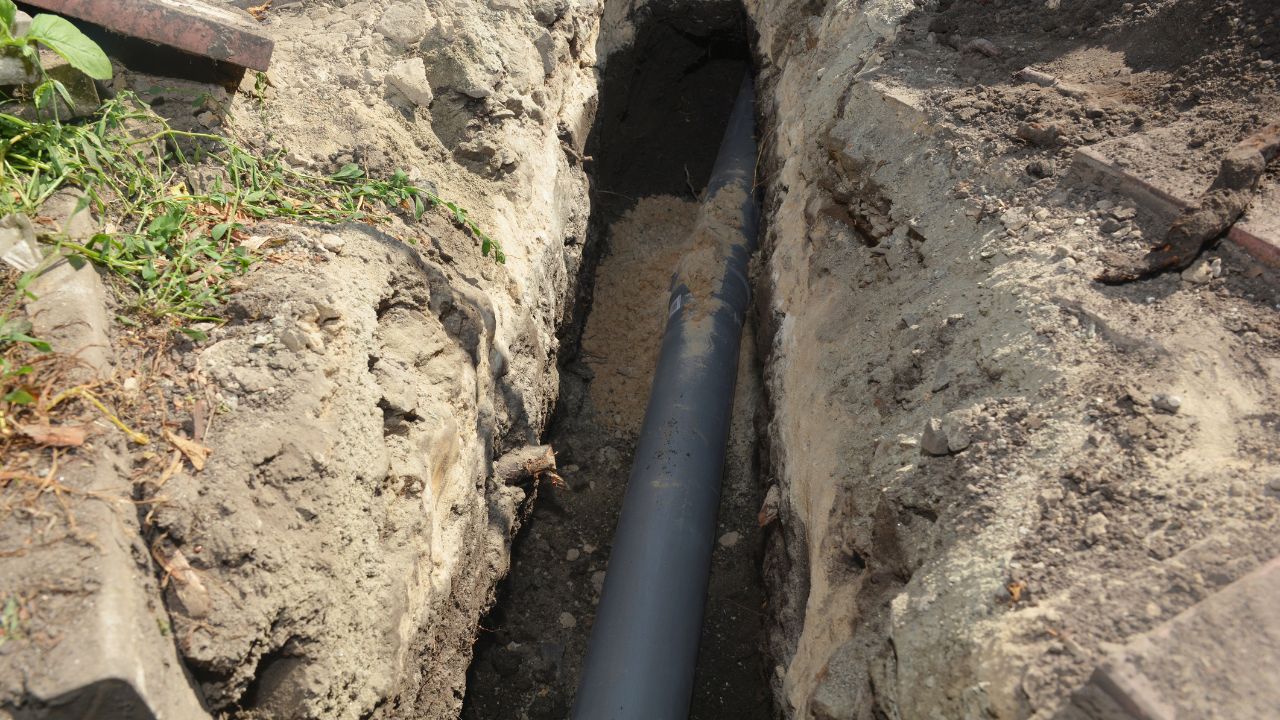
The excavation process follows a systematic approach that begins with initial assessment using sewer camera inspections to pinpoint the exact location and nature of the damage. Once the problem is identified, local permits are secured and utility lines are marked to prevent accidental damage during digging. A trench is then dug along the path of the sewer line to sufficient depth to expose the damaged pipe. The affected section is cut out and replaced with new piping, typically PVC or ABS plastic, though cast iron can also be used depending on the application. After installation, the line is tested for proper function and leaks before the trench is backfilled and the ground surface is restored, including any removed landscaping or pavement.
This approach offers a complete replacement that can last 75-100 years, providing long-term durability that many homeowners find reassuring. The new pipe section is entirely fresh, eliminating any concerns about the integrity of older materials. However, these benefits come at a cost beyond the initial repair expense.
Traditional excavation creates significant disruption to property, including landscaping, driveways, and other structures due to the extensive digging required. This disruption leads to higher restoration costs as homeowners must pay to replace damaged lawns, gardens, hardscaping, and sometimes even portions of driveways or walkways. The longer project timeline means the property remains in a state of construction for several days from excavation to restoration. Additionally, the higher labor and equipment costs compared to some trenchless alternatives make this a time-consuming and costly process overall.
Despite these drawbacks, traditional methods remain necessary in specific situations. When a sewer pipe has completely collapsed or is severely damaged beyond repair by trenchless methods, excavation may be the only viable option. Significant structural issues such as large breaks, bellied pipes, or extreme offsets that prevent the insertion of liners or bursting heads also require traditional repair. In cases where the existing pipe material is incompatible with trenchless technologies, or when the pipe location is easily accessible and the cost of excavation and restoration is less prohibitive than trenchless options, traditional methods make practical sense. Some homeowners also prefer full replacement of a section rather than repair within the existing pipe, prioritizing the long-term durability of a completely new pipe section. Shallow pipes where excavation is less complex and disruptive may also be better candidates for traditional repair.
Trenchless Sewer Line Replacement
Trenchless technology represents a modern evolution in sewer repair, offering methods that minimize disruption while delivering comparable or superior long-term results. Two primary trenchless techniques dominate the industry: Cured-In-Place Pipe (CIPP) lining and pipe bursting.
The CIPP Process
CIPP begins with the same careful assessment as traditional methods—initial inspection using video camera equipment to identify pipe issues. However, the repair process diverges significantly from that point. The damaged pipe section is thoroughly cleaned to remove debris, roots, and blockages, ensuring proper adhesion of the liner. A custom-fabricated, resin-saturated liner, often made of felt, polyester, fiberglass cloth, or carbon fiber, is then inserted into the pipe using air or water pressure. Once positioned, the resin in the liner is cured using hot water, steam, or ultraviolet (UV) light, which hardens it to form a tight-fitting, corrosion-resistant replacement pipe. A final video inspection confirms the proper setting and operational integrity of the new liner.
This method creates a seamless pipe within the existing one, eliminating joints where leaks commonly occur. The result is a corrosion-resistant solution that can extend the life of the sewer system for 50 years or more. However, CIPP has limitations. It's not suitable for severely collapsed or heavily deformed pipes where the liner cannot navigate obstructions or expand sufficiently. The method also cannot correct pipe bellies or significant slope issues, as the liner conforms to the existing pipe's shape. Additionally, CIPP reduces the internal diameter slightly, which may not be ideal in situations where maintaining maximum flow capacity is critical.
The Pipe Bursting Process
Pipe bursting takes a different approach to trenchless repair. Small entry and exit pits are created at either end of the pipe section to be replaced—far less invasive than a full trench. A specialized bursting head, typically conical in shape, is inserted into the old pipe and then pulled or pushed through the existing pipeline, fracturing it outwards. Simultaneously, this process pulls a new pipe, usually made of high-density polyethylene (HDPE), into the newly created space. The new pipe is often of the same or larger diameter, which can improve hydraulic capacity.
This method is suitable for replacing various pipe materials including clay, cast iron, and concrete. Pipe bursting can accommodate pipe diameters typically ranging from 100 mm to 600 mm (4 to 24 inches), with some applications extending to 1220 mm (48 inches). The technique is preferable to CIPP when the existing pipe is severely damaged, collapsed, or requires an increase in diameter. Unlike CIPP, which works within the existing pipe structure, pipe bursting provides a completely new, structurally independent pipeline, often with increased flow capacity.
Comparing the Advantages
Both trenchless methods share significant advantages over traditional excavation. They minimize property disruption, reduce restoration costs, and typically complete repairs faster. However, each has its ideal applications. CIPP excels when the existing pipe structure is fundamentally sound but compromised by cracks, leaks, or root intrusion. Pipe bursting becomes the better choice when the pipe is beyond structural repair or when upsizing the diameter is necessary to improve system capacity.
The key distinction between these trenchless approaches and traditional methods lies not just in how they're executed, but in their fundamental philosophy. Traditional excavation removes and replaces. CIPP rehabilitates and reinforces from within. Pipe bursting destroys and rebuilds simultaneously. Understanding these differences helps property owners match the right solution to their specific situation, balancing factors like pipe condition, budget, property impact, and long-term performance goals.
How Does Trenchless Technology Work for Sewer Repair?
Understanding the mechanics of trenchless sewer repair helps property owners appreciate why these methods deliver superior results with minimal disruption. While the technology may seem complex, the processes follow logical steps that professionals have refined over decades of application. Here's how these innovative repair methods work from start to finish.
The Process of Trenchless Sewer Repair
Trenchless repairs rely on precision and careful execution at every stage. Both CIPP lining and pipe bursting follow distinct processes designed to address different types of pipe damage while minimizing surface disruption.
CIPP Installation Process
The CIPP method begins with an initial video camera assessment to identify pipe issues. This diagnostic step is critical because it reveals the exact location, extent, and nature of damage, allowing technicians to plan the repair strategy accurately. Once the assessment is complete, the damaged pipe section undergoes thorough cleaning to remove debris, roots, and blockages. This cleaning ensures proper adhesion of the liner and creates the ideal surface for the repair materials to bond effectively.
With the pipe prepared, technicians move to the installation phase. A custom-fabricated resin-saturated liner is prepared specifically for the dimensions and conditions of the damaged pipe. The liner, crafted from materials like felt, polyester, fiberglass cloth, or carbon fiber, is then inserted into the pipe using air or water pressure. This insertion method allows the flexible liner to navigate bends and curves within the existing pipe structure.
After positioning, the resin in the liner is cured using hot water, steam, or ultraviolet (UV) light. This curing process hardens the resin, transforming the flexible liner into a rigid, corrosion-resistant replacement pipe that fits tightly against the old pipe walls. The choice of curing method depends on factors like pipe diameter, accessibility, and project specifications. Once curing is complete, a final video inspection confirms the proper setting and operational integrity of the new liner, ensuring the repair meets quality standards.
The entire CIPP process creates a seamless, durable pipe within the old one, eliminating joints where leaks commonly develop. This "pipe within a pipe" approach reinforces the existing structure while creating a smooth interior surface that improves flow characteristics and resists future root intrusion.
Pipe Bursting Installation Process
Pipe bursting takes a more aggressive approach to replacement, literally destroying the old pipe while installing the new one. The process starts with small entry and exit pits created at the pipe ends. These access points are significantly smaller than the trenches required for traditional excavation, minimizing property disruption while providing necessary access for equipment.
A specialized conical bursting head is then inserted into the old pipe through one of the access pits. This bursting head serves as the primary tool that makes the entire process possible. As the head is pulled or pushed through the existing pipeline, it fractures the old pipe outward, displacing the broken segments into the surrounding soil. Simultaneously, the bursting head pulls a new pipe, usually made of high-density polyethylene (HDPE), into the newly created space.
The new HDPE pipe sections are heat-welded above ground using a fusion machine before being pulled into place. This welding creates continuous, leak-proof joints that can withstand decades of use. The new pipe is often of the same or larger diameter than the original, which can improve hydraulic capacity and accommodate increased flow demands.
Pipe bursting offers two distinct approaches based on the type of bursting head used. Static bursting heads expand through pulling action, favored when ground movement needs to be minimized to protect surrounding structures or utilities. Dynamic bursting heads use pneumatic or hydraulic forces to impact and break the old pipe, making them preferred for tougher pipe materials and challenging soil conditions, though they can cause more ground vibration. The choice between these methods depends on the material of the existing pipe and soil conditions at the site.
Additional Trenchless Methods
While CIPP and pipe bursting dominate the trenchless repair market, horizontal directional drilling represents another option in specific applications. This method is typically used for new pipe installations rather than repairs, but it shares the trenchless philosophy of minimizing surface disruption through strategic underground navigation.
The success of trenchless repairs depends heavily on specialized equipment designed for underground work. Understanding these tools helps explain why professional expertise is essential for these methods.
Pipe Bursting Equipment
The bursting head stands as the centerpiece of pipe bursting operations. Its conical shape is engineered to fracture old pipes efficiently while creating space for the new pipe to follow. As noted, bursting heads come in static or dynamic types, with the choice depending on existing pipe material and soil conditions. Static heads work through mechanical expansion as they're pulled through the pipe, while dynamic heads deliver repeated impacts that pulverize more resistant materials.
Supporting the bursting head are pulling rods or cables that transmit force from the surface equipment to the underground operation. A winch or cable reel provides the necessary pulling force, which can be substantial depending on pipe diameter and length. These systems must generate enough power to fracture cast iron, clay, or concrete pipes while maintaining precise control to prevent damage to nearby utilities.
The fusion machine completes the pipe bursting equipment suite by heat-welding sections of new HDPE pipe above ground. This above-ground welding ensures quality control and creates joints stronger than the pipe material itself. The welded sections are then pulled into place as the bursting head advances through the old pipe.
CIPP Equipment
CIPP relies on different specialized equipment matched to its rehabilitation approach. The resin-saturated liner materials—felt, polyester, fiberglass cloth, or carbon fiber—form the foundation of the repair. These materials are selected based on pipe diameter, expected loads, and chemical resistance requirements. Each material offers specific advantages, with carbon fiber providing exceptional strength for demanding applications and felt offering cost-effective solutions for standard residential repairs.
Air or water pressure insertion systems control the placement of the liner within the existing pipe. These systems must maintain consistent pressure to ensure the liner properly conforms to the pipe's interior without creating wrinkles or gaps that could compromise the repair. The insertion method varies based on pipe configuration, with some installations using air pressure to "blow" the liner into place and others relying on water pressure for inversion installations.
Curing equipment represents the final critical component for CIPP work. Hot water systems circulate heated water through the lined pipe to activate the resin curing process. Steam systems offer faster curing times for certain applications. UV light equipment provides the most precise curing control, using ultraviolet radiation to harden the resin from the inside out. Each curing method has optimal applications based on pipe diameter, liner material, and site conditions.
Diagnostic Camera Systems
Both trenchless methods depend heavily on video camera equipment for initial assessment and final inspection. These waterproof cameras designed specifically for pipeline inspection are typically affixed to a flexible push rod or integrated into remotely controlled robotic crawlers. The choice between push cameras and crawler systems depends on pipe diameter, distance to be inspected, and accessibility of entry points.
Access to the pipe is gained through existing entry points like cleanouts or manholes, eliminating the need for excavation simply to inspect the system. Once inserted, the cameras continuously capture and transmit real-time video footage to a monitoring station where technicians analyze pipe conditions. Modern inspection cameras feature pan-and-tilt capabilities for comprehensive viewing angles, LED illumination for visibility in dark pipe interiors, and high-definition recording for detailed analysis.
The diagnostic role of camera systems extends beyond initial assessment. During CIPP installation, cameras verify that the liner has been properly positioned before curing begins. After curing, final video inspection confirms the proper setting and operational integrity of the new liner, documenting that the repair meets specifications. For pipe bursting, cameras inspect the new pipe installation to verify alignment and joint integrity. This documentation provides quality assurance for both the contractor and property owner while creating records for future reference.
The integration of advanced camera technology with trenchless repair methods represents one of the field's most significant advantages. The ability to see exactly what exists underground, make precise diagnoses, and verify completed work without excavation transforms sewer repair from an educated guess into a data-driven process. This precision reduces costs, minimizes disruption, and ensures repairs address the actual problems rather than assumed conditions.
What Are the Key Benefits of Trenchless Sewer Repair?
Trenchless sewer repair delivers advantages that extend far beyond simply fixing a broken pipe. From preserving your property's appearance to generating substantial long-term savings, these modern methods offer compelling benefits that make them the preferred choice for most sewer repair situations.
Reduced Property Disruption
The most immediately visible benefit of trenchless repair is the dramatic reduction in property disruption. This advantage alone often drives property owners to choose trenchless methods even when traditional excavation might cost less upfront.
CIPP uses existing access points, creating a minimal disruption level that leaves landscapes and hardscaping virtually untouched. Technicians access the damaged pipe through cleanouts or manholes already present in the system, eliminating the need to dig up yards, gardens, or paved surfaces. The work happens entirely underground, with only a small work area needed at the access point for equipment staging.
Pipe bursting requires only small entry and exit pits at the pipe ends, resulting in a low disruption level compared to traditional methods. These pits typically measure just a few feet across—enough to provide access for the bursting head and new pipe installation, but a fraction of the size of a traditional excavation trench. Property owners can expect to lose access to small portions of their property rather than watching entire sections torn up for days or weeks.
Traditional excavation, by contrast, requires digging an entire trench along the damaged pipe section, creating a high disruption level that impacts everything in its path. Landscaping, driveways, walkways, fences, irrigation systems, and other structures may need to be removed or relocated to accommodate the trench. The resulting disruption can render portions of a property unusable for the duration of the project and require extensive restoration afterward.
The preservation of existing landscapes and infrastructure makes trenchless methods particularly advantageous in urban environments or areas with sensitive landscaping, driveways, or other surface structures. Properties with mature trees, established gardens, decorative hardscaping, or recently installed features benefit enormously from methods that avoid costly or disruptive excavation. A homeowner who spent years cultivating a garden or thousands of dollars on a new patio can protect these investments while still addressing critical sewer line problems.
This benefit extends beyond aesthetics and personal investment. In commercial settings, minimizing disruption means businesses can continue operating with minimal interruption. In residential areas, neighbors experience less noise, dust, and traffic disruption. The reduced environmental impact of limiting excavation also aligns with growing concerns about sustainable construction practices.
Cost-Effectiveness and Time Savings
Understanding the true cost of sewer repair requires looking beyond the initial service invoice to consider total project expenses and long-term value. When evaluated comprehensively, trenchless methods often deliver superior cost-effectiveness despite higher upfront repair costs in some situations.
Traditional excavation may show a lower upfront cost for minor, accessible repairs where the damaged pipe lies shallow and in an easily reached location. In these specific scenarios, the simplicity of digging a small trench and replacing a short pipe section can be economical. However, these favorable conditions represent a minority of sewer repair situations.
CIPP demonstrates high return on investment when avoiding landscape and hardscape restoration. The repair itself may cost more than simple excavation, but property owners avoid paying to replace destroyed landscaping, repave driveways, rebuild retaining walls, or restore irrigation systems. When these restoration costs are factored into the total project expense, CIPP often emerges as the more economical choice. Industry data shows trenchless methods can deliver 46-52% savings when including restoration costs—a substantial difference that transforms the financial equation.
Pipe bursting proves competitive for full line replacement, particularly when replacing lengthy sections of damaged pipe. While the specialized equipment and expertise required add to the base cost, the elimination of massive trenching and restoration work creates savings that offset these expenses. For properties with extensive sewer line problems, pipe bursting can replace entire lines faster and more affordably than traditional methods.
The time savings inherent in trenchless repairs translate directly to cost savings through reduced labor hours. CIPP is typically completed in one day, compared to several days to weeks for traditional excavation. Pipe bursting requires one to two days for completion. Faster completion means technicians spend less time on site, reducing labor costs while also minimizing the inconvenience to property owners.
The absence of extensive surface restoration requirements eliminates a significant cost category entirely. Traditional repairs require backfilling trenches, compacting soil, replacing removed materials, and often waiting for settling before final restoration can occur. Trenchless methods avoid these steps, reducing both direct restoration costs and the time required for property owners to return to normal use of their land.
These efficiency gains create a more cost-effective solution in the long run by reducing labor, equipment, and restoration costs simultaneously. Property owners pay for the actual repair rather than funding extensive collateral work to restore what was disturbed during the repair process. The reduced environmental impact also delivers value, though it may be harder to quantify in immediate financial terms.
Durability and Long-Lasting Results
The longevity of a sewer repair directly impacts its value and cost-effectiveness. A repair that lasts decades provides far more value per dollar than one requiring replacement after just a few years. Trenchless methods deliver impressive durability that matches or exceeds traditional replacements.
CIPP liners are highly durable, often lasting up to 50 years or more with proper installation and normal use conditions. The seamless construction eliminates joints where leaks typically develop over time. The liner materials—whether felt, polyester, fiberglass cloth, or carbon fiber—create a corrosion-resistant replacement pipe that stands up to the harsh underground environment. Unlike metal pipes that can corrode or clay pipes that can crack, CIPP liners maintain their integrity across decades of service.
Pipe bursting with HDPE pipes delivers a lifespan of 50 to 100 years, matching or exceeding the traditional method's 75-100 year lifespan for new pipe. HDPE offers exceptional resistance to corrosion, root intrusion, and chemical damage. The fusion-welded joints create continuous pipe sections without weak points where failures commonly occur. This durability makes pipe bursting an investment in long-term infrastructure rather than a temporary fix.
The longevity of trenchless repairs helps prevent future problems and additional costs in several important ways. CIPP forms a seamless, durable pipe within the old one, creating a smooth interior surface that resists buildup and blockages while preventing root intrusion at joints. Pipe bursting provides a completely new, structurally independent pipeline that doesn't rely on the integrity of the old pipe for support. The new installation often includes increased flow capacity through same-size or larger diameter pipes, accommodating future demands and reducing the likelihood of capacity-related problems.
Both methods result in corrosion-resistant replacement pipes that won't deteriorate from the chemicals and conditions present in sewer systems. This resistance eliminates a common source of pipe failure and the need for premature replacement. The reduced waste generation inherent in trenchless methods makes them eco-friendly options that minimize environmental impact while delivering lasting performance.
Perhaps most importantly, the thoroughness and quality of trenchless repairs create a less likelihood of future failures compared to partial fixes or repairs that don't address underlying structural issues. When property owners invest in CIPP or pipe bursting, they're implementing solutions designed to last for the remaining useful life of the property's plumbing system. This proactive approach extends the plumbing system's life and prevents costly emergency repairs that inevitably occur when problems are patched rather than properly resolved.
The combination of minimal disruption, superior cost-effectiveness, and exceptional durability makes trenchless repair the logical choice for most sewer line problems. While traditional excavation still has its place in specific situations, the benefits of modern trenchless technology explain why these methods have become the industry standard for sewer repair. Property owners who choose trenchless methods invest in solutions that protect their property today while delivering performance that lasts for decades into the future.
Why is Sewer Repair Important for Property Owners?
Sewer line problems rarely announce themselves with dramatic failures. More often, they begin as minor inconveniences that property owners are tempted to ignore or address with quick fixes. Understanding the true importance of proper sewer repair and maintenance requires looking beyond the immediate symptoms to the long-term consequences of neglect and the substantial benefits of proactive care.
The Hidden Costs of Ignoring Sewer Line Problems
The most insidious aspect of sewer line damage is how quickly small problems compound into major crises. What appears to be a minor inconvenience today can transform into a catastrophic failure that demands emergency intervention and extensive repairs.
When Quick Fixes Create Bigger Problems
Property owners often attempt to address drainage issues with the easiest available solution, but this approach carries significant risks. Using the wrong cleaning method creates a high risk of clog recurrence, with blockages returning shortly after cleaning. A homeowner who uses a drain snake for a grease buildup problem may restore temporary flow, but the grease remains on the pipe walls, quickly re-accumulating to cause another blockage. Similarly, applying high-pressure methods to old or weak pipes can result in pipe failure, creating damage far more severe than the original clog.
DIY failures represent another hidden cost that property owners frequently underestimate. Using incorrect tools or chemicals can cause more damage than the original problem. Chemical drain cleaners, for instance, can corrode older pipes, creating leaks where none existed before. Mechanical tools applied with too much force can crack clay pipes or damage joints, turning a simple clog into a structural failure requiring excavation and replacement.
The Escalation Pattern
The progression from minor issue to major repair follows a predictable pattern that every property owner should understand. Early detection of minor anomalies like hairline cracks or nascent root intrusions is crucial in preventing escalation into major, costly repairs or catastrophic pipe failures. A hairline crack that could be addressed with CIPP lining for a few thousand dollars can evolve into a complete collapse requiring excavation and full replacement costing tens of thousands.
Minor issues inevitably lead to complete pipe collapse or severe damage when left unaddressed. The process accelerates as water infiltration through small cracks erodes surrounding soil, removing support from the pipe. Meanwhile, structural issues develop including large breaks, bellied pipes, and extreme offsets. What starts as simple cracks or leaks progresses to the point where full pipe replacement becomes the only viable option.
The financial implications are stark. Emergency repairs are significantly more expensive than scheduled maintenance, often costing three to five times more due to the urgency, after-hours labor rates, and extensive damage that must be addressed. Catastrophic pipe failures cause extensive property damage that extends far beyond the plumbing system itself. Raw sewage backing up into basements destroys flooring, walls, and personal property. Collapsed pipes under driveways require complete reconstruction of hardscaping. Failures beneath landscaped areas kill expensive plants and require extensive soil remediation.
The Compounding Effect of Neglect
Each decision to defer repair creates additional problems that multiply the eventual cost. A slow leak that goes unaddressed saturates soil around the pipe, leading to settling and misalignment. That misalignment creates low spots where debris accumulates, causing new blockages. Those blockages increase pressure on already-weakened sections, accelerating the deterioration. By the time the problem forces action, what could have been a simple repair has evolved into a complex, multi-faceted project requiring extensive work.
Property owners must recognize that sewer systems don't improve with age or benign neglect. Unlike wine, they deteriorate predictably and inexorably. The question is never whether problems will worsen, but how quickly and how expensive the eventual repair will be.
The Impact of Regular Drain and Sewer Line Maintenance
Contrast the cascading costs of neglect with the substantial benefits of proactive maintenance, and the value proposition becomes clear. Regular inspection and cleaning represent an investment that pays dividends in extended system life, reduced emergency costs, and peace of mind.
Inspection: The Foundation of Prevention
Regular inspections are recommended annually for municipal and commercial properties and every few years for residential properties. This schedule provides the frequency needed to catch developing problems before they become critical. Video pipe inspections provide precision diagnosis through clear, real-time visual data that reveals conditions invisible to surface observation.
The value of these inspections extends far beyond simply identifying current problems. Proactive maintenance is supported by allowing early detection of minor anomalies before they develop into serious issues. A technician reviewing inspection footage can spot a small root intrusion and recommend treatment before those roots completely obstruct the pipe. They can identify areas where grease is beginning to accumulate and schedule cleaning before flow is significantly restricted.
This diagnostic capability eliminates the necessity for excavation, substantially reducing environmental impact, labor costs, and public inconvenience. Instead of digging exploratory trenches to locate problems, precise camera data pinpoints issues to within inches. This leads to significant economic efficiency by precisely locating and characterizing problems, allowing contractors to mobilize exactly the right equipment and materials for effective repair. The process avoids superfluous digging and facilitates more streamlined repair solutions.
Cleaning: The Key to Longevity
Regular cleaning represents the most effective tool property owners have for extending sewer system life. Preventive maintenance has a dramatic impact on the longevity of drain systems, with data showing that proactive annual or bi-annual maintenance programs can more than double the expected lifespan of pipes compared to reactive or no-maintenance approaches. Specifically, preventive programs can extend lifespan from 25 to 70+ years—a difference that dramatically affects long-term property value and operating costs.
The recommended maintenance schedule varies by property type and use. Regular hydro-jetting is recommended every 18-24 months for homes to remove accumulated debris and maintain optimal flow. Commercial facilities, especially restaurants with high grease buildup, require more frequent preventive maintenance—often quarterly or semi-annually—to prevent the accumulation that inevitably leads to blockages and backups.
The effectiveness of professional cleaning comes from its thoroughness. Thorough cleaning ensures the entire pipe interior is scoured, not just the immediate area of a clog. This comprehensive approach removes the buildup that would otherwise continue to restrict flow and trap debris. The result is long-lasting performance and reduced frequency of future blockages.
The Mathematics of Maintenance
Consider the economics from a purely financial perspective. A residential property with a 100-foot sewer lateral might spend $400-600 every two years for preventive hydro-jetting. Over a 30-year period, that represents $6,000-9,000 in maintenance costs. Without that maintenance, the same pipe system might fail after 25 years, requiring replacement at a cost of $15,000-30,000 depending on method and site conditions. The property owner who invested in maintenance saves $6,000-21,000 while enjoying 30 years of trouble-free operation instead of dealing with an emergency replacement.
The calculation becomes even more favorable when considering the avoided costs of emergency repairs, water damage restoration, and the operational disruption that comes with sewer failures. A restaurant that suffers a sewer backup during dinner service loses thousands in revenue and damages its reputation. A homeowner facing a basement sewage backup must pay for cleanup, restoration, and temporary housing while repairs are completed. These costs dwarf the expense of regular maintenance.
Building Long-Term Value
Beyond the immediate financial benefits, regular maintenance builds long-term property value. Documented maintenance records demonstrate responsible ownership when selling a property. Potential buyers recognize the value of a well-maintained sewer system and factor it into their offers. Conversely, properties with unknown or neglected sewer conditions face buyer skepticism and reduced offers that reflect the risk of imminent repair needs.
For commercial properties, maintenance records become even more critical. Lenders evaluating properties for financing review maintenance documentation as part of their due diligence. Properties with comprehensive maintenance records qualify for better terms and lower risk assessments. Insurance companies may offer reduced premiums for properties with documented preventive maintenance programs that reduce the likelihood of claims.
The importance of sewer repair and maintenance ultimately comes down to control. Property owners who embrace proactive maintenance control when repairs happen, what they cost, and how they impact operations. Those who defer maintenance surrender that control, leaving themselves vulnerable to emergencies that arrive at the worst possible times with the highest possible costs. The choice is clear: invest modest amounts in regular care, or gamble with catastrophic failures that can cost ten times more. For most property owners, that's not really a choice at all.
How to Choose the Right Sewer Repair Method for Your Property?
Selecting the appropriate sewer repair method requires evaluating multiple factors that interact in complex ways. The optimal solution for one property may be entirely wrong for another with seemingly similar problems. Understanding how to assess your specific situation ensures you invest in the repair approach that delivers the best long-term value for your circumstances.
Factors to Consider Before Choosing a Sewer Repair Solution
Three primary factors drive the decision-making process: the extent of damage to your sewer line, the age and material composition of your plumbing system, and your available budget and timeline. Each factor influences the others, creating a decision matrix that requires careful analysis.
Assessing Damage Extent
The nature and severity of pipe damage serves as the starting point for method selection. Different repair technologies excel at addressing specific types of failures while proving inadequate for others.
Cracks and leaks respond well to CIPP, which creates a seamless liner that seals these openings without requiring excavation. Root intrusion and corrosion similarly benefit from CIPP's effectiveness at creating a barrier against further deterioration. The liner not only stops current infiltration but prevents future root penetration and protects against continued corrosion.
When damage escalates to severely damaged or collapsed pipes, the decision shifts toward pipe bursting or traditional excavation. CIPP cannot navigate through completely collapsed sections, making it unsuitable for these conditions. Pipe bursting handles these situations by destroying the damaged pipe entirely while installing a new one, though it requires that some remnant of the old pipe structure remains to guide the bursting head. Undersized pipes needing capacity increase also point toward pipe bursting, which can install larger diameter replacement pipes that improve system hydraulics.
Completely collapsed pipes typically necessitate traditional excavation. When the old pipe has lost all structural integrity, there's nothing for a bursting head to follow or for a liner to conform to. Large breaks, bellied pipes, and extreme offsets similarly require traditional methods, as these structural issues prevent the insertion of liners or the passage of bursting heads through the damaged sections.
Pipe material compatibility varies by method and must be verified before proceeding. Some materials respond well to certain trenchless approaches while proving problematic for others. This compatibility assessment requires professional evaluation to ensure the chosen method will work effectively with the existing infrastructure.
Evaluating Property Age and Pipe Materials
The age of your property and its plumbing system directly impacts method selection and success likelihood. Older pipes may be more fragile, with weakened or damaged pipe walls risking further damage from high-pressure cleaning or liner installation. A cast iron pipe from the 1950s might have deteriorated to the point where any intervention could cause additional failures. This fragility must be assessed through video inspection before committing to a repair strategy.
Different pipe materials suit different replacement methods. Cast iron pipes are suitable for pipe bursting replacement, as are clay pipes and concrete pipes. The bursting process effectively fractures these rigid materials while pulling the new HDPE pipe into place. Modern traditional replacements typically use PVC or ABS plastic, which offers superior longevity and resistance to corrosion compared to older materials. The existing pipe material must be compatible with the chosen trenchless technology, making material identification a critical early step in the decision process.
Balancing Budget and Timeline
Financial considerations and project urgency create another layer of complexity in method selection. Traditional excavation often presents the lower upfront cost for minor, accessible repairs, particularly when the pipe is shallow and easily reached. However, this apparent cost advantage can evaporate quickly when restoration expenses are factored in.
CIPP delivers high ROI when avoiding landscape and hardscape restoration costs. A repair that preserves an expensive paver driveway or mature landscaping saves thousands in restoration expenses that would accompany traditional excavation. Pipe bursting proves competitive for full line replacement, offering a middle ground between traditional and CIPP approaches. When evaluating costs, property owners must consider total costs including restoration, not just repair costs. Data shows 46-52% savings with trenchless methods including restoration compared to traditional excavation with full restoration.
Emergency repairs are significantly more expensive than scheduled maintenance, often commanding premium rates for immediate response and after-hours work. Property owners who address problems proactively during regular business hours save substantially compared to those facing crisis situations.
Project timeline considerations weigh heavily in method selection. CIPP typically completes within 1 day, allowing rapid return to normal operations. Pipe bursting requires 1-2 days for completion, still far faster than traditional methods. Traditional excavation stretches across several days to weeks depending on site conditions, weather, and restoration requirements. For commercial properties where downtime directly impacts revenue, or residential properties where occupants need continuous sewer access, these timeline differences can outweigh other considerations.
Selecting the Best Repair Method: Trenchless vs. Traditional
With the key factors understood, the selection process becomes more straightforward. Each method has its ideal application range where it delivers optimal performance and value.
When CIPP Is the Best Choice
CIPP excels in situations where the existing pipe structure remains fundamentally sound but has developed problems that compromise its function. The method is best suited for addressing cracks, leaks, root intrusion, and corrosion—problems that affect the pipe's integrity without completely destroying its structure.
The technique proves invaluable for preserving landscaping and when pipes run under structures where excavation would be impractical or prohibitively expensive. A sewer line running beneath a home's foundation, a swimming pool, or a detached garage becomes accessible through CIPP without disturbing these structures. When the pipe is structurally sound enough to hold a liner, CIPP creates a new pipe within the old one that can last 50+ years.
Minimal disruption makes CIPP particularly attractive for properties where traditional excavation would cause unacceptable damage. The method uses existing access points like cleanouts and manholes, avoiding the need to dig along the entire pipe length. Projects requiring completion within 1 day benefit from CIPP's rapid installation process, which typically allows same-day restoration of sewer service. The resulting repair provides a 50+ year lifespan, matching or exceeding the longevity of traditional replacement while avoiding its disruptive nature.
When Pipe Bursting Is the Best Choice
Pipe bursting addresses situations where CIPP falls short but traditional excavation remains undesirable. The method is best for severely damaged or undersized pipes that need complete replacement. When pipe capacity needs to be increased to handle higher flows or accommodate property additions, pipe bursting can upsize the line while avoiding extensive excavation.
Urban environments with sensitive surface structures benefit particularly from pipe bursting. Properties with established landscaping, brick or paver driveways, decorative hardscaping, or other expensive surface features avoid the destruction that would accompany traditional excavation. The method effectively replaces clay, cast iron, and concrete pipes—the materials most common in aging infrastructure—with new HDPE that can last 50-100 years.
Pipe bursting accommodates pipes ranging from 100mm to 600mm diameter (4-24 inches), with some applications extending to 1220mm (48 inches). This size range covers most residential and commercial applications. When a completely new, structurally independent pipeline is needed, pipe bursting delivers it with minimal surface disruption. The 1-2 day project timeline proves acceptable for most property owners, offering faster completion than traditional methods while providing a more robust solution than CIPP for severely damaged pipes.
When Traditional Methods Remain Necessary
Despite the advantages of trenchless technologies, traditional excavation remains necessary in specific circumstances. A pipe that has completely collapsed or is severely damaged beyond repair by trenchless methods requires the access that only excavation provides. Significant structural issues including large breaks, bellied pipes, or extreme offsets prevent liner insertion or bursting head passage, making traditional methods the only viable option.
When existing pipe material proves incompatible with trenchless technologies, excavation allows complete removal and replacement with modern materials. If the pipe location is easily accessible and the cost of excavation and restoration is less prohibitive than trenchless options, traditional methods may present the most economical solution. Some homeowners prefer full replacement rather than repair within the existing pipe, valuing the certainty of entirely new materials throughout the system.
Shallow pipes where excavation is less complex and disruptive may favor traditional methods. When the pipe runs just a few feet below the surface in an easily accessible location, the advantage of trenchless technology diminishes. For property owners prioritizing the 75-100 year lifespan of completely new pipe over minimizing disruption, traditional replacement delivers the longest possible service life.
Additional Considerations That Influence Method Selection
Beyond the primary factors, several site-specific considerations can determine whether trenchless methods prove feasible. Pipe bursting requires stable soil conditions that can support the forces involved in fracturing the old pipe. Unstable or very soft soils may collapse around the new pipe or fail to contain the fractured segments of the old pipe. Sufficient space for access pits must be available at the pipe ends—typically requiring a few square feet of accessible area at each location.
Potential issues near other underground utilities can complicate or preclude trenchless methods. A sewer line running parallel to and close to gas lines, water mains, or electrical conduits may require traditional excavation to avoid any possibility of damaging these critical services. Problems with extremely shallow or deep lines can also favor traditional methods. Very shallow pipes lack the soil cover needed to contain bursting forces, while very deep pipes may exceed the practical reach of trenchless equipment.
CIPP's limitations include its unsuitability for severely collapsed or heavily deformed pipes where the liner cannot navigate obstructions or expand sufficiently. The method also cannot correct pipe bellies or significant slope issues—it conforms to the existing pipe's shape, including any problematic configurations. Property owners must understand these limitations when evaluating whether CIPP meets their needs.
The selection process ultimately requires professional assessment. While understanding these factors helps property owners participate knowledgeably in decision-making, the complexity of interactions between damage type, pipe material, soil conditions, and site constraints demands expert evaluation. A qualified contractor can conduct video inspection, assess site conditions, evaluate material compatibility, and provide recommendations based on experience with similar situations. That professional guidance, informed by the property owner's understanding of the options and their implications, leads to the repair method that delivers the best long-term value for each unique situation.
Don't let sewer line problems disrupt your property or drain your budget. Alpine Plumbing, Heating, and Air specializes in advanced trenchless sewer repair solutions that save you time, money, and hassle. Our experienced technicians use state-of-the-art CIPP lining and pipe bursting technology to restore your sewer system with minimal disruption to your landscaping and daily life.
Whether you're facing chronic backups, slow drains, or need preventive maintenance, we provide comprehensive video inspections and customized repair solutions. Schedule your consultation today and discover why property owners throughout the region trust Alpine Plumbing, Heating, and Air for professional, reliable trenchless sewer repair services.