Key Takeaways
- The best thermostat setting depends on your home’s insulation, HVAC type, daily routine, and local climate, so start with small 1°F adjustments and track comfort and runtime.
- A realistic comfort band beats a single “perfect” number because settings you constantly override usually erase any energy savings.
- Humidity strongly affects comfort, so improving moisture control can let you raise summer setpoints or lower winter setpoints without feeling uncomfortable.
- A four-block schedule for wake, away, evening, and sleep can cut costs, especially when you use moderate setbacks rather than extreme temperature swings.
- Smart thermostat automation and basic maintenance work best together, with fan set to Auto, clean filters, and features like learning, geofencing, and adaptive recovery doing most of the savings work.
Your thermostat settings affect every dollar you spend on heating and cooling. Set it too low in summer, and you waste energy. Too high in winter and the comfort suffers. The right home comfort temperature depends on your house, your habits, and your climate. This guide covers the factors that shape your ideal settings, the schedules that actually save money, and the smart thermostat usage strategies that make HVAC efficiency effortless. No guesswork. Just practical energy saving tips backed by data.
What Factors Should You Consider Before Choosing Thermostat Settings? Start With Your Home, System, and Lifestyle
The "best" thermostat settings don't exist in a vacuum. What works in a well-insulated ranch in Phoenix won't work in a drafty two-story in Chicago. Before you pick a number, you need to understand what's pushing your system harder — and where small changes deliver the biggest payoff.
Your Goals Shape the Starting Point
Decide what matters most: comfort, savings, or a balance of both. A comfort-first approach keeps temperatures tight and consistent. A savings-first approach accepts wider swings during sleep and away hours. Most homeowners land somewhere in the middle. Knowing your priority upfront prevents the constant thermostat tinkering that wastes energy and frustrates everyone in the house.
Home Variables: The Building Itself
Your home's physical traits directly affect how hard your HVAC system works. Insulation quality, window type, floor plan layout, sun exposure, and ceiling height all influence how quickly conditioned air escapes. A south-facing living room with single-pane windows gains heat fast in summer. A poorly insulated attic bleeds warmth in winter. These factors determine whether a given temperature setting feels comfortable — or whether your system runs nonstop trying to hold it.
System Variables: What You're Working With
A furnace, a heat pump, and a central AC unit all respond to thermostat commands differently. Older systems lose efficiency over time. Ductwork leaks, restricted airflow, and weak humidity control all change how your home feels at any given setpoint. Heat pumps deserve special attention here. According to Energy.gov, heat pumps require specialized programmable thermostats because traditional setbacks can trigger backup electric resistance heating — an expensive fallback that erases your savings. If you have a heat pump, make sure your thermostat is designed for it.
People Variables: Who Lives There
Sleep preferences vary. Infants and elderly family members are more sensitive to temperature swings. Pets need a safe range when you're away. Work-from-home schedules mean the house is occupied more hours per day, which changes when and how aggressively you can set back temperatures. A household of four with a newborn and a remote worker has very different needs than an empty-nest couple gone nine hours a day.
Climate Variables: Where You Live
Hot-humid, hot-dry, cold-dry, and mixed-season climates all demand different strategies. Humidity is a major factor — in a muggy climate, lowering the thermostat a degree may not improve comfort as much as running a dehumidifier. Energy.gov notes that energy savings from thermostat setbacks tend to be greater in milder climates, where the temperature gap between indoors and outdoors is smaller. If you live in an extreme climate, setbacks still help, but the percentage saved may be lower.
Start Small and Measure
Don't overhaul your settings all at once. Adjust by one degree at a time and track two things: how the house feels and how long the system runs. Give each change a few days before deciding if it works. According to EnergyHub, adjusting the thermostat by just 1°F can save approximately 1% to 3% on heating and cooling bills. Those small moves compound. A 3°F shift you barely notice could cut your bill by up to 9% over a season.
What Are the Optimal Thermostat Settings to Balance Home Comfort With Energy Savings? Aim for a Range, Not a Single Number
No magic number works for every home. The goal is finding a realistic temperature range — your comfort band — that you'll actually stick with day after day. Settings you override constantly save nothing. The best thermostat settings are the ones that feel livable and still cut your energy bill.
Pick a Comfort Band You Can Live With
Think of your thermostat settings as two overlapping zones. Your comfort band is the range where everyone in the house feels fine. Your efficiency band is the range where your system runs the least. Where those two overlap is your sweet spot. The Department of Energy recommends 78°F for summer and 68°F for winter when you're home. Those numbers aren't arbitrary. A house loses energy more slowly when the gap between indoor and outdoor temperatures is smaller. A higher interior temp in summer slows heat flow in. A lower interior temp in winter slows heat loss. The closer your setpoint stays to outdoor conditions, the less your system works.
When to Go Tighter or Wider
Not every household can follow the standard ranges. Homes with infants, elderly residents, or people managing chronic health conditions may need tighter settings — a degree or two closer to their ideal at all times. On the other hand, if everyone in the house is healthy and adaptable, widening the range by a few degrees during sleep and away hours unlocks significant savings. The key is matching the setting to the people, not the other way around.
Humidity Changes Everything
Temperature is only half the equation. ASHRAE recommends keeping indoor relative humidity between 40% and 60%, while other sources suggest 30% to 50% as the ideal window. In summer, high humidity makes 76°F feel like 80°F, which tempts you to drop the thermostat lower than necessary. In winter, dry air makes 68°F feel colder, pushing you to crank the heat. Before adjusting your home comfort temperature, check your humidity levels. A dehumidifier in summer or a humidifier in winter often solves the problem more cheaply than running your HVAC harder.
One Room Too Hot or Cold? Don't Touch the Thermostat
When one bedroom runs warm, and the basement stays cold, the instinct is to lower the whole-house setpoint. That overcools half the home to fix one room. The real fix is addressing airflow — checking vents, balancing dampers, or sealing duct leaks. For persistent hot and cold spots in multi-story or large homes, HVAC zoning systems offer the best long-term solution. Zoning divides your home into independently controlled areas, each with its own thermostat. According to F.F. Hitchcock, zoning can save 20% to 30% on heating and cooling costs by conditioning only the spaces that need it. That's a major boost to HVAC efficiency without sacrificing comfort anywhere in the house.
How Do You Build an Efficient Thermostat Schedule for Home, Sleep, and Away? Break Your Day Into Four Blocks
A set-it-and-forget-it temperature wastes money every hour you're asleep or away. The fix is a simple schedule built around four daily blocks: wake, away, evening, and sleep. Each block gets its own setpoint. The result is energy-saving tips you don't have to think about once they're programmed.
Define Your Blocks, Then Set Your Setbacks
Map your typical day. What time do you wake up? When does the house empty out? When does everyone return? When do you go to bed? Those four transitions are your schedule anchors. During away and sleep blocks, set the thermostat back in winter or up in summer. According to Energy.gov, setting back the thermostat 7° to 10°F for just 8 hours per day can save up to 10% annually on energy bills. The key is consistency — your system saves the most when it follows the same pattern daily.
Avoid schedule whiplash. Swinging 15°F between blocks sounds aggressive, but it forces your system into long, hard recovery cycles that stress components and spike energy use during catch-up. Keep setbacks moderate and test for a week or two. Track how the house feels at each transition and watch your system's runtime. If recovery takes too long or comfort drops noticeably, narrow the gap by a degree or two.
What Schedule Works Best for Summer Cooling? Raise the Setpoint When You Leave and Sleep
A practical summer schedule starts at 78°F when you're home, bumps to 85°F when you're away, and settles around 78°–80°F for sleep. Ceiling fans at night let you push the sleep setpoint a degree or two higher without noticing. Humidity matters here — a well-functioning HVAC system, potentially supplemented by a standalone dehumidifier, maintains ideal moisture levels and reduces the urge to over-cool. If your house feels sticky at 78°F, the problem is likely humidity, not temperature.
During heat waves, don't chase perfection. Let the house run a degree or two warmer rather than forcing your system to work at full capacity for hours. Protect indoor air quality by keeping windows closed and filters clean. At night, avoid overcooling — dropping below 72°F while you sleep wastes energy and can leave you waking up cold with a system that ran all night.
What Schedule Works Best for Winter Heating? Lower the Setpoint When You Sleep and Leave
A solid winter schedule holds 68°F when you're home and awake, drops to 62°–65°F when you're away, and lowers to 60°–65°F for sleep. Layer a blanket before lowering the thermostat — most people sleep better in cooler air anyway.
The DOE data on nighttime setbacks is clear. A setback of 3° to 10°F can reduce energy costs by 5% to 12%. Push that to 10° to 20°F and savings climb to 9% to 18%. The bigger the setback you can tolerate, the more you save. Just don't go so low that pipes freeze or the house takes hours to recover in the morning.
If you have a heat pump, setbacks require the right equipment. Standard programmable thermostats can trigger backup electric resistance heating during recovery, which is expensive. Energy.gov notes that specialized heat pump thermostats use algorithms to minimize resistance heat use, making setbacks cost-effective without the energy penalty. During cold snaps, reduce your setback range rather than eliminating it. A 5°F drop still saves money without forcing the system into a long, inefficient recovery cycle.
Which Smart Thermostat Features and HVAC Habits Improve Efficiency the Most? Focus on Automation, Fan Settings, and Maintenance
Technology helps, but only if you use the right features and pair them with good habits. A smart thermostat on a neglected system still wastes energy. The biggest gains come from combining smart thermostat usage with a few high-impact maintenance basics.
Smart Features That Actually Move the Needle
Not every smart feature matters equally. The ones that save real money work without you thinking about them. Learning algorithms study your schedule and preferences, then build an optimized routine automatically. Geofencing uses your phone's GPS to detect when you leave and return, adjusting temperatures in real time. Occupancy sensors catch the gaps — nobody's home mid-afternoon, so the system dials back. Adaptive recovery starts heating or cooling early so the house hits your target temperature right when you need it, not 30 minutes late. According to Duke Energy, smart thermostats can reduce heating and cooling bills by an average of 20% annually. That's not a manufacturer claim — ENERGY STAR certified models are independently verified to deliver energy savings based on actual field data.
Fan and System Settings to Get Right
Your fan setting matters more than most people realize. "Auto" mode runs the fan only when the system is actively heating or cooling. "On" mode keeps it running nonstop, which increases electricity use and can pull unconditioned air through duct leaks. For most homes, "Auto" is the better choice among energy-saving tips. Temperature swing — how far the temperature drifts before the system kicks on — is another setting worth checking. Too tight and the system short-cycles, wearing out components. Too loose and comfort suffers. A 1°F swing is standard for most setups. If your system cycles frequently, widen it slightly and see if comfort holds.
Maintenance Habits That Support Your Thermostat Settings
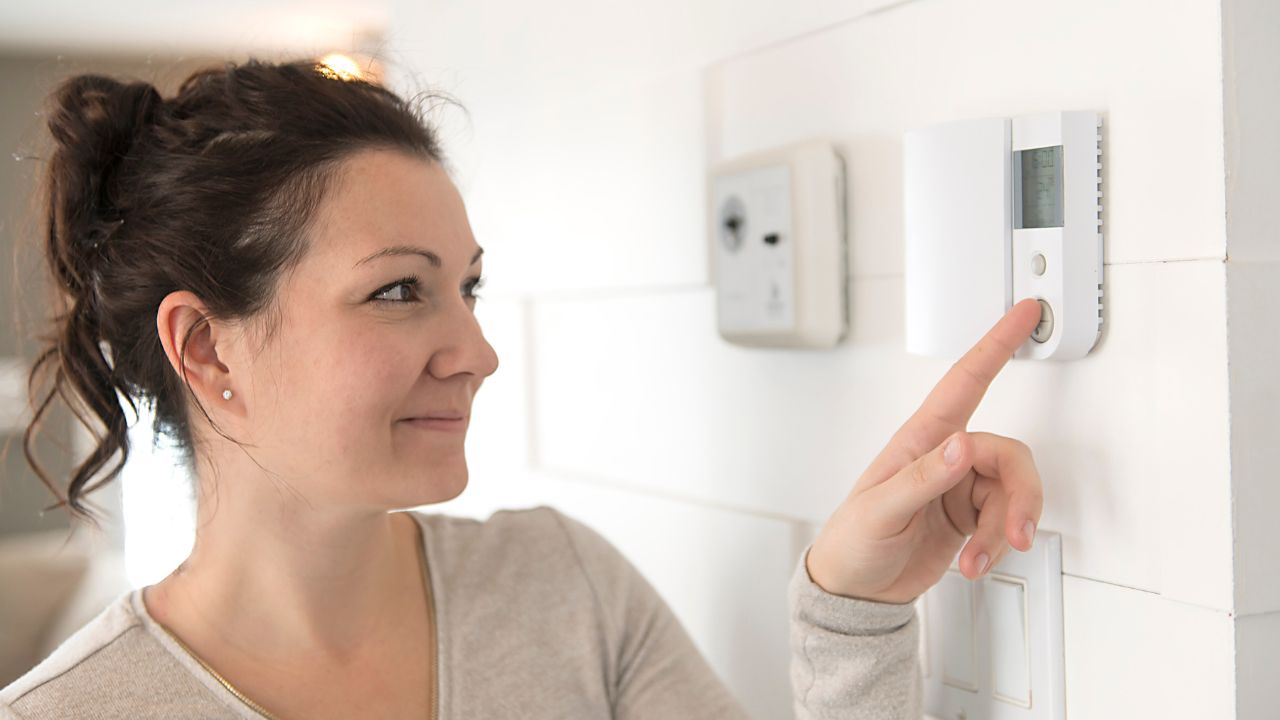
The smartest thermostat in the world can't fix a dirty filter or a misplaced sensor. A clogged air filter can reduce HVAC efficiency by up to 15%, according to Lee Company. That means your system burns more energy to hit the same target — and your thermostat has no way to compensate. Change filters on schedule, seal visible duct leaks, and make sure vents aren't blocked by furniture. Ceiling fans help too. They don't cool the air, but they move it, which lets you raise your setpoint a few degrees without noticing. Thermostat placement also plays a role in HVAC efficiency. Energy.gov recommends mounting it on an interior wall, away from direct sunlight, drafts, doorways, skylights, and windows. A thermostat near a sunny window reads the room as warmer than it is, causing the AC to run longer than necessary.
Quick-Win Checklist
The fastest changes with the biggest payoff, in order of effort:
- Switch the fan to "Auto" if it's set to "On."
- Replace your air filter if it's been more than 90 days.
- Check thermostat placement — move it if it's near a heat source or draft.
- Enable geofencing and learning features on your smart thermostat.
- Run ceiling fans counterclockwise in summer, clockwise in winter.
- Add a dehumidifier or humidifier if humidity is outside the 40%–60% range.
Ready to Dial In Your Comfort and Savings? We Can Help
The right thermostat settings save money, reduce system strain, and keep every room comfortable year-round. But settings alone only go so far. A well-maintained HVAC system, proper thermostat placement, and the right equipment make those numbers actually work. That's where we come in. At Alpine Plumbing Heating and Air, we help homeowners optimize their systems — from smart thermostat installation to full HVAC tune-ups and zoning solutions. Whether you need a seasonal maintenance check or want expert guidance on upgrading your setup, our team is ready. Contact Alpine Plumbing Heating and Air today to start saving on every energy bill.