Key Takeaways
- Trenchless sewer repair avoids extensive digging, preserving landscaping and hardscaping while saving up to 75% compared to traditional methods.
- CIPP lining and pipe bursting are the primary trenchless methods, each ideal for different types of damage and pipe conditions.
- Trenchless repair is a faster, more efficient solution, often completed within one to two days, compared to weeks of disruption with traditional excavation.
- Traditional excavation is necessary when pipes are severely damaged, collapsed, or misaligned beyond repair by trenchless methods.
- Trenchless sewer repair provides long-term durability, with pipes lasting 50 to 100 years, and minimizes environmental impact by reducing soil disruption and chemical use.
When a sewer line fails, homeowners face a critical decision: repair or replace, and which method to use. The two main approaches — trenchless sewer repair and traditional pipe trenching — differ in cost, disruption, and long-term value. A full sewer line replacement can run thousands of dollars regardless of method, but the cost comparison between the two reveals significant differences once you factor in restoration and downtime. Understanding each method's environmental impact, limitations, and ideal use cases helps homeowners make a confident, informed choice.
What Are the Main Methods for Sewer Line Repair and Replacement?
Sewer line problems demand one of two approaches: dig it up or fix it from the inside. Traditional excavation physically removes and replaces damaged pipe. Trenchless methods repair or replace pipes underground with minimal digging. Both get the job done, but the process, cost, and property impact vary widely.
Traditional Excavation Involves Digging Trenches to Access and Replace Damaged Pipe
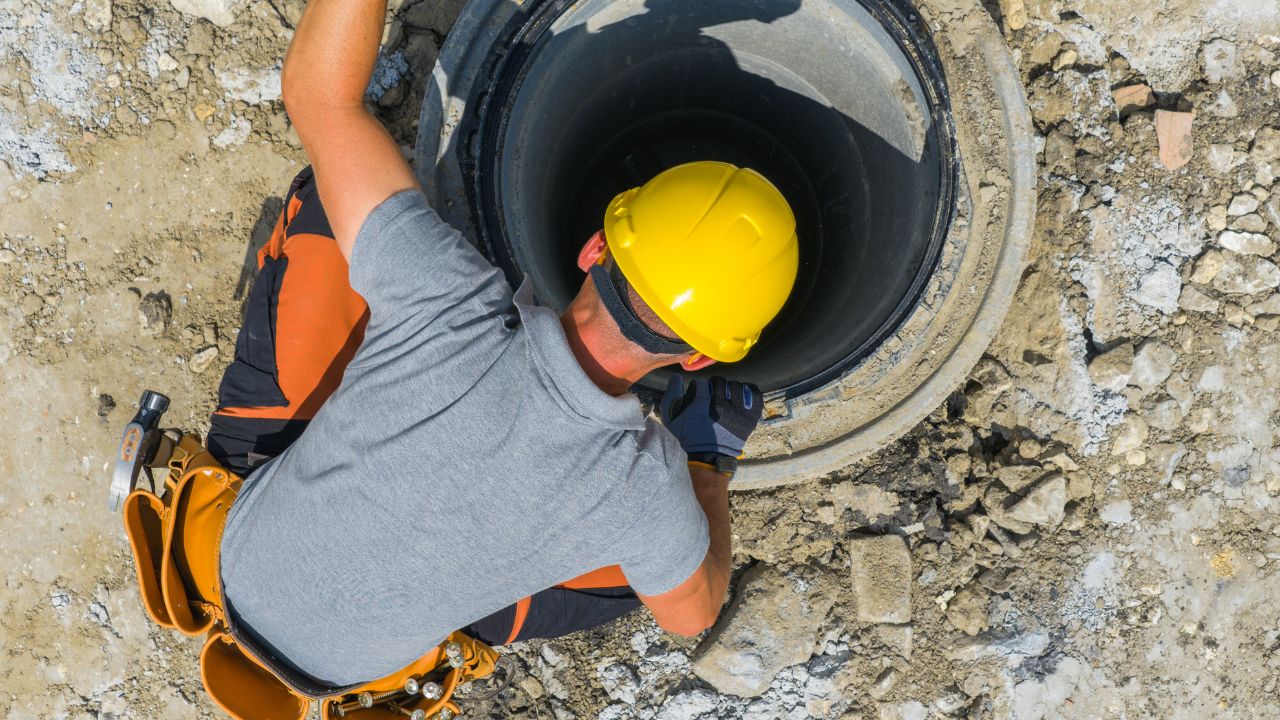
Traditional excavation is exactly what it sounds like. Crews dig a trench along the length of the damaged sewer line, remove the old pipe, lay new pipe, backfill the trench, and restore the surface. It requires heavy machinery — backhoes, excavators, dump trucks — and significant ground disturbance across the property.
The plumbing work alone costs $50–$250 per linear foot, with labor rates running $45–$200 per hour. Total initial project costs, including equipment, labor, and digging, fall between $4,000 and $13,000. That figure doesn't include surface restoration. Trenching-related repairs add another $4–$12 per linear foot, and raw excavation runs $30–$70 per cubic foot. These costs add up fast, especially on properties with driveways, landscaping, or other hardscaping in the path of the sewer line.
Trenchless Sewer Repair Fixes or Replaces Pipe From the Inside With Minimal Digging
Trenchless sewer repair uses two primary methods: CIPP (Cured-In-Place Pipe) lining and pipe bursting. Both avoid the need for a full trench.
CIPP lining inserts a flexible textile liner — made of felt, fiberglass, or composite material — saturated with a thermosetting resin like epoxy or vinyl ester into the existing pipe. The liner is inverted into place using air pressure or water, then cured with heat, steam, or UV light. The result is a seamless new pipe formed inside the old one. Residential CIPP lining costs $80–$250 per foot. Commercial jobs run $100–$300 per foot.
Pipe bursting takes a different approach. A bursting tool equipped with a hydraulic or pneumatic expansion head is pulled through the old pipe, fracturing it outward into the surrounding soil. Simultaneously, a new HDPE (high-density polyethylene) pipe is pulled into the void left behind. Pipe bursting costs $100–$300 per foot and handles diameters from 4 to 24 inches, with some systems reaching up to 48 inches. Typical installation lengths run up to 750 feet, and straight pulls can exceed 1,000 feet.
Trenchless Methods Skip the Full Trench and Rely on Technology Instead of Excavation
The core difference comes down to disruption. Traditional pipe trenching requires digging across the full length of the damaged section. Crews remove old pipe, install new pipe, backfill, compact soil, and then restore whatever was on the surface — lawn, driveway, sidewalk, or garden. Every step adds time and cost.
CIPP lining skips the digging entirely. After cleaning and a camera inspection, the resin-saturated liner is inserted, cured in place, and any covered lateral connections are reopened with a robotic cutting device. Pipe bursting requires only two small pits — one at each end of the repair section — for launching and receiving the bursting tool. No full trench is needed.
Both trenchless methods require a video camera inspection before work begins. This step assesses pipe condition, identifies the damage, and confirms that the pipe's structural integrity can support the chosen repair method. The cost comparison on process alone is notable: traditional dig-and-replace runs $200–$500 per foot, while pipe bursting comes in at $100–$300 per foot for the same sewer line replacement outcome.
What Are the Advantages of Trenchless Sewer Repair Over Traditional Excavation, and When Should a Homeowner Opt for Each?
Trenchless sewer repair wins on property preservation and total project cost. But it's not the right fit for every situation. The severity of the damage, pipe condition, and what's sitting above the sewer line all factor into the decision. Here's how the two methods compare — and when each one makes sense.
Trenchless Repair Preserves Landscaping and Hardscaping by Eliminating Full-Scale Excavation
Trenchless methods need only a couple of small access points. There's no trench running across the yard, under the driveway, or through the garden. That alone removes the most expensive and disruptive part of traditional pipe trenching — the surface restoration.
When traditional excavation tears up a property, the restoration bill stacks up fast. Landscape costs include new sod at $0.35–$0.85 per square foot, mature tree replacement at $500–$3,000 each, shrubs and plants at $50–$500 each, and garden bed rebuilding at $300–$2,000. Hardscape repairs hit even harder: concrete driveways run $8–$18 per square foot, asphalt driveways $3–$7, sidewalks $6–$12, and patios $10–$25. Then come the extras — fence removal and reinstallation at $1,500–$4,000, deck repairs at $500–$3,000, sprinkler system replacement at $1,500–$3,500, and retaining wall repairs at $2,000–$8,000. Trenchless repair sidesteps all of it.
Trenchless Methods Can Cut Total Project Costs by Up to 75%
The cost comparison between methods becomes lopsided once restoration enters the equation. Traditional sewer line replacement with full restoration can run $12,000–$25,000. Trenchless methods can save up to 75% compared to the total because the repair cost is essentially the entire project cost — there's little to nothing to restore afterward.
Real-world numbers for a 50-foot sewer line tell the story clearly. A line running under grass costs roughly $6,000 with trenchless repair versus $7,300 with traditional excavation. Under a driveway, it's $6,500 versus $10,200. Through a landscaped yard, trenchless comes in around $7,000 compared to $10,300 for dig-and-replace. The gap widens as property complexity increases.
Trenchless Repair Cannot Fix Collapsed Pipes, Misaligned Lines, or Incompatible Pipe Materials.
Trenchless technology has clear boundaries. Both CIPP lining and pipe bursting rely on the existing pipe as a pathway. If the pipe has completely collapsed, there's no structure left to line or burst through. Misaligned or sagging pipes — known as bellies — can't be corrected with trenchless methods either, since neither technique can change the pipe's grade or alignment.
Other limitations narrow the field further. Expansive soils and nearby service lines create complications for pipe bursting. Dynamic bursting heads can cause ground heaving in certain soil conditions. Older plumbing systems may not be compatible with trenchless technology at all. Orangeburg pipes — made from wood pulp and tar and installed between 1946 and 1972 — are generally too fragile for trenchless repair and need full replacement. The work also requires specialized equipment and trained professionals, so this isn't a DIY project.
Homeowners Should Choose Traditional Excavation When Pipe Damage Is Too Severe for Trenchless Methods
Traditional excavation becomes the only viable path in several scenarios. Collapsed or severely broken pipes need physical removal — there's no workaround. Extensive corrosion running throughout the line makes lining ineffective because there's not enough sound pipe to bond with. Severe tree root infiltration that has cracked and structurally compromised the pipe demands direct access for removal and replacement.
Proximity to other utility lines also favors excavation. Pipe bursting pushes old pipe fragments outward into the surrounding soil, which can crush or cut adjacent gas, water, or electrical lines. In those cases, an open trench lets contractors visually locate and protect other utilities. Homeowners who want a complete fresh start with modern materials like PVC also benefit from excavation. And for shallow pipes with minimal landscaping overhead, traditional methods can actually be the more cost-effective choice since restoration expenses stay low.
How Does Trenchless Sewer Repair Save Time and Labor Compared to Excavation?
Time is money in sewer repair — literally. Every extra day on the job means more labor hours, more equipment rental, and more disruption to daily life. Trenchless sewer repair compresses the entire process into a fraction of the time traditional excavation demands.
Trenchless Speed Comes From Skipping the Dig, the Backfill, and the Restoration
The biggest time sinks in traditional pipe trenching are the steps that happen before and after the actual plumbing work: digging, shoring trench walls, backfilling, compacting soil, and coordinating restoration. Trenchless methods eliminate all of it. There's no trench to dig, no soil to haul away, and no surface to rebuild.
Specialized equipment drives the speed advantage further. CIPP inversion systems and pipe bursting rigs are engineered for rapid deployment — crews arrive, set up at one or two access points, and get to work. No separate landscaping, concrete, or fencing contractors need to be scheduled. Property owners can often use their driveways the same day the repair is completed.
Trenchless Repairs Finish in 1–2 Days Versus Weeks for Traditional Excavation
Most trenchless repairs wrap up within one to two days. Many are finished in a single day. Traditional excavation, by comparison, requires three to seven days just for the plumbing work and initial backfilling — and that's before restoration even begins.
Full restoration after traditional sewer line replacement stretches the timeline dramatically. Concrete curing alone takes 7–28 days. New sod needs two to three weeks of consistent watering before it's established. During that entire period, driveways may be unusable, yards are torn up, and the property functions as a construction zone. Trenchless repair has no equivalent waiting period.
Fewer Crews and Less Equipment Mean Lower Labor Costs and Less Neighborhood Disruption
Trenchless efficiency isn't just about calendar days — it's about resource reduction. Fewer labor hours mean lower overall project costs. There's no need for excavators, dump trucks, or compaction equipment running for days on end. That eliminates the noise, dust, and heavy equipment traffic that turns a sewer repair into a neighborhood event.
Average trenchless project costs reflect this efficiency. Pipe lining and pipe bursting projects typically run $6,000–$12,000, with small-scale pipe lining jobs coming in as low as $3,000–$4,000. The reduced labor footprint is a major reason the cost comparison favors trenchless methods for most residential scenarios.
What Types of Problems Are Best Solved by Trenchless Sewer Repair?
Not every sewer problem calls for the same solution. Trenchless sewer repair handles cracks, leaks, and root intrusion effectively — but some damage is too far gone for anything less than a full dig. Matching the method to the problem saves money and avoids repeat repairs.
CIPP Lining Seals Cracks and Leaks by Creating a New Pipe Inside the Old One
Cracked or leaking sewer lines are ideal candidates for CIPP lining. The process forms a seamless, corrosion-resistant pipe within the existing one, sealing every crack and joint gap in a single application. The cured epoxy resin liner restores structural integrity and creates a smooth interior surface that improves waste flow and resists future buildup.
Costs scale with the scope of damage. Sectional CIPP repairs for localized cracks can run as little as $2,500. A full lining project covering 25–30 feet of pipe typically ranges from $4,000–$6,500. One important detail: point repair and sectional liner warranties cover only the specific repaired segment. If a different section of the same line fails later, it won't fall under the original warranty.
Trenchless Methods Clear Tree Roots and Prevent Re-Entry With a Sealed Liner
Tree root invasion is one of the most common sewer line problems, and trenchless methods address it in two stages. First, hydro jetting at 3,000–8,000 PSI cuts through and dislodges roots clogging the pipe. Then, CIPP lining creates a seamless barrier with no joints or cracks for roots to exploit, preventing future re-entry.
The costs for root-related trenchless work vary by severity. Residential hydro jetting averages $300–$600 but can range from $100–$2,000 for more complex jobs. Additional tree root removal services run $100–$600. A camera inspection before hydro jetting is essential — costing $275–$1,800 — to confirm the pipe can handle high-pressure cleaning without breaking apart. Skipping that step risks turning a repair into a sewer line replacement.
Traditional Excavation Is Necessary When Damage Has Compromised the Pipe's Structure Entirely
Trenchless methods need a pipe to work with. When that pipe is gone — collapsed, shattered, or corroded beyond function — excavation is the only path forward. Dense root masses that have cracked and displaced pipe sections also fall outside the scope of trenchless repair. There's simply not enough intact structure to line or burst through.
Excavation also makes sense when physical root barriers need to be installed alongside the new pipe to prevent future intrusion, or when the existing pipe is made of older, brittle materials like clay or cast iron that have deteriorated past the point of rehabilitation. Full sewer line replacement via excavation costs $60–$250 per linear foot, with average total project costs ranging from $3,000–$25,000 depending on length, depth, and site conditions.
What Are the Long-Term Benefits of Choosing Trenchless Sewer Repair?
Upfront cost matters, but long-term value is where trenchless sewer repair pulls ahead. Decades of durability, lower environmental impact, and straightforward maintenance investments hold up well over time.
CIPP-Lined and Burst-Replaced Pipes Last 50 to 100 Years With Strong Warranty Backing
CIPP-lined pipes carry a lifespan of 50 years or more. The cured epoxy resin resists corrosion, tree root intrusion, and cracking — putting it on par with new PVC pipe in durability. PVC, commonly used in pipe bursting replacements, has an expected underground lifespan of approximately 100 years. Both methods deliver long-term performance that rivals or exceeds a full traditional sewer line replacement.
Warranties reflect that confidence. Pipe bursting warranties are often comparable to those for entirely new pipe installations. CIPP lining benefits from extended material warranties issued by liner manufacturers, covering deficiencies in curing and installation. These protections give homeowners added assurance that the repair will hold.
The environmental impact of trenchless repair is significantly lower than that of traditional excavation. Minimal soil disturbance preserves existing ecosystems and landscapes. There's no need for heavy machinery running for days, which reduces the carbon footprint of the project. Excavated materials — soil, broken pavement, old pipe — don't need to be hauled away and disposed of.
The cleaning stage carries environmental benefits too. Hydro jetting used in pre-repair preparation is entirely chemical-free, relying only on pressurized water. No harsh chemicals enter groundwater, lakes, or streams, making it safe for properties near water sources.
Routine Hydro Jetting and Camera Inspections Keep Repaired Lines in Top Condition
A trenchless repair doesn't eliminate the need for ongoing maintenance. Residential hydro jetting is recommended every one to two years to keep lines clear. Professional camera inspections should be scheduled every few years, particularly for older homes or properties with large trees nearby. Lateral line inspection and cleaningares advised every two years.
For properties with trees close to sewer lines, installing root barriers or scheduling professional root cutting adds another layer of protection. Daily habits matter too — only human waste and toilet paper should go down the drain. Wipes, feminine hygiene products, grease, and paper towels are common culprits behind preventable blockages. Proactive maintenance extends the life of any sewer system and keeps emergencies off the table.
Let Alpine Plumbing Heating and Air Find the Right Sewer Solution for Your Home
Every sewer line problem is different, and the right repair method depends on your pipe's condition, location, and budget. Whether you need trenchless sewer repair to preserve your property or traditional excavation for severe damage, the decision starts with a professional assessment.
At Alpine Plumbing Heating and Air, we use video camera inspections to diagnose the problem accurately before recommending a solution. Our team handles everything from CIPP lining and pipe bursting to full sewer line replacement — so you get the most cost-effective fix for your situation.
Don't wait for a backup to force the decision. Contact us today to schedule an inspection and get a clear plan for your sewer line.