Key Takeaways
- HVAC air filters protect both your health and your system by trapping airborne particles before they recirculate and before they reach sensitive components like the blower and evaporator coil.
- Filter type and MERV rating determine what gets captured and how quickly the filter fills, with many homes doing best in the MERV 8–13 range for balanced filtration and airflow.
- Most households should replace filters about every 90 days, but pets, allergies, smoke, construction dust, or heavy system runtime often require monthly changes.
- Dirty filters restrict airflow, create uneven temperatures, and raise energy bills, while prolonged neglect increases the risk of coil icing, overheating, shutdowns, and costly breakdowns.
- Proper replacement matters: power the system off, install the filter with the airflow arrow pointing toward the blower, and ensure a tight fit so air can’t bypass around the edges.
Your HVAC air filter is the first line of defense between your lungs and everything floating through your ductwork. It's also one of the cheapest parts in your entire system, yet skipping a single air filter replacement can cost you hundreds in repairs and spike your energy bills. Whether you're building an HVAC maintenance schedule from scratch or just trying to keep clean air indoors, understanding how your filter works, when to change it, and what happens when you don't is the foundation of responsible homeownership. This guide breaks it all down.
What Does A Home HVAC Air Filter Do, And Why Does It Matter?
Every time your heating or cooling system kicks on, it pulls air from your living space through a return duct. The filter sits in that airstream and catches particles before they reach the equipment. Without it, every contaminant in your home would pass directly over sensitive components and recirculate back into every room. The filter serves two jobs at once: it protects your health and your system.
Air Filters Capture Dust, Allergens, And Microorganisms Based On Filter Grade
A standard filter traps the basics: dust, lint, and larger pollen particles. Move up in quality, and the filter starts catching pet dander, mold spores, and fine dust that would otherwise stay airborne for hours. At the top end, HEPA filters remove up to 99.97% of airborne contaminants, including bacteria and some viruses.
What your filter actually captures depends entirely on its grade. A cheap fiberglass panel stops the big stuff. A mid-range pleated filter handles most of what triggers sneezing and coughing. The key takeaway is that filter lifespan and particle capture go hand in hand — the more a filter catches, the faster it fills up.
A Dirty Filter Directly Reduces Indoor Air Quality And Worsens Allergy Symptoms
Once a filter loads up with debris, it can't grab new particles effectively. Contaminants that would normally get trapped pass straight through and recirculate. Dust settles on surfaces faster. Pollen and dander linger in the air longer. The result is a noticeable drop in the clean air indoor quality your system is supposed to maintain.
For people with allergies, asthma, or other respiratory conditions, this shift hits harder. Symptoms that seemed under control can flare up without any obvious cause. In many cases, a clogged filter is the culprit. Keeping up with changes on a consistent HVAC maintenance schedule is one of the simplest energy efficiency tips that also directly protects your health.
Filters Shield The Blower, Evaporator Coil, And Ductwork From Damage
The filter doesn't just clean your air. It keeps dust and debris from coating the blower motor, clogging the evaporator coil, and building up inside your ductwork. When grime reaches the evaporator coil, it mixes with condensation and forms a sludge that eventually clogs the condensate drain line, which can lead to water damage and mold.
A clogged filter can reduce HVAC system efficiency by up to 15%. That's because restricted airflow forces the blower to work harder, the compressor to run longer, and every component downstream to absorb extra strain. Regular air filter replacement is the cheapest form of system protection you can buy.
What Types Of HVAC Air Filters Are Most Common, And How Are They Different?
Not all filters do the same job. They range from basic dust catchers to hospital-grade barriers, and the right choice depends on your system, your household, and your budget. Understanding the differences helps you pick a filter that actually matches your needs instead of overpaying or underperforming.
Fiberglass, Pleated, Electrostatic, And Washable Filters Each Serve Different Needs
Fiberglass filters are the cheapest option on the shelf. They carry MERV ratings of 1–4, catch only large particles like dust and lint, and need replacement every 30 days. They protect the equipment but do very little for air quality.
Pleated filters are the most popular upgrade. With MERV ratings from 5–13, they capture smaller particles, including pollen, pet dander, and mold spores. Their accordion-style folds create more surface area, which extends filter lifespan up to 90 days under normal conditions. Electrostatic filters use static charge to attract particles and come in both disposable and washable versions. Washable filters are reusable after rinsing, which cuts waste, but they generally don't capture fine particles as effectively as a good pleated filter. For most homeowners, following a basic HVAC maintenance schedule, a mid-range pleated filter hits the sweet spot between cost, performance, and convenience.
MERV Ratings Measure Filtration Efficiency — Residential Systems Do Best Between 8 And 13
MERV stands for Minimum Efficiency Reporting Value. The scale runs from 1 to 20, and the higher the number, the smaller the particles the filter can trap. A MERV 1filter catches only the largest debris. A MERV 13 handles fine dust, smoke particles, and most bacteria.
For most homes, a MERV rating between 8 and 13 provides the best balance of clean air indoor quality and adequate airflow. Going below 8 means you're mostly just protecting equipment. Going above 13 starts to restrict airflow in systems that weren't designed for it. Your air filter replacement choice should match both your air quality goals and your system's capacity.
Yes — A Filter Can Be Too Restrictive And Starve Your System Of Airflow
HEPA filters sit at MERV 17–20. They're exceptional at filtration, but their density creates significant resistance. Most standard residential HVAC systems aren't built to push air through that kind of barrier. Installing one without confirming compatibility forces the blower to strain, which drives up energy use and accelerates wear on components.
If your system can't handle a HEPA filter, you won't get better air quality — you'll get worse performance. A MERV 11 or 13 pleated filter paired with consistent replacement is a far better energy efficiency tip strategy for the average home than a high-MERV filter the system can't support.
Where Is Your Air Filter Located, And How Do You Identify The Correct Size?
Before you can stick to any HVAC maintenance schedule, you need to know where your filter lives and what size to buy. It sounds basic, but buying the wrong size or not knowing where to look is one of the most common reasons homeowners skip changes altogether.
Most Filters Sit Near The Air Handler Or Behind A Return Air Vent
In most homes, the filter is in one of two places: inside or next to the air handler unit (usually in a basement, attic, utility closet, or garage), or behind a return air vent grille on a wall or ceiling. Some systems have filters in both locations. If your system has a horizontal air handler, the filter typically slides into a slot on the intake side. Look for a removable door, a slot with a visible edge of filter media, or a rack that pulls out. If you've never located yours, check the owner's manual or follow the return ductwork back to the unit.
The Correct Size Is Printed On The Side Of Your Current Filter
Pull out the existing filter and look at the frame. You'll see three numbers printed on one edge — length, width, and depth (for example, 20x25x1). These are nominal dimensions, meaning they're rounded. The actual filter is slightly smaller to allow it to slide in and out of the slot. Always buy the exact nominal size printed on the filter. Guessing or rounding to the nearest "close enough" option leads to a poor fit and wasted money. If the print has worn off, measure the filter yourself or measure the slot opening and match it to standard sizes.
Gaps, Rattling, Or Visible Light Around The Filter Signal A Seal Problem
A properly seated filter fits snug inside its slot with no gaps along the edges. If you can see light around the frame, feel air blowing past the sides, or hear the filter rattling when the system runs, the seal is compromised. That means unfiltered air is bypassing the filter entirely and entering your HVAC system — defeating the purpose of every air filter replacement you make. Common causes include a slightly wrong size, a warped filter frame, or a damaged housing. Even a small gap lets dust reach the evaporator coil and blower, which shortens filter lifespan across the board and undermines the clean air indoor environment you're trying to maintain.
This is the question most homeowners search for, and the answer depends on your household. There's a baseline every air filter replacement schedule should follow, but real-world conditions almost always shorten the interval. Falling behind doesn't just hurt air quality — it directly damages equipment and drives up costs.
In Average Conditions, Replace Your Filter Every 90 Days And Check Monthly
The standard recommendation is to swap in a fresh filter every 90 days. That applies to a home with no pets, average occupancy, and no unusual dust or pollution sources. Even on this schedule, check the filter monthly. Pull it out, hold it up to the light, and look for heavy discoloration or visible debris buildup. If it looks loaded, replace it early regardless of the calendar. A monthly visual check is the simplest habit you can add to any HVAC maintenance schedule.
Homes With Pets, Allergies, Or Smoke Exposure Need Monthly Changes
Pet hair and dander load filters fast, especially from heavy shedders like dogs and cats. Homes with pets may need air filters replaced every 30 days rather than every 90. The same applies if anyone in the household has allergies or asthma — a partially clogged filter recirculates the exact particles that trigger symptoms. Wildfire smoke, heavy pollen seasons, and nearby construction dust also compress the timeline. If any of these factors apply, monthly replacement is the safer default.
Systems Running Constantly In Extreme Heat Or Humidity Fill Filters Faster
When temperatures stay high for weeks, your system runs more hours per day. More runtime means more air passing through the filter, which means faster loading. High-humidity regions compound the problem because moisture can cause trapped dust to cake onto the filter media, reducing airflow even sooner. During peak cooling or heating season, check the filter every two to three weeks. Waiting the full 90 days in these conditions almost guarantees a restricted filter well before the next scheduled change.
Dirty Filters Cause Restricted Airflow, Uneven Temperatures, And Higher Energy Bills
When a filter clogs, the blower has to push harder to move the same volume of air. That extra effort shows up directly on your energy bill. Rooms furthest from the air handler may stop getting adequate airflow, creating hot and cold spots throughout the house. Running an HVAC system with a dirty filter leads to costly repairs and a shorter system lifespan because every component downstream absorbs the strain. Consistent replacement is one of the most effective energy efficiency tips available — and one of the cheapest.
Ignored Filters Lead To Coil Icing, Overheating, And System Breakdowns
When airflow drops low enough, the evaporator coil can freeze over. Ice on the coil blocks cooling entirely and can damage the compressor if the system keeps running. On the heating side, restricted airflow causes the heat exchanger to overheat, which may trigger safety shutdowns or crack the exchanger over time. Both scenarios turn a $10 filter into a repair bill that runs into the hundreds or thousands. Keeping clean air indoors starts with a filter that isn't choking the system, and staying ahead of changes is the easiest way to protect filter lifespan and avoid emergency service calls.
What Are The Clearest Signs Your Air Filter Needs Changing Right Now?
You don't always need to wait for a calendar reminder. Your home gives you signals when the filter is done. Learning to spot them means you catch problems early instead of waiting until airflow drops or something breaks.
A Quick Visual Inspection Reveals Heavy Dirt, Dust, And Debris Buildup
Pull the filter out and look at it. A clean filter appears mostly white or light-colored with the media clearly visible. A filter that needs replacing looks gray, matted, or visibly coated in dust and debris. If you hold it up to a light source and can't see light passing through, it's past due. This five-second check is the fastest way to stay ahead of your HVAC maintenance schedule without overthinking it.
Weak Airflow From Vents And Uneven Room Temperatures Point To A Clogged Filter
If some vents feel like they're barely pushing air while others seem fine, a loaded filter is a likely cause. The blower can only generate so much pressure, and a clogged filter eats into that capacity. Rooms at the end of long duct runs suffer first. You might also notice the system running longer cycles without reaching the set temperature. Before calling for service, check the filter. A simple air filter replacement resolves this issue more often than most homeowners expect.
When a filter stops doing its job, the effects show up in multiple ways. Dust accumulates on furniture and surfaces faster than usual, even right after cleaning. You may notice a stale or musty smell from the vents as particles and moisture bypass the filter. Energy bills creep up without any change in usage habits because the system is working harder to compensate. Allergy symptoms can also flare — more sneezing, congestion, or irritation indoors than normal. Any of these shifts is worth investigating, and the filter should be the first thing you check. Catching it early protects both clean air indoor quality and filter lifespan before the strain escalates into a real energy efficiency problem or equipment issue.
What Is The Safest Step-By-Step Way To Replace An HVAC Air Filter?
Air filter replacement is a straightforward task that takes less than five minutes. But doing it wrong — skipping the shutoff, installing backwards, or forcing the wrong size — creates problems that defeat the purpose. Here's how to do it right every time.
Turn Off The System At The Thermostat And Circuit Breaker Before Removing The Old Filter
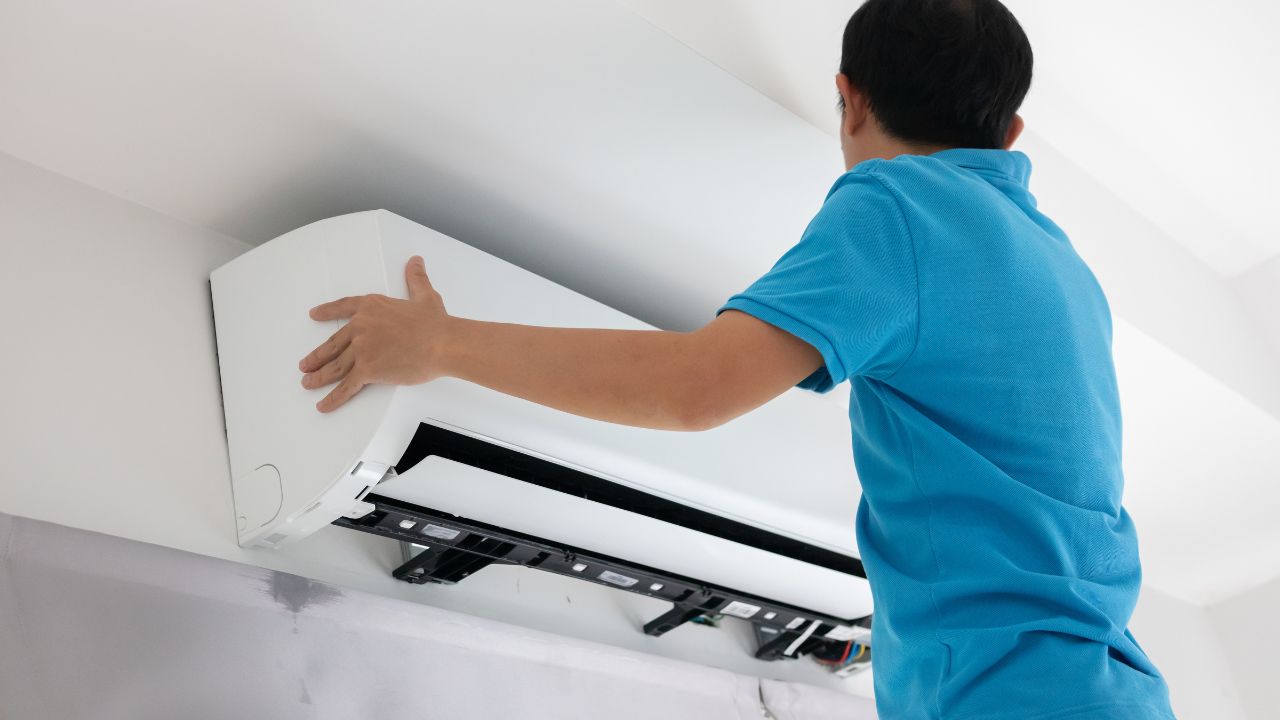
Always shut the system down before touching the filter. Switch the thermostat to "off" first, then flip the corresponding breaker at your electrical panel. This prevents the blower from kicking on while the filter slot is open, which would pull unfiltered air straight through the system. Once power is off, open the filter access door or slide the old filter out of its slot. Note how it's oriented before removing it. Bag the old filter to keep trapped dust from spreading, and dispose of it in your regular trash.
The Airflow Arrow On The Filter Frame Must Point Toward The Blower
Every disposable filter has an arrow printed on the frame indicating the direction of airflow. That arrow should always point toward the blower or air handler — away from the return duct and toward the equipment. If the filter sits in a return vent on a wall or ceiling, the arrow points into the wall. If it slides into a slot on the air handler, the arrow points into the unit. Installing it backwards restricts airflow and reduces filtration because the filter media is designed to load from one side. If you can't tell which direction air flows, turn the system on briefly without a filter and feel which way air moves through the slot.
If The Filter Doesn't Fit Or Keeps Slipping, Verify The Printed Dimensions And Check The Housing
A filter that won't seat properly or slides around inside the slot is doing almost nothing. Pull it out and confirm the nominal dimensions printed on the frame match your system's requirements. Even a half-inch difference in any direction creates gaps that let unfiltered air bypass into the system, shortening filter lifespan and undermining clean air indoor quality. If the size is correct but the fit is still loose, inspect the housing or rack for damage, bent tracks, or a missing retaining clip. A snug fit with no visible gaps is the standard — anything less means your HVAC maintenance schedule is running on a filter that isn't fully protecting the equipment.
Keep Your System Running Right — Let Alpine Handle The Rest
A consistent air filter replacement schedule protects your equipment, lowers your energy bills, and keeps your home's air clean. It's one of the easiest wins in any HVAC maintenance schedule and costs almost nothing compared to the repairs it prevents. But when airflow problems persist after a fresh filter, or you're not sure whether your system is performing the way it should, it's time for a professional eye. At Alpine Plumbing Heating and Air, we help homeowners stay ahead of costly breakdowns with thorough maintenance, tune-ups, and expert diagnostics. Whether you need a seasonal inspection, duct sealing, or a full system evaluation, our team is ready to help. Contact us today to schedule service and keep your home comfortable year-round.