Key Takeaways
- Duct cleaning is most useful after construction, pest contamination, visible debris, or major airflow issues—not as routine maintenance for every home.
- Many “dirty duct” complaints are better solved by upgrading filtration, sealing duct leaks, and maintaining coils and blowers.
- Real signs of need include debris blowing from vents, persistent odors tied to the system, or evidence of rodents/insects in ductwork.
- Poor duct cleaning can cause damage or spread particles, so verifying methods, scope, and documentation matters.
- A step-by-step inspection process helps homeowners choose the right fix, whether that’s cleaning, repairs, sealing, or indoor air quality upgrades.
Most homeowners hear about duct cleaning from a coupon mailer or a cold call offering a deal that sounds too good to pass up. The problem is that the duct cleaning industry is full of misleading claims, inflated promises, and outright scams sitting right next to legitimate services that solve real problems. This guide breaks down what duct cleaning actually is, when it matters, when it doesn't, and how to tell the difference. Whether you're chasing better home air quality, investigating a musty smell, or just wondering if that $99 flyer is legit, you'll find a straight answer here.
What Is HVAC Duct Cleaning, and What Does It Actually Include?
HVAC duct maintenance is one of those services that sounds straightforward but gets complicated fast. Companies define "duct cleaning" differently depending on what they're selling. Some clean the full system. Others vacuum a few vents and call it done. Understanding what the service actually covers, and what it doesn't, is the first step to knowing whether you need it at all.
Ducts Are Only One Part of the System
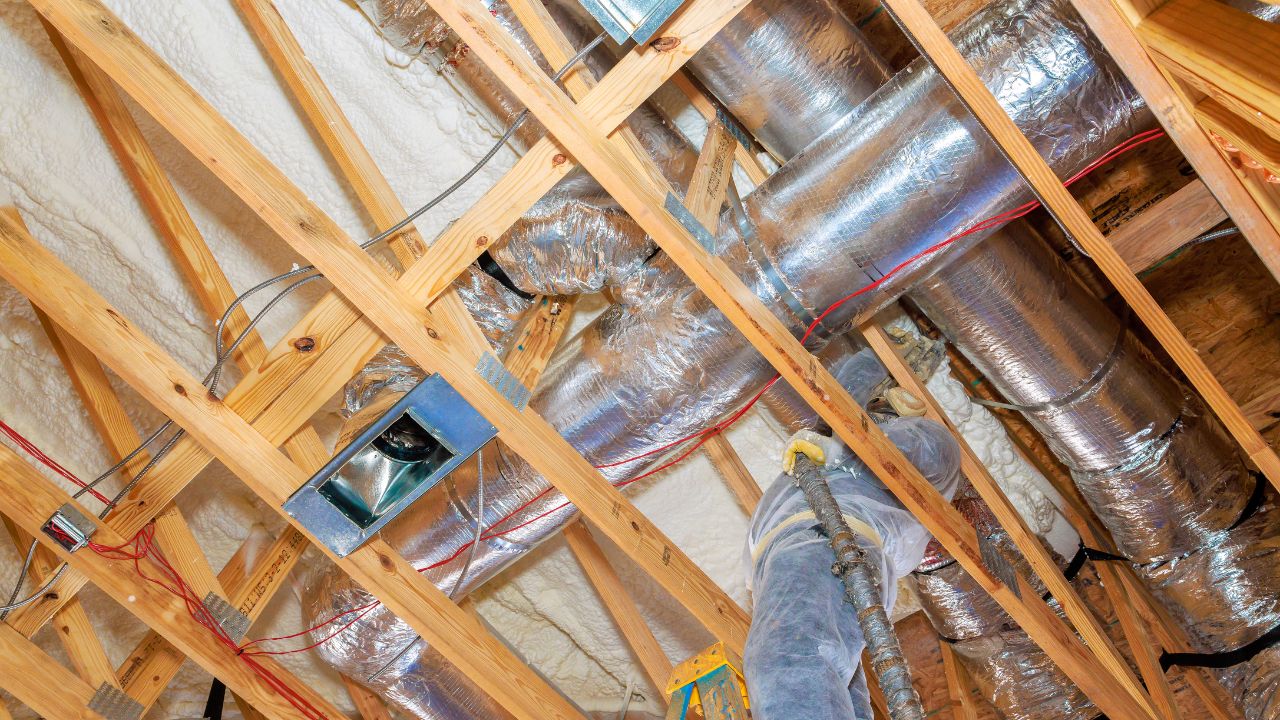
The "ducts" in duct cleaning refer specifically to the supply and return air ducts, which are the sheet metal or flex channels that carry conditioned air from your HVAC unit to each room and back again. Registers, grilles, and diffusers, the visible covers on your walls, floors, and ceilings, are also part of the ductwork.
Everything else is a separate HVAC component. That includes the heat exchanger, cooling coils, condensate drain pan, fan motor and housing, and the air handling unit itself. These parts matter for home air quality and airflow improvement, but they fall outside the ductwork. When a company says they "clean your ducts," ask whether they mean just the channels or the full system. The answer tells you a lot about what you're paying for.
Real Duct Cleaning Uses Negative Pressure and Mechanical Agitation
Legitimate duct cleaning puts your entire duct system under continuous negative pressure using a high-powered vacuum, either truck-mounted or a portable unit with HEPA filtration rated at 99.97% collection efficiency at 0.3 microns per NADCA standards. While the vacuum holds suction, technicians feed rotary brushes, air whips, or air snakes through the ductwork to physically dislodge debris from interior surfaces. The vacuum then captures everything before it reaches your living space.
What doesn't count is what the industry calls "blow-and-go" work. These are companies that show up with a portable shop vacuum and a handful of basic tools, spend 30 minutes in your house, and leave. That approach doesn't create negative pressure, doesn't agitate debris from duct walls, and may actually make things worse by stirring up settled dust without removing it. If the crew doesn't bring serious equipment, the duct cleaning benefits you're expecting won't materialize.
Cleaning Ducts Alone Isn't the Same as Cleaning the System
This is where many homeowners get tripped up. NADCA's ACR Standard, the industry benchmark for when to clean ducts and how to do it properly, calls for cleaning the entire HVAC system. That means the ductwork plus the coils, drain pan, blower motor, heat exchanger, and air filter. The reason is simple: if you clean the ducts but leave a dirty evaporator coil or a clogged drain pan, contaminants cycle right back into the ductwork as soon as the system runs.
The EPA reinforces this point directly. According to the agency, there is little evidence that cleaning only the ducts, without addressing other system components, improves efficiency or air quality. A company offering true duct cleaning benefits should be quoting you for a full-system service, not just the duct runs. If the proposal only mentions ductwork, you're likely looking at an incomplete job.
What Are the Most Common Situations Where Duct Cleaning Is Legitimately Helpful?
Not every dusty vent means you need to call a professional. But there are specific situations where duct cleaning is clearly the right move, backed by both the EPA and NADCA. These aren't marketing scenarios. These are conditions where contaminants inside your ductwork are actively affecting your home air quality or HVAC performance, and no amount of filter changes will fix the problem.
Visible Debris Blowing From Vents Means Something Is Wrong
If you can see dust, particles, or debris being pushed out of your supply registers when the system runs, that's one of the clearest signs it's time for cleaning. The EPA specifically identifies this scenario, ducts clogged with excessive dust and debris that visibly discharge into the living space, as a legitimate reason for professional intervention. This isn't the same as a thin film of dust on a vent cover, which is normal. The red flag is airborne particles actively blowing into your rooms every time the blower kicks on. When that happens, your ductwork is no longer just holding debris. It's distributing it. Cleaning addresses the source, and you should notice an immediate airflow improvement once the buildup is removed.
A Home With Unknown Maintenance History Deserves an Inspection
When you move into a house, you inherit whatever the previous owner did or didn't do to the HVAC system. If there are no maintenance records and the seller can't tell you when the ducts were last cleaned or inspected, that's reason enough to get a professional look. NADCA recommends annual HVAC inspections and cleaning every three to five years as a general guideline. For a home with no history, the smart first step is a thorough inspection using cameras, moisture meters, and airflow meters. This tells you whether there's an actual problem without committing to a full cleaning. You may find the system is fine, or you may find years of neglect that need attention. Either way, you'll know what you're working with before spending money.
Renovations and Construction Projects Justify Cleaning
Drywall dust, sawdust, insulation fibers, and paint residue don't stay put during a remodel. They get pulled into return vents and settle throughout your duct system, even if you taped off registers during the work. This is one of the most well-supported reasons to schedule duct cleaning. A study published in Indoor Air (Holopainen et al., 2003) found that mechanical brushing and compressed air cleaning reduced construction dust deposits in newly installed ducts by 75% to 99%. That kind of contamination doesn't resolve on its own and won't be caught by a standard air filter. If you've done any significant renovation, from a single-room gut job to a full addition, cleaning the ducts afterward is one of the more reliable duct cleaning benefits you can count on.
Rodents and insects don't just pass through ductwork. They nest, leave droppings, shed body parts, and sometimes die inside the system. Every time your HVAC runs, it pushes air over those contaminants and delivers them into your living space. Both the EPA and NADCA list vermin infestation as a clear and urgent indicator for professional cleaning. The health concern is real: rodent droppings carry allergens and pathogens, insect debris triggers allergic reactions, and decomposing carcasses produce odors that no air freshener will mask. The correct sequence is pest eradication first, then a full duct cleaning to remove all biological material. Skipping the cleaning after the exterminator leaves means your HVAC duct maintenance problem isn't actually solved; you've just stopped it from getting worse.
What Warning Signs Suggest a Bigger Issue Than "Dirty Ducts"?
Sometimes what looks like a duct cleaning problem is actually something else entirely. Persistent smells, worsening allergies, and dark residue around vents can all point to issues that duct cleaning won't fix. Misdiagnosing the source wastes money and leaves the real problem in place. Before assuming your ducts need cleaning, consider whether one of these underlying causes is driving the symptoms.
Persistent Odors Usually Point to Moisture, Mold, or Something Dead
A musty or foul smell coming from your vents doesn't automatically mean dirty ducts. More often, it signals a moisture problem. Condensation on cooling coils, a clogged drain pan, or a slow leak somewhere in the system creates the damp conditions that mold needs to grow. If visible mold appears on hard-surface ducts or HVAC components, that section needs professional cleaning or outright replacement. The EPA is clear on one point that matters here: insulated ducts that become wet or moldy cannot be effectively cleaned. The insulation must be removed and replaced. No amount of scrubbing or chemical treatment will restore it. A dead animal in the ductwork produces a distinct rotting smell that intensifies when the blower runs. That requires physical removal and targeted cleaning of the affected section, not a whole-system duct cleaning. In every case, the fix starts with identifying and eliminating the moisture source or removing the carcass. Cleaning comes after.
Allergy Flare-Ups May Be a Filtration or Humidity Problem, Not a Duct Problem
When seasonal allergies suddenly get worse indoors, the instinct is to blame the ducts. But the more likely culprits are your air filter and your humidity level. The American College of Allergy, Asthma & Immunology recommends HEPA filters in portable air purifiers and MERV 11–13 rated filters in central HVAC systems as frontline tools for allergy management. That guidance points to filtration upgrades, not duct cleaning, as the first step when symptoms flare up. Humidity plays an equally important role. The recommended indoor range is 30%–50%. Above that threshold, dust mites reproduce faster, mold spores thrive, and microorganisms gain protection from the moisture in the air. If your home sits above 50% humidity and you're experiencing allergy symptoms, a dehumidifier or HVAC adjustment will do more for your home air quality than a duct cleaning appointment. Address filtration and humidity first. If symptoms persist after both are optimized, then investigate the ductwork.
Black Dust or Soot Around Vents Is Usually a Combustion Problem
Dark residue collecting on or around supply registers looks alarming, and homeowners often assume it's coming from inside the ducts. In most cases, it's soot from a combustion source inside the home. Candles, gas fireplaces, wood-burning stoves, and even gas ranges produce fine particulate that circulates through the HVAC system and deposits around vents. The EPA advises regular inspection and maintenance of all fuel-burning appliances to prevent carbon monoxide buildup, and the same advice applies to soot. If black dust keeps reappearing after you wipe it away, the problem isn't dirty ductwork. It's an incomplete combustion issue or an appliance that needs servicing. Cleaning the ducts might remove what's already there, but it won't stop new soot from forming. Fix the source first, then decide whether the ducts need attention based on what's left after the combustion issue is resolved.
When Should Homeowners Consider Having Their HVAC Ducts Cleaned, and When Can It Be Safely Avoided?
This is the core question most homeowners are really asking. The answer depends on what's actually happening inside your system, not on a calendar or a marketing pitch. Both the EPA and NADCA provide clear guidance on when to clean ducts and when to skip it. The triggers are specific, and the alternatives are often cheaper and more effective for everyday air quality concerns.
Duct Cleaning Is Most Worth It When Specific Contamination Exists
The EPA endorses duct cleaning under three conditions: substantial visible mold growth inside hard-surface ducts, evidence of vermin infestation, or excessive dust and debris actively being released into your living space through supply registers. These aren't vague recommendations. They describe observable, verifiable problems that a professional can confirm during an inspection. NADCA expands the list slightly to include situations the EPA doesn't address directly, such as after fire, smoke, or water damage, when a professional inspection reveals significant particulate contamination, or when unacceptable odors or visible dirt discharge persist despite other maintenance. In all of these cases, the duct cleaning benefits are concrete, and the problem won't resolve without direct intervention. If your situation matches any of these triggers, cleaning is justified and likely overdue.
Visible Dust on Vents Alone Doesn't Mean You Need Cleaning
A thin layer of dust on a vent cover is normal in every home. It accumulates from regular air circulation and says very little about what's inside your ductwork. The EPA's position is straightforward: if no one in your household suffers from unexplained allergies or illness, and a visual inspection of the duct interior reveals no significant contamination, cleaning is probably unnecessary. This is where many homeowners overspend. A dusty register doesn't mean your ducts are clogged or your home air quality is compromised. Before scheduling a cleaning based on surface dust, pull off a register cover and look inside with a flashlight. If you see bare metal or minimal buildup, your system is doing its job, and your filters are handling the load.
Try These Alternatives Before Paying for Duct Cleaning
If your goal is cleaner indoor air, three steps cost less than duct cleaning and often deliver better results. First, change your air filters every one to three months. This is the single most effective HVAC duct maintenance task any homeowner can do, and it prevents the majority of airborne particles from ever reaching the ductwork. Second, seal your duct leaks. The Department of Energy estimates that up to 30% of conditioned air is lost through leaky ducts, which means your system is working harder, your bills are higher, and unconditioned air carrying dust and allergens is being pulled in from attics, crawlspaces, and wall cavities. Sealing those leaks delivers immediate airflow improvement and reduces the debris entering the system in the first place. Third, consider a portable HEPA air cleaner for rooms where you spend the most time. According to the EPA, studies have shown small but measurable improvements in both cardiovascular and respiratory health from HEPA air cleaners. For most households, this combination of filter changes, leak sealing, and portable purification will do more for air quality than a duct cleaning service.
Without Special Issues, Follow a Simple Schedule
NADCA's general guideline is to have ducts cleaned every three to five years, with an annual inspection to catch problems early. That frequency should increase if you have shedding pets, smokers in the household, or family members with allergies or asthma. The EPA takes a more conservative stance and sets no fixed schedule at all, recommending cleaning only on an as-needed basis when specific problems are identified. For the average home with regular filter changes and no contamination triggers, the practical answer lands somewhere between those two positions. Inspect annually, clean when there's a documented reason to, and don't let anyone convince you that a set calendar matters more than the actual condition of your system.
Ready for Cleaner Air? Let Alpine Help You Breathe Easier
Duct cleaning isn't always necessary, but when it is, the difference is immediate. The key is knowing when your system actually needs attention and choosing a qualified team to do the work right. Whether you're dealing with visible debris, post-renovation dust, persistent odors, or a home with no maintenance history, a professional inspection gives you the answers before you spend a dime on cleaning you may not need. At Alpine Plumbing Heating and Air, we follow NADCA standards and clean the full system, not just the ducts. Contact us today to schedule an inspection and find out exactly what your home needs.