Key Takeaways
- Professional water leak detection uses acoustic, thermal imaging, and tracer gas methods to locate hidden leaks without destructive exploratory work, costing $150-$500 for residential services.
- Early detection saves thousands in repair costs—month one repairs cost $200-$500 while month three repairs exceed $10,000, with average water damage claims exceeding $11,000.
- Warning signs include unexplained water bill spikes, musty odors, damp walls, peeling paint, and pressure changes—check your water meter when fixtures are off to detect hidden leaks.
- DIY leak detection often costs more than professional services—incomplete DIY repairs average $1,000 while fixing overlooked problems runs $5,000 or more.
- Regular plumbing inspections and smart leak detectors provide ongoing protection—annual inspections catch issues early while smart systems alert you within 24 hours and reduce water bills by 10%.
Water leaks cause thousands of dollars in damage when left undetected. Understanding how water leak detection works helps homeowners catch problems early and avoid expensive repairs. Professional plumber leak detection uses specialized equipment to locate hidden leaks behind walls, under slabs, and in underground pipes without destructive exploratory work. This guide explains water leak detection methods, warning signs that indicate leaks, and the importance of leak detection services for protecting your property.
From acoustic testing to thermal imaging, you'll learn when to call plumbing services and how early water leak detection saves money by preventing structural damage, mold growth, and water waste. Discover why professional leak detection delivers better results than DIY approaches and how regular inspections maintain your plumbing system's integrity.
What is Water Leak Detection and How Does It Work?
Water leak detection identifies hidden leaks in your plumbing system before they cause major damage. Professional plumbers use specialized equipment to locate leaks behind walls, under slabs, and in underground pipes without destructive exploratory work.
The Basics of Water Leak Detection
Water leak detection services pinpoint the exact location of leaks using non-invasive technology. Instead of breaking through walls or floors to find problems, plumbers use advanced tools that detect leaks from the surface. This approach saves time, reduces repair costs, and prevents unnecessary damage to your property.
Different Methods of Water Leak Detection
Acoustic Leak Detection
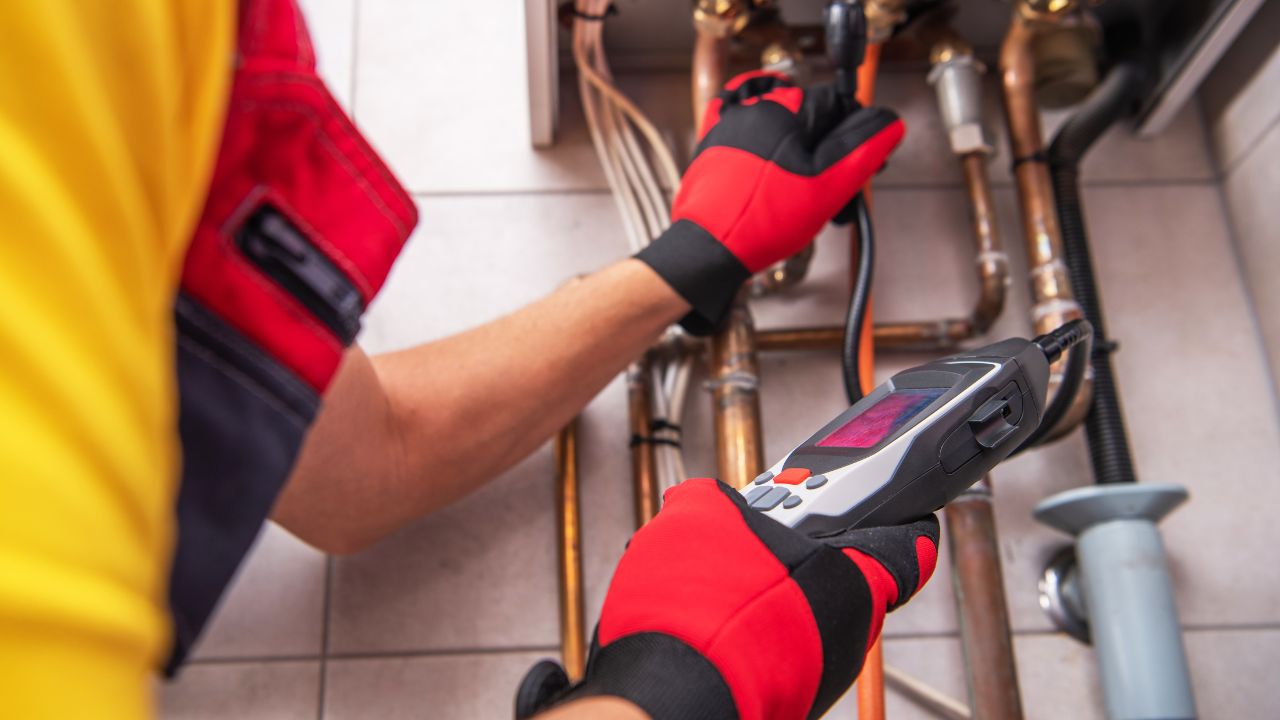
Acoustic leak detection uses sensitive listening devices to detect sounds from water escaping pressurized pipes. These tools identify the high-frequency noise of leaks through walls, floors, and underground. Professional plumber leak detection with acoustic equipment costs $200-$500 and works effectively for most residential leaks.
Infrared Thermography
Infrared thermography detects temperature variations caused by water leaks. Thermal imaging cameras identify moisture behind walls and in concealed areas by reading heat signatures. This water leak detection method costs $300-$600 and reveals hidden water damage without opening walls.
Tracer Gas Detection
Tracer gas detection uses a non-flammable mixture of 5% hydrogen and 95% nitrogen to locate leaks when acoustic methods aren't effective. The gas fills the suspect pipe, escapes through the leak, and rises to the surface where detectors pinpoint the location. This method costs about 25% less than helium-based detection at roughly $60-70 per cylinder.
The hydrogen-nitrogen mixture moves through dirt, asphalt, and concrete faster than helium. Residential pool pipes need only 1-3 cubic feet to fill. Gas detectors work through concrete by following the path of least resistance. For pipes 2 feet below ground, detection takes just minutes. Deeper pipes require longer wait times as the tracer gas reaches the surface.
How Accurate is Water Leak Detection?
Modern water leak detection services deliver precise results that reduce unnecessary repairs. Advanced tools locate leaks without destructive exploratory work, protecting your property while identifying problems. Non-invasive methods prevent the cost and hassle of breaking through walls or floors to search for leaks.
Tracer gas systems like the Loktracer TLD500 match helium sensor sensitivity with no reduction in accuracy. The importance of leak detection services lies in this precision—catching problems early before they escalate into expensive emergencies.
When Should I Call a Plumber for Water Leak Detection, and How Does It Work?
Call a plumber for water leak detection when you notice unexplained water bill increases, damp spots, musty odors, or changes in water pressure. Professional plumber leak detection uses specialized equipment to locate hidden leaks quickly and accurately. Early water leak detection prevents minor problems from becoming expensive disasters.
Recognizing the Signs of a Water Leak
Unexplained Water Bills
Monitor your water bills for unexpected spikes that signal hidden leaks. Small leaks waste hundreds of gallons monthly, driving up costs without obvious signs. Check your water meter when all fixtures are off for 30 minutes—any movement indicates active leaks somewhere in your system.
Damp Walls, Ceilings, and Floors
Water damage behind walls develops silently over weeks or months before symptoms appear. Visible staining represents only a fraction of actual moisture present behind wall surfaces. Yellowish or brownish stains appear in irregular patterns on walls and ceilings, while peeling or bubbling paint indicates water accumulated between paint film and wall surface.
Warping, buckling walls, or soft spots signal moisture damage requiring immediate attention. Mold grows when moisture, organic material like drywall, and temperatures between 40°F-100°F combine. Indoor humidity should stay between 30-50%—readings above 60% promote mold growth. Musty odors are among the earliest and most reliable indicators, detectable days or weeks before other symptoms. Water stains below bathrooms reveal leaks from tubs, showers, toilets, or supply lines.
Low Water Pressure or Water Stains
Changes in water pressure indicate leaks diverting water from your fixtures. Sounds of running water, dripping, or hissing when all fixtures are off suggest active leaks. These signs require professional water leak detection services to locate the source and prevent further damage.
When Should I Call a Plumber for Water Leak Detection, and How Does It Work?
Call a plumber for water leak detection when you notice unexplained water bill increases, damp spots, musty odors, or changes in water pressure. Professional plumber leak detection uses specialized equipment to locate hidden leaks quickly and accurately. Early water leak detection prevents minor problems from becoming expensive disasters.
Recognizing the Signs of a Water Leak
Unexplained Water Bills
Monitor your water bills for unexpected spikes that signal hidden leaks. Small leaks waste hundreds of gallons monthly, driving up costs without obvious signs. Check your water meter when all fixtures are off for 30 minutes—any movement indicates active leaks somewhere in your system.
Damp Walls, Ceilings, and Floors
Water damage behind walls develops silently over weeks or months before symptoms appear. Visible staining represents only a fraction of moisture present behind wall surfaces. Look for yellowish or brownish stains in irregular patterns, peeling or bubbling paint, and warping or soft spots in walls.
Musty odors are among the earliest and most reliable indicators—detectable days or weeks before other symptoms. Mold requires moisture, organic material like drywall, and temperatures between 40°F-100°F to grow. Keep indoor humidity between 30-50%, as readings above 60% promote mold growth. Water stains below bathrooms reveal leaks from tubs, showers, toilets, or supply lines.
Low Water Pressure or Water Stains
Changes in water pressure indicate leaks diverting water from your fixtures. Sounds of running water, dripping, or hissing when all fixtures are off suggest active leaks. These signs require professional water leak detection services to locate the source and prevent further damage.
Why You Should Call a Professional Plumber for Leak Detection
The Risks of DIY Leak Detection
DIY leak detection often misses hidden problems, costing around $1,000 for incomplete repairs. Professional repairs to fix overlooked DIY problems run $5,000 or more. The total cost of the DIY approach can exceed professional initial estimates, making early professional water leak detection the smarter investment.
Plumber Leak Detection Vs. Smart Leak Detectors
Smart leak detectors provide 24/7 supervision and learn normal water usage patterns to detect anomalies. These systems send instant alerts via app when problems are detected—often within 24 hours—and some automatically shut off water supply to prevent destruction. Homeowners achieve 10% reductions in water bills with smart detectors.
Professional plumbers use acoustic detection, pressure testing, and visual inspection to locate and repair leaks efficiently. Plumber leak detection combines multiple methods—acoustic, thermal, and pressure testing—to accurately locate hidden leaks that smart detectors identify. The importance of leak detection services lies in this combination: smart systems alert you to problems, while professional plumbing services find and fix them.
The Importance of Early Water Leak Detection
Early water leak detection saves thousands in repair costs and prevents structural damage to your home. The importance of leak detection services becomes clear when comparing month-one repair costs of $200-$500 to month-three costs exceeding $10,000. Professional water leak detection catches problems before they escalate into expensive emergencies.
Why Early Detection Can Save You Money
Average water damage insurance claims exceed $11,000, with national repair costs averaging $3,814. Most homeowners pay $1,361-$6,270 for repairs, while severe cases reach $10,000 and extreme cases hit $75,000.
The escalation timeline shows how quickly costs multiply. Month one repairs with minimal damage cost $200-$500. By months two or three, significant damage and structural concerns push costs to $2,000-$5,000. After three months, major damage requires repairs exceeding $10,000. Water extraction alone costs $500-$1,500, or $2,500 for extensive spread. Drying and dehumidification runs $1,000-$3,500, mold removal starts at $500, and subfloor assessment and removal exceeds $3,000. Basic drying and mitigation costs $3-$7.50 per square foot.
A single drip wastes over 1,000 gallons annually, driving up utility bills while causing hidden damage. One homeowner avoided thousands in restoration costs through early water leak detection, catching a deteriorated rubber washer before structural damage occurred.
Preventing Major Damage with Prompt Leak Detection
Early water leak detection prevents structural damage to framing and foundation. Prompt action stops mold growth before it becomes a health hazard and avoids expensive restoration and reconstruction projects. Catching problems at the earliest stages prevents minor issues from escalating into major repairs and stops toxic mold growth in enclosed wall cavities.
The Role of Water Leak Detection Services in Home Maintenance
Schedule annual plumbing inspections to catch issues early. Inspect appliances like washing machines, water heaters, and dishwashers regularly for signs of leaks. Maintain pipes by insulating them to prevent freezing and bursting during cold weather. Install smart leak detectors for early warnings that alert you to problems before they cause extensive damage.
Causes of Water Leaks and Rusty Water in Your Home
Water leaks develop from corroded pipes, tree root intrusions, and aging plumbing systems. Understanding the causes of rusty water helps identify leak sources and prevent system failures. Professional water leak detection services locate these problems before they cause extensive damage.
Common Causes of Water Leaks
Corroded Pipes
Pipe corrosion develops when metal reacts with water and oxygen over time. Galvanized steel and copper pipes deteriorate from the inside out, creating weak spots that eventually leak. Corrosion accelerates in areas with acidic water or high mineral content, weakening pipe walls until they fail.
Tree Root Intrusions
Tree roots seek moisture and grow toward underground water lines. Roots penetrate pipes through small cracks or loose joints, expanding inside the line and causing blockages. Root intrusions create leaks as they break through pipe walls and continue growing, eventually requiring plumber leak detection to locate the damage.
Plumbing System Age
Older plumbing systems face increased leak risk as materials degrade. Pipes installed 50+ years ago used materials that break down faster than modern options. Worn washers, deteriorated seals, and weakened joints develop throughout aging systems, making early water leak detection essential for preventing multiple failure points.
The Connection Between Water Leaks and Rusty Water
How Leaks Contribute to Rusty Water
Leaks expose pipe interiors to oxygen, accelerating corrosion and creating rust. Water seeping through corroded areas carries rust particles into your supply lines. Pressure changes from leaks disturb settled rust deposits, sending discolored water through your fixtures. The causes of rusty water often trace back to hidden leaks that expose metal pipes to conditions promoting oxidation.
The Effect of Rusty Water on Plumbing Systems
Rusty water indicates advanced pipe corrosion that weakens your plumbing system. Iron oxide particles clog aerators, damage fixtures, and stain sinks and tubs. Corroded pipes develop additional weak points where new leaks form, creating a cycle of deterioration. Water leak detection services identify rust sources before corrosion spreads throughout your system, preventing complete pipe replacement.
How Water Leak Detection Works: From Start to Finish
Professional water leak detection follows a systematic process from initial assessment to leak repair. Understanding how water leak detection works helps homeowners know what to expect when calling plumbing services. The process combines visual inspection, specialized tools, and testing methods to pinpoint leak locations accurately.
The Process of Professional Leak Detection
Initial Inspection and Assessment
Plumbers begin with a thorough inspection of your plumbing system, checking fixtures, pipes, and potential problem areas. Initial assessment costs $100-$200 and includes reviewing water bills, examining visible plumbing, and identifying symptoms like water stains or pressure changes. This inspection determines which detection methods will locate leaks most effectively.
Video pipe inspection inserts cameras into pipes for visual inspection, costing $250-$1,000 depending on system complexity. Smoke testing injects smoke to detect leaks or blockages for $200-$500, revealing hidden openings where smoke escapes. Pressure testing checks pipe pressure to identify leaks for $150-$400, showing exactly where pressure drops occur in the system.
Plumber leak detection combines these tools based on leak symptoms and location. Professionals select methods that provide the most accurate results without unnecessary property damage.
Identifying the Source of the Leak
Once testing reveals the leak location, plumbers verify the exact source through targeted investigation. This step confirms leak position before repairs begin, preventing unnecessary exploratory work. Accurate source identification ensures repairs address the actual problem rather than symptoms, making early water leak detection more cost-effective than trial-and-error approaches.
The Role of Plumbing Services in Water Leak Detection
Residential leak detection costs $150-$500 for standard home systems. Commercial leak detection runs $300-$1,500 or more due to larger, more complex plumbing. Specialized services include gas leak detection at $200-$600, slab leak detection at $300-$800, sewer line leaks at $250-$1,000, and swimming pool leaks at $200-$1,000.
Emergency services during nights, weekends, or holidays add $100-$300 to standard rates. Urban areas typically charge higher prices than rural regions due to increased operating costs. The importance of leak detection services justifies these costs by preventing damage that exceeds detection fees many times over.
The Benefits of Water Leak Detection Services for Homeowners
Water leak detection services protect your property, reduce utility costs, and extend plumbing system life. The importance of leak detection services shows in preserved home value and avoided emergency repairs. Professional plumber leak detection delivers peace of mind through accurate problem identification and timely solutions.
Protecting Your Property with Early Leak Detection
Early water leak detection keeps repair costs minimal by catching problems before major damage occurs. One case study showed a homeowner who found a deteriorated rubber washer through early detection—avoiding structural damage, mold growth, and significant water loss. Prompt action through water leak detection services prevents minor issues from becoming expensive disasters that compromise your home's structural integrity.
Minimizing Water Waste and Reducing Utility Bills
Early detection contributes to water conservation efforts while lowering monthly bills. Water leak detection services prevent minor leaks from wasting water before they escalate into major problems. Catching leaks early stops hundreds of gallons from draining away monthly, directly reducing utility costs and supporting environmental conservation.
Enhancing the Longevity of Your Plumbing System
Professional detection provides time efficiency—plumbing services locate leaks quickly without prolonged searching. Fast, accurate water leak detection prevents ongoing damage that shortens pipe lifespan and forces premature replacement. Safety assurance matters especially for gas leaks or structural concerns where delayed detection creates hazards. Regular leak detection extends system life by addressing problems before corrosion and damage spread throughout your plumbing.
How to Choose the Right Plumbing Services for Leak Detection
Selecting the right plumbing services for leak detection requires evaluating experience, technology, and service quality. Professional plumber leak detection combines expertise with advanced equipment to locate leaks accurately and efficiently. The importance of leak detection services increases when you choose qualified professionals who prevent damage through precise diagnostics.
Qualities to Look for in a Leak Detection Plumber
Experience and Expertise
Experienced professionals locate leaks quickly through time-efficient processes developed over years of practice. Different detection methods require varying tools and expertise levels—skilled plumbers know which approach works best for specific leak types and locations. Look for plumbing services with proven track records in water leak detection across residential and commercial properties.
Modern plumbers combine multiple detection methods including acoustic, thermal, and pressure testing for comprehensive results. Advanced tools and equipment vary by detection method and property type—professionals invest in technology that delivers accurate diagnostics without property damage. Choose water leak detection services that use current equipment rather than outdated methods that miss hidden leaks or require exploratory demolition.
Why Choose Alpine Plumbing, Heating, and Air for Leak Detection Services
Alpine Plumbing, Heating, and Air provides comprehensive water leak detection services with experienced technicians and advanced diagnostic equipment. Our plumber leak detection specialists combine acoustic, thermal, and pressure testing methods to locate leaks accurately the first time. We offer transparent pricing, prompt response times, and quality repairs that prevent recurring problems.
The importance of leak detection services guides our commitment to protecting your property through early problem identification. Our team handles residential and commercial leak detection with the same attention to detail and customer service. Contact Alpine Plumbing, Heating, and Air for professional water leak detection that saves you money and preserves your plumbing system's integrity.
Protect Your Home with Professional Leak Detection Today
Don't wait for water damage to escalate into expensive repairs. Alpine Plumbing, Heating, and Air delivers fast, accurate water leak detection services that save you money and protect your property. Our experienced plumbers use advanced acoustic, thermal, and pressure testing methods to locate leaks without destructive exploratory work.
Whether you notice unexplained water bills, damp walls, or pressure changes, early water leak detection prevents minor problems from becoming major disasters. Contact Alpine Plumbing, Heating, and Air today for professional plumber leak detection you can trust. Call now to schedule your inspection and experience the importance of leak detection services from qualified professionals who care about your home.