Water softener cost in California ranges from $800 to $5,500 installed in 2026, depending on system type and installation complexity. Understanding the breakdown of equipment, installation, and ongoing expenses helps California homeowners make informed decisions about protecting plumbing fixtures and appliances from mineral buildup.
We cover equipment and installation pricing by system type, regional water hardness data, and sizing guidance, plus how these numbers compare to broader California plumbing repair costs. Cost variations reflect differences in grain capacity and installation difficulty, since straightforward installations cost significantly less than complex retrofits requiring new supply lines and drainage routing.
Key Takeaways
Salt-based water softeners in California cost $800–$3,800 installed, while salt-free systems range from $1,500–$4,500
Installation labor accounts for roughly 50% of total cost, ranging from $200–$800 depending on plumbing complexity
Water hardness varies significantly across California, with Los Angeles averaging 8–15 GPG and requiring proper system sizing
Ongoing maintenance expenses include $60–$120 per year for salt plus $20–$50 annually in additional water costs
Grain capacity should match household size multiplied by water hardness, with 48,000–64,000-grain systems needed for hardness above 15 GPG
Water Softener Cost in California Starts With How the System Works
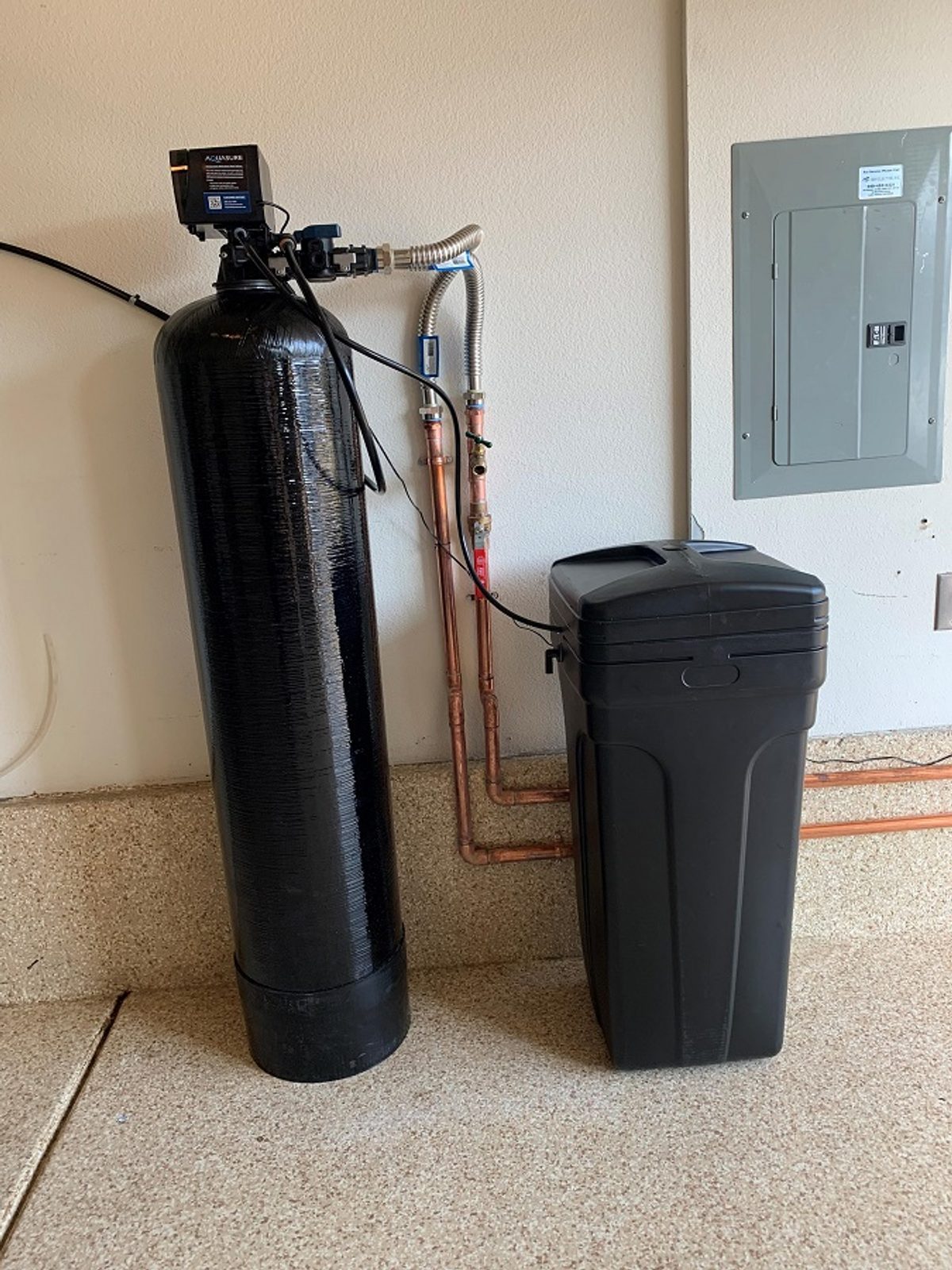
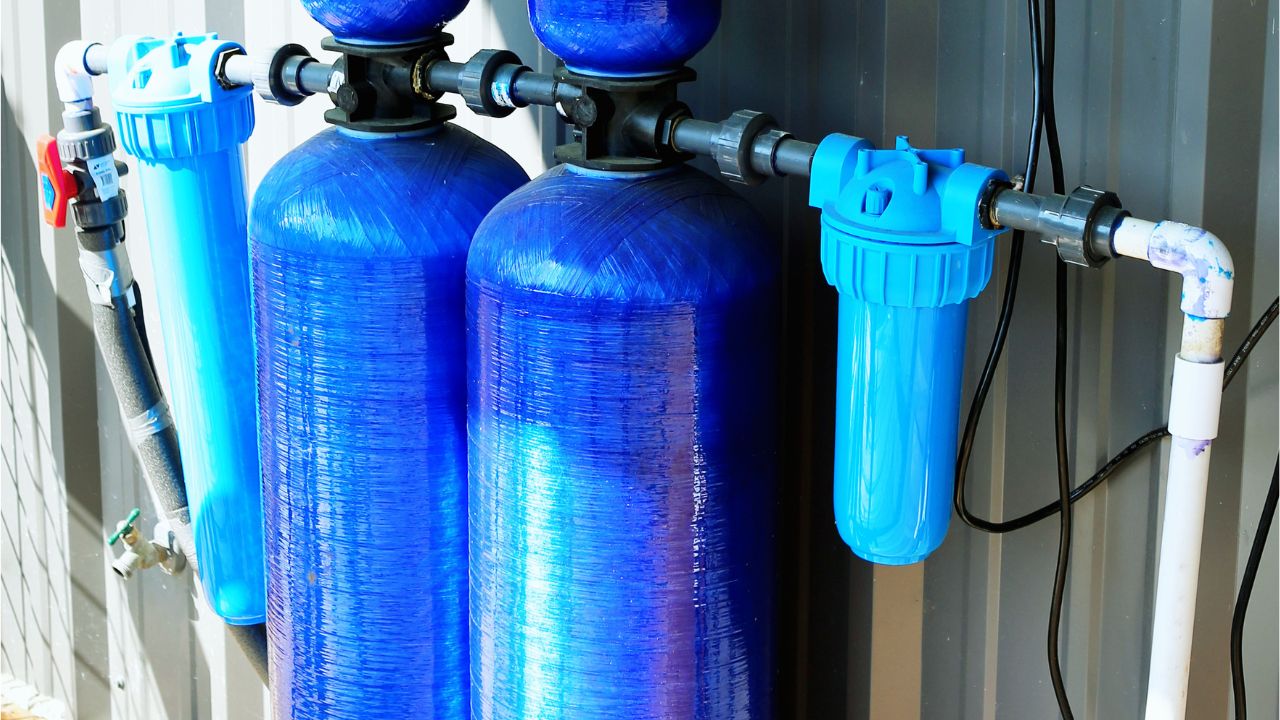
A water softener removes calcium and magnesium minerals from household water through ion exchange technology. The system replaces hard minerals with sodium ions, preventing scale buildup in pipes, water heaters, and appliances throughout your home.
Salt-based softeners require regeneration cycles one to three times weekly to clean and recharge resin beads, flushing accumulated minerals into the drain during each cycle.
Types of Water Softeners: Salt-Based, Salt-Free, and Electronic Descalers
Ion exchange is the traditional salt-based softening process, physically removing calcium and magnesium by exchanging them for sodium ions through resin beads.
Descaler devices prevent scale buildup without removing minerals, using template-assisted crystallization or electromagnetic fields to alter mineral structure instead of ion exchange.
How Water Hardness Affects Softener Selection
GPG measures water hardness in grains per gallon, with one grain equaling approximately 17.1 parts per million. California water hardness varies widely, from a 6 GPG statewide average to over 23 GPG in areas relying on untreated groundwater.
Hardness above 15 GPG often requires 48,000–64,000-grain systems to handle the mineral load without excessive regeneration cycles. Accurate hardness testing determines appropriate grain capacity, preventing undersized systems that regenerate too frequently or oversized units that waste salt and water.
Key Components and Features of Water Softening Systems
Regeneration cycles occur when water softeners clean and recharge resin beads using concentrated salt brine. Most residential systems regenerate one to three times per week, depending on water usage, hardness levels, and tank capacity.
NSF 44 and WQA Gold Seal certification standards verify water softener quality, performance, and structural integrity. Certified systems meet strict testing requirements for material safety, contaminant reduction claims, and long-term operational reliability under typical household conditions.
Water Softener Cost in California Depends on Equipment and Installation
Water softener pricing in California reflects both equipment costs and installation complexity for complete residential systems. The price of water softeners in San Dimas and throughout California depends on unit capacity, technology type, and local labor rates.
Total installed costs range from $1,300 to $5,500, with equipment accounting for roughly half the expense. Installation difficulty, existing plumbing configuration, and required modifications to accommodate softener placement influence the final project cost.
Breakdown of Unit and Installation Costs
Salt-based system units cost $600-$2,000 before installation, while salt-free units range from $800-$2,500. The table below breaks down typical pricing for a complete installed system.
Cost Item
Typical Price Range
Salt-based unit (before installation)
$600-$2,000
Salt-free unit (before installation)
$800-$2,500
Standard installation labor
$300-$1,000
Complete salt-based system, installed
$1,200-$3,800
Installation costs vary based on accessibility, plumbing modifications, and local permit requirements throughout California. Simple installations with existing plumbing loops and accessible locations cost significantly less than complex retrofits requiring new supply lines, drain routing, and bypass valve installation.
Factors Influencing Installation Complexity and Labor Rates
California statewide hourly plumbing rates range from $75-$200, higher in urban markets like Los Angeles, with straightforward softener labor running $200-$400.
Installation expenses can reach $500-$3,000 in typical scenarios and up to $6,000 in exceptionally complex cases.
Ongoing Maintenance and Operating Expenses
Ongoing operating costs total $100-$300 annually for salt, filters, and periodic servicing.
Salt-free systems average roughly $1,452 installed with about $40 per year in sediment filter maintenance.
Regional Water Hardness Across California Shapes Softener Needs
California water hardness varies dramatically by region, water source, and seasonal conditions affecting hard water effects on San Dimas homes. Statewide average hardness measures 6.2 GPG, but individual communities experience significantly higher or lower levels depending on local geology.
Regional variations require homeowners to test actual water quality before selecting softener capacity and technology. Proper system sizing based on measured hardness prevents inadequate treatment or unnecessary equipment expense for specific household conditions.
Regional Hardness Levels: Southern California vs. Statewide Trends
California's statewide average hardness of 6.2 GPG masks significant regional variation throughout the state. Los Angeles water hardness ranges from 8.0 GPG to 14.9 GPG depending on seasonal source blending and specific distribution zones.
Santa Clara County groundwater averages roughly 14.6 GPG, while treated surface water stays below 7 GPG, showing why blanket recommendations fail.
Impact of Water Source and Seasonal Variations on Hardness
Most blended municipal water in California ranges 7-10 GPG, while untreated well water can reach 23 GPG, requiring larger-capacity systems.
Los Angeles sources include the Colorado River Aqueduct and Northern California imports through mineral-rich terrain, so seasonal blending shifts hardness over time.
Testing Water Hardness and Its Importance for System Sizing
TDS measures total dissolved solids in parts per million, providing broader water quality context beyond hardness alone. Accurate hardness testing before purchase ensures appropriate system sizing and prevents costly mistakes from undersized or oversized equipment.
The sizing formula multiplies people times 75 gallons per day times GPG hardness times 7 days to calculate weekly grain capacity needs. Free water testing services help homeowners obtain accurate measurements for informed water softener selection decisions.
Salt-Based, Salt-Free, and Dual-Tank Systems Carry Different Price Tags
Salt-based and salt-free systems occupy overlapping price ranges with distinct performance characteristics and long-term cost implications. Dual-tank systems command premium prices but deliver uninterrupted soft water during regeneration cycles, eliminating temporary hardness breakthrough.
System type selection depends on water chemistry, household preferences, and budget for both upfront and ongoing expenses. Understanding performance differences helps homeowners match technology to specific needs rather than choosing solely on initial purchase price.
Price Ranges by System Type and Capacity
Capacity also drives price: a 32,000-grain unit costs approximately $700, while a 64,000-grain system runs roughly $1,500 for the unit alone. The table below compares typical costs across system types.
System Type
Unit Cost
Installed Cost
Typical Lifespan
Single-tank salt-based
$500-$1,700
$800-$2,500
15-20 years
Dual-tank salt-based
$1,000-$5,000
Higher, no interruption during regeneration
15-20 years
Salt-free
$800-$2,500
$1,500-$4,500
Maintenance-free scale prevention
Electronic/magnetic descaler
$150-$600
$200-$600 (whole-house)
No mineral removal
High-efficiency models like the SoftPro Elite HE 64,000-grain system cost $1,527 for the unit only. These capacity-based price differences reflect larger resin volumes, enhanced valve systems, and heavier construction required for greater mineral removal capacity.
Pros and Cons Relating to Performance and Maintenance
Salt-based systems genuinely remove hardness minerals, cutting soap use and preventing scale buildup, with most systems paying for themselves within 2 to 5 years through lower soap and appliance-repair costs.
Electronic descalers do not remove hardness minerals, allowing soap scum and mineral spotting to persist. While descalers prevent scale accumulation in pipes and appliances, they cannot deliver the same soap efficiency and complete softening benefits as ion-exchange systems.
Certification and Quality Considerations
NSF 44 and WQA Gold Seal certified models add $100–$300 to equipment costs. Certification verifies performance claims, structural durability, and material safety, providing assurance that systems meet independent testing standards.
Quality certifications reduce long-term replacement and repair costs through superior construction and reliable performance. Investing in certified systems typically proves more economical over the equipment's lifespan than choosing uncertified alternatives based solely on the lowest initial price.
Water Softener Costs Compared to Other California Plumbing Services
Water softener installation fits within a broader spectrum of plumbing repair costs California homeowners encounter for maintenance and improvements. Understanding relative pricing helps homeowners budget for comprehensive plumbing system care rather than isolated projects.
Professional plumbing services share common cost drivers including labor rates, permit requirements, and complexity factors. Comparing water softener expenses to drain cleaning and sewer line repair costs provides context for overall household plumbing investment planning.
Relation to Drain Cleaning Costs and Typical Pricing Factors
National drain cleaning averages $243, with Los Angeles service typically $110-$345 and hydro jetting roughly double the cost of snaking.
Sewer line snaking runs $200-$500, a fraction of water softener installation costs, making drain and sewer services worth budgeting alongside softener investments.
Sewer Line Repair Costs and How They Influence Installation Expenses
CIPP lining and pipe bursting run $60-$250 per linear foot; Los Angeles trenchless repair overall averages $90-$400 per linear foot.
Trenchless methods save $3,000-$8,000 versus traditional excavation, with a 50-foot CIPP liner running $4,800-$7,200 compared to $6,100-$12,400 for open-cut replacement.
Permit and Inspection Fees Relevant to Water Softener Installation
Permit costs vary by city and county. The table below lists typical fees across several California jurisdictions.
Jurisdiction
Permit Fee
Los Angeles City connection permit
$273 flat + $2.84/linear ft
San Bernardino County (10 fixtures or less)
$151 flat
Morgan Hill building sewer lateral permit
$256
Marin County residential sewer permit
$235
These permit fee variations demonstrate how local jurisdiction requirements significantly impact total project costs across different California communities.
Emergency and Complex Installations Add to Total Costs
Emergency premiums typically run 1.5 to 2 times standard rates or add a flat surcharge of $150 or more, so timing installation matters for cost control.
Complex installation factors drive labor costs beyond basic equipment pricing, so a careful site assessment before your quote helps prevent unexpected expenses.
Typical Emergency Surcharges and After-Hours Fees
Los Angeles after-hours fees specifically range from $150-$300 for evening, weekend, and holiday service requests.
Emergency service call fees range from $150-$500, with Los Angeles overtime labor running 1.5 to 2 times standard hourly rates.
Complexity Factors That Increase Labor Costs
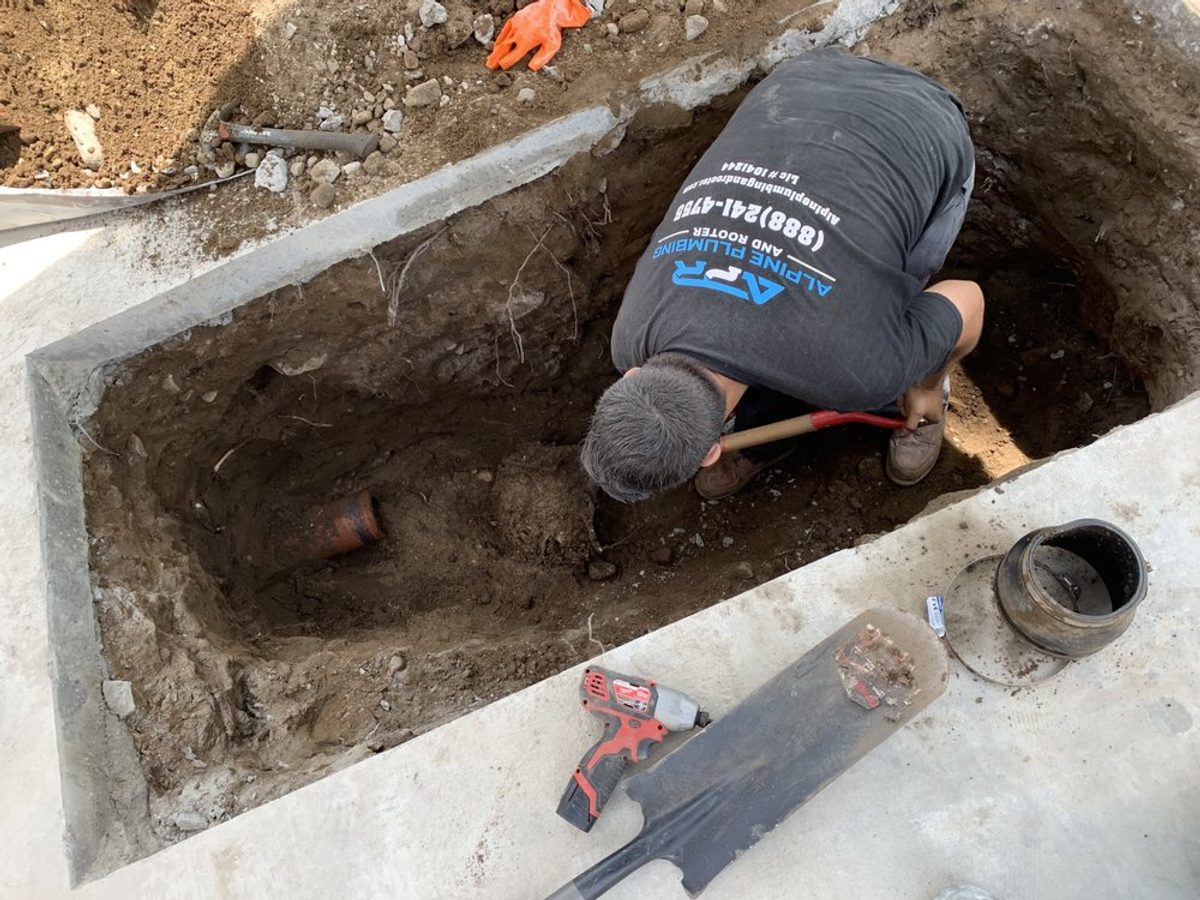
Complex installations needing new supply lines, drain access, or bypass valves cost $400-$800 or more; root removal and digging bill at $75-$200 per hour.
About half of the total water softener cost is labor. Limited access, non-standard plumbing, or code compliance push costs toward the higher end of typical ranges.
How to Prepare for Additional Charges During Installation
Business-hours scheduling saves 30 to 50 percent compared to evening and weekend appointments; trip and dispatch fees of $75-$200 are often waived if you proceed with the work.
Urgent parts surcharges add 20 to 40 percent above standard pricing, so planning installations in advance minimizes these premium charges.
Choosing the Right Water Softener for a California Home
Choosing the appropriate water softener requires matching grain capacity to household size and measured water hardness levels. The cost to install a water softener in CA varies based on these sizing decisions and resulting equipment specifications.
Professional consultation and water testing prevent costly mistakes from undersized systems or unnecessary capacity purchases. Informed selection based on actual usage patterns and water chemistry delivers optimal performance and cost-effectiveness over the system's lifespan.
Matching Grain Capacity to Household Size and Water Hardness
This same formula determines whether a home needs a 40,000-grain system or a larger unit for higher hardness.
A 48,000-grain system suits 3-4-person households with moderate hardness, while 64,000-grain units serve larger families or hardness above 15 GPG.
Evaluating Salt Vs. Salt-Free Options for Your Needs
Salt-free installations cost more upfront but deliver scale prevention without mineral removal or sodium addition, appealing to households that want low maintenance over completely soft water.
Potassium chloride alternatives for sodium-restricted diets cost three to four times more than standard salt. Evaluating whether water softeners are worth it requires balancing upfront investment against long-term savings and specific household water quality goals.
Importance of Professional Consultation and Water Testing
Verifying contractor C-36 or A license status with CSLB before hiring ensures proper credentials and consumer protections. C-36 plumbing contractor licenses and A general engineering licenses authorize water softener installation work throughout California.
CSLB represents the California State License Board, the contractor licensing authority enforcing qualification and insurance requirements. Free water testing services recommended before softener purchase establish accurate hardness levels for appropriate system sizing and technology selection.
Water Softener Cost in California: Comprehensive Pricing Insights and Practical Guidance
Water softener cost in California varies by system type, capacity, and installation complexity, so understanding these drivers helps homeowners budget accurately and pick a system matching their household's water quality needs.
Regional hardness, ongoing maintenance, and long-term operating costs all factor into total ownership beyond the initial installation. Professional water testing and NSF 44 or WQA Gold Seal certification help confirm the right size and quality.
Maintenance tips to avoid expensive repairs extend a water softener's lifespan. Regular salt monitoring, resin bed cleaning, and annual professional inspections preserve performance and prevent premature equipment failure.
Get Water Softener Installation From Alpine Plumbing, Heating, and Air
Choosing the right water softener protects your pipes, water heater, and appliances for years to come, and Alpine Plumbing, Heating, and Air makes that decision simple. Our licensed California and Arizona technicians test your water hardness, recommend the correct system size for your household, and handle installation from start to finish. Family-owned since 2017 and serving San Dimas, the San Gabriel Valley, the Inland Empire, and Lake Havasu City, AZ, our team is available 7 days a week for emergency service. Call (626) 385-4001 or request a free quote online to schedule your water softener consultation today.
Frequently Asked Questions About Water Softener Cost in California
How much does it cost to install a water softener in California?
Most California homeowners pay between $800 and $5,500 for a fully installed water softener, depending on system type and installation complexity. Salt-based systems typically run $1,200 to $3,800 installed, while salt-free systems range from $1,500 to $4,500. Installation labor accounts for roughly half the total cost, and straightforward jobs with existing plumbing loops cost significantly less than retrofits requiring new supply lines. A professional water hardness test helps confirm the right system size before you request a quote.
Is a salt-free water softener worth the extra cost?
Salt-free systems cost more upfront, generally $1,500 to $4,500 installed, but they prevent scale buildup without adding sodium to your water or requiring regular salt refills. Salt-based systems remove hardness minerals completely and typically cost less installed, delivering softened water with a 15- to 20-year lifespan. Households on sodium-restricted diets or without drain access for brine discharge often prefer salt-free technology. The right choice depends on your water hardness level, budget, and household health considerations.
How long does water softener installation take?
A straightforward water softener installation with existing plumbing loops usually takes a few hours to complete in a single visit. Installations requiring new supply lines, drain routing, or bypass valve work take longer and may need additional scheduling for permits or inspections. Complex retrofits in tight spaces or older homes with non-standard plumbing configurations can extend the timeline further. Scheduling during regular business hours also helps avoid emergency surcharges and keeps the project on track.
Do I need a permit to install a water softener in California?
Permit requirements vary by city and county, and many California jurisdictions require a plumbing permit for water softener installation, especially when new drain lines or supply connections are involved. Los Angeles City charges a $273 flat fee plus $2.84 per linear foot for connection permits, while San Bernardino County charges $151 flat for ten fixtures or less. A licensed C-36 plumbing contractor pulls the correct permits and schedules inspections as part of the installation process. Verifying your contractor's CSLB license status before hiring protects you from unpermitted work.
How do I know what size water softener I need?
System size depends on household size and measured water hardness, calculated by multiplying the number of people by 75 gallons per day, then by GPG hardness, then by 7 days. A 3- to 4-person household with moderate hardness typically needs a 40,000- to 48,000-grain system, while larger families or hardness above 15 GPG often require 48,000- to 64,000-grain systems. Free water testing establishes your actual hardness level rather than relying on regional averages, since hardness varies significantly even within the same city. Undersized systems regenerate too frequently, while oversized units waste salt and water.
Welcome to Alpine Plumbing and Rooter, serving San Dimas and the surrounding areas as your reliable source for exceptional plumbing and drainage services. We also provide reliable licensed HVAC services.
After reviewing your information, we will contact you as soon as possible.
"*" indicates required fields
Alpine Plumbing, Heating, and Air
462 Borrego Ct Unit A, San Dimas, CA 91773
CA Plumbing/HVAC License: #1041244 AZ Plumbing License: ROC 362311
Welcome to Alpine Plumbing, Heating, and Air, serving San Dimas, San Bernardino, Lake Havasu, AZ, and the surrounding areas. We are your reliable source for exceptional plumbing, Heating, and Air Conditioning needs.