Key Takeaways
- SEER2 replaced SEER in 2023 because the test now reflects more realistic airflow resistance, so numbers look lower even when the equipment performance is comparable.
- A higher SEER2 rating generally lowers annual cooling costs, but the real dollar savings depend more on local electric rates, cooling hours, and climate zone than on the label alone.
- Comparing systems only works when you match the same equipment type and confirm an AHRI-certified indoor/outdoor combination, since mismatched components can reduce efficiency.
- The best SEER2 “value” often sits in the mid-range because efficiency gains taper off at the top end, especially in mild climates with fewer cooling hours.
- Duct leakage, insulation gaps, filter restrictions, sizing errors, and poor installation can erase much of the promised SEER2 benefit, so home improvements and commissioning matter.
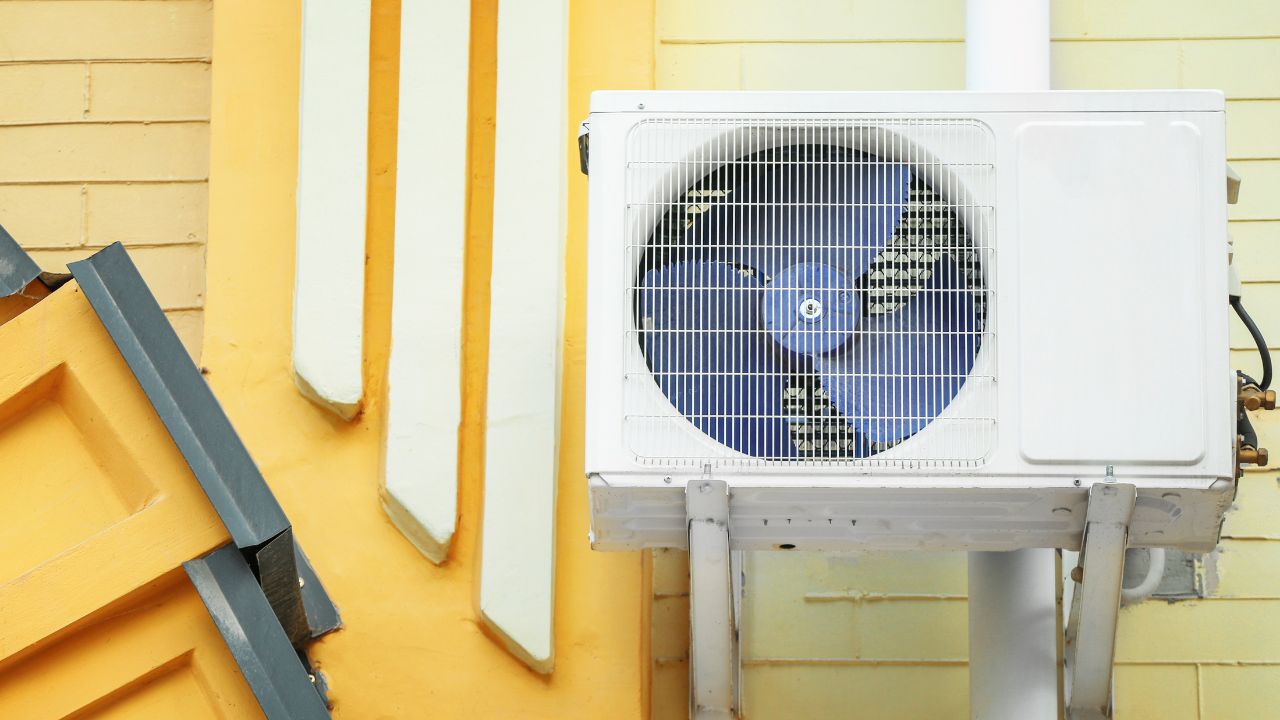
If you're shopping for a new air conditioner or heat pump, the SEER2 rating on every unit is the first number you need to understand. It replaced the original SEER metric in 2023, and the shift confused a lot of homeowners. The numbers look lower, the rules vary by region, and sales pitches don't always clarify what matters. This guide breaks down what SEER2 actually measures, how it affects home cooling efficiency, what to spend, and where a cost‑saving thermostat or an Energy Star HVAC system fits into the decision. Every section gives you facts — not fluff.
What Is SEER2, and Why Did SEER Change to SEER2?
The Department of Energy updated how it tests air conditioners and heat pumps starting January 1, 2023. The old rating was SEER. The new one is SEER2. The equipment didn't change overnight — the measuring stick did. Understanding what shifted and why keeps you from misreading spec sheets or overpaying based on outdated SEER rating comparison charts.
SEER2 Measures How Much Cooling You Get Per Dollar of Electricity
SEER2 stands for Seasonal Energy Efficiency Ratio 2. In plain terms, it divides the total cooling your system produces over a full season (measured in BTUs) by the total electricity it consumes (measured in kWh). A higher SEER2 rating means the unit wrings more cooling out of every kilowatt-hour you pay for. Think of it like fuel economy on a car — a higher number means you go further on the same tank.
The DOE Switched to a Harder, More Realistic Lab Test
The old SEER test (Appendix M) pushed air through equipment at just 0.1 inches of water column static pressure — essentially a wide-open duct with no resistance. Real homes have filters, bends, dampers, and long duct runs. The new Appendix M1 test raises that pressure to 0.5 inches of water column, a fivefold increase that mirrors what systems actually face in the field.
The DOE started this process with a 2014 Request for Information and finalized the rule on January 6, 2017. Once the January 2023 compliance date hit, every newly manufactured unit had to carry an EnergyGuide label showing its SEER2 value. The update also introduced two companion metrics: EER2 for peak cooling performance and HSPF2 for heat-pump heating efficiency.
A Lower SEER2 Number Does Not Mean Worse Equipment
This is the single biggest point of confusion in any seer rating comparison. SEER2 values run about 4–7 % lower than the old SEER numbers for the exact same hardware. A unit previously labeled 14 SEER now shows roughly 13.4 SEER2. One rated 16 SEER lands near 15 SEER2. The quick math: multiply the old SEER by 0.95 to approximate the SEER2 equivalent.
The equipment didn't get less efficient. The test got harder. In fact, units that meet the new M1 minimums are approximately 7 % more efficient than units that barely passed under the old M standard. So if you're comparing a 2022 spec sheet side by side with a 2024 spec sheet, don't assume the newer unit is worse because the number dropped. It was tested under conditions closer to what your system will actually experience behind your walls.
What Does the SEER2 Rating Indicate About a Home's HVAC System, and How Can Homeowners Interpret It for Savings?
A SEER2 rating tells you how much electricity a system needs to cool your home over an entire season. The higher the number, the less you pay to run it. But translating that number into actual dollar savings depends on your climate, your electric rate, and how many hours your system runs each year. Here's how to read the rating like a bill forecast, not just a spec-sheet detail.
Higher SEER2 Translates Directly to Lower Annual Cooling Costs
Start with a common baseline: a 3-ton (36,000 BTU) system running 1,800 cooling hours per year at $0.14/kWh. At 13.4 SEER2, that system pulls roughly 2,690 kWh annually and costs about $377 to operate. Swap in an 18.0 SEER2 unit and consumption drops to around 1,994 kWh — about $279 per year, saving you roughly $98 every cooling season. Over a typical 15-year equipment lifespan, upgrading to 17.0 SEER2 saves around $1,200, an 18.0 SEER2 saves approximately $1,470, and a 20.0 SEER2 saves close to $1,890.
Those numbers shift with local conditions. In Miami, where a 3-ton system runs about 1,320 cooling hours at 11.86 ¢/kWh, jumping from a 14 SEER unit to a 16 SEER2 saves roughly $67 per year — a 16 % cut. Moving to 18 SEER2 saves about $105 per year, a 26 % reduction. The takeaway for any seer rating comparison: plug in your local rate and your estimated run hours before trusting a generic savings chart.
Your Electric Rate and Climate Zone Swing the Math More Than Most People Expect
National electricity rates range from $0.08 to $0.35 per kWh. That spread changes everything. An 18 SEER2 upgrade that pays for itself in roughly four years at $0.25/kWh takes closer to eight years at $0.12/kWh. If your utility charges time-of-use peak rates — often $0.25 to $0.50/kWh on summer afternoons — a higher-efficiency unit shaves costs precisely when electricity is most expensive.
Geography matters just as much. In hot, humid states like Florida, Texas, and Louisiana, cooling seasons stretch eight to ten months with 2,000–3,000+ run hours, and homeowners can see 20–25 % lower cooling costs with a high-efficiency system. In the Pacific Northwest or northern states, cooling seasons last three to five months with only 800–1,500 run hours, trimming costs by just 10–15 %. The same SEER2 rating delivers very different home cooling efficiency depending on where you live.
Always Compare Matched Systems Within the Same Region and Equipment Category
Not every system is held to the same minimum. Northern states require 13.4 SEER2 for split-system air conditioners under 45,000 BTU. Southern and southwestern states set the floor at 14.3 SEER2, and the Southwest adds mandatory EER2 thresholds on top of that. Heat pumps follow their own scale: split-system models must hit at least 14.3 SEER2 and 7.5 HSPF2, while packaged heat pumps need 13.4 SEER2 and 6.7 HSPF2.
When comparing quotes, always confirm the AHRI-certified matched combination — the specific indoor coil or air handler paired with the outdoor condenser. Manufacturers test and rate these as a set. Mixing brands or mismatching components can drop the system below its published SEER2 rating, and you'll never see the efficiency you paid for. Verify any pairing at www.ahridirectory.org before signing a contract.
What SEER2 Rating Should Homeowners Look For in Their Climate and Budget?
Picking a SEER2 rating is really a climate-and-budget decision, not a "higher is always better" decision. The right number balances upfront equipment cost against the energy savings you'll actually capture over the system's life. Here's how the tiers break down and where each one makes financial sense.
Good, Better, and Best Map to Three Distinct Equipment Tiers
A basic system rated 14.3–15 SEER2 uses a single-stage compressor and costs roughly $9,800 on a 1,700 sq ft home. It meets code, keeps costs low, and works fine in mild climates or homes that only run the AC a few months a year. Mid-tier units in the 16–17 SEER2 range step up to two-stage compressors, install for about $11,000–$13,000, and deliver 15–20 % energy savings over basic models, along with noticeably better humidity control and quieter operation.
Premium systems at 18+ SEER2 feature variable-speed compressors, install in the $13,800–$16,200 range, and cut energy use 25–30 % compared to entry-level equipment. They also tend to qualify for Energy Star HVAC rebates and federal tax credits, which help offset the higher price tag. The jump in comfort — tighter temperature control, near-silent operation, superior dehumidification — is the main reason many homeowners choose this tier even before running the savings math.
Premium SEER2 Pays Back Fastest in Hot Climates and High-Rate Utility Areas
If you live in a hot-humid market like Miami, Houston, or New Orleans, your system logs 2,000–3,000+ cooling hours per year. At that usage level, the price premium for 18+ SEER2 typically pays back in five to eight years and generates $2,000–$4,000+ in lifetime savings — a strong return on a piece of equipment that lasts 15–20 years.
High electricity rates accelerate the math even further. In California ($0.25–$0.35/kWh), Hawaii ($0.30–$0.40/kWh), or New England ($0.18–$0.25/kWh), payback periods shrink by 30–50 % compared to regions with cheaper power. Homeowners planning to stay in the house ten years or more benefit the most, because they capture the full payback window and any bump in resale value that a high-efficiency system adds.
Mid-Range SEER2 Often Delivers the Smartest Value Per Dollar
Efficiency gains follow a curve of diminishing returns. Going from 13.4 to 16 SEER2 nets roughly 19 % more efficiency — the single best bang for your buck in any SEER rating comparison. From 16 to 18, you gain about 12.5 %. From 18 to 20, roughly 11 %. And from 20 to 22, only about 10 %. Each step costs more but returns proportionally less.
In a mild climate like Seattle, the numbers make this concrete. Annual cooling costs at 14 SEER2 run $80–$120; at 18 SEER2, they drop to $65–$95. That's only $15–$25 per year in savings — nowhere near enough to justify a $4,000 price premium over the system's life. Budget-constrained homeowners or anyone planning to sell within five years generally get a better return from a 14–16 SEER2 unit paired with proper sizing and quality installation than from chasing the highest rating on the shelf.
A high SEER2 rating on the spec sheet doesn't guarantee low bills or great comfort once the system is bolted into your house. Ductwork, insulation, sizing, installation quality, and how you control the system all determine whether you capture the rated home cooling efficiency or leave a chunk of it on the table. This section covers what the rating alone can't tell you.
Duct Leaks, Poor Insulation, and Clogged Filters Silently Erase Efficiency Gains
Leaky ducts are the biggest hidden drain. In a typical home, 20–30 % of conditioned air escapes through gaps in the duct system before it ever reaches a room. The fix is mastic sealant on every joint — not duct tape, which dries out and peels — plus R-6 to R-8 insulation on any run that passes through an unconditioned attic or crawlspace.
The building envelope matters just as much. Poor attic insulation alone can inflate cooling costs by 25–50 %; the DOE recommends R-38 to R-60, depending on your climate zone. Air leakage through the envelope — around attic hatches, recessed lights, plumbing, and electrical penetrations — accounts for another 25–40 % of cooling energy loss. And don't overlook the filter: a dirty air filter chokes airflow by 15–30 % and can cut system efficiency by 5–15 %. Swap it every one to three months.
Wrong Sizing and Sloppy Installation Can Cost More Than a Lower SEER2 Rating
A Manual J load calculation is the industry-standard method for sizing equipment correctly. It accounts for square footage, insulation levels, window area, orientation, occupancy, and local climate data. Rough rules of thumb exist — one ton per 400–600 sq ft in moderate climates, one ton per 300–400 sq ft in hot-humid areas, one ton per 500–700 sq ft in mild zones — but they're starting points, not substitutes for the real calculation.
Get the sizing wrong, and efficiency suffers either way. An oversized system short-cycles: it cools the air fast but shuts off before removing enough humidity, leaving rooms feeling cool but sticky. An undersized system runs nonstop and never reaches the thermostat setpoint. Even with correct sizing, expect 10–20 % lower real-world efficiency than the published SEER2 rating due to duct leakage, imperfect refrigerant charge, and airflow restrictions. Budget an additional 10 % for quality labor — a skilled installer who verifies charge and static pressure is worth more than an extra point of SEER2.
A Cost‑Saving Thermostat and Variable-Speed Equipment Multiply Every Efficiency Dollar
Simple thermostat discipline goes further than most homeowners realize. Each degree of setback saves roughly 3–5 % on cooling costs. The DOE recommends 78 °F when you're home and 82–85 °F when you're away. A cost‑saving thermostat like the Nest, Ecobee, or Honeywell Home automates those shifts through learned schedules, geofencing, and real-time energy reports, delivering typical savings of 10–23 % annually without any extra effort after setup.
Pair that smart control with a variable-speed compressor — the type found in premium Energy Star HVAC systems — and the gains compound. Variable-speed units run at lower speeds most of the time, matching output to the actual load rather than cycling full-blast on and off. The result is precise temperature control, far better dehumidification, and 50–70 % quieter operation compared to a single-stage system. For homeowners who value comfort as much as efficiency, this combination often matters more than the SEER2 number itself.
How Can Homeowners Decide What to Buy Using a Step-by-Step Process?
Reading specs and savings charts is useful, but it doesn't replace a clear buying sequence. The five steps below move from your personal priorities down to the contractor conversation, so nothing gets skipped and you avoid the most expensive mistakes.
Step 1 — Identify Your Priority Before You Shop
Emergency replacements and planned upgrades are different buying situations. If your system just died in July, speed and availability matter — a 14–16 SEER2 unit installed correctly this week beats a back-ordered premium model next month. Comfort-focused buyers have the luxury of targeting variable-speed systems at 18+ SEER2 for humidity control, quiet operation, and tighter temperature swings. If lowering bills is the main driver, start with your current utility statements, estimate your annual AC spend, and calculate the dollar difference at each SEER2 tier before committing to a price bracket.
Step 2 — Benchmark Your Existing System's Age and Efficiency
HVAC equipment has a typical life expectancy of 15–20 years, and efficiency drops roughly 5 % per year without maintenance. If your unit is a decade old and has been lightly serviced, it's likely running well below its original rating. The upgrade math from older equipment is dramatic: moving from SEER 10 to SEER 16 cuts cooling wattage by about 38 %, and jumping from SEER 8 to SEER 20 represents roughly 150 % more rated efficiency. In practical terms, replacing a SEER 10 or SEER 13 system with a SEER 16–18 unit can yield $300–$900 in annual cooling cost savings depending on climate and usage.
Step 3 — Fix the House Before You Upgrade the Hardware
Putting a high SEER2 rating into a leaky house is like buying premium fuel for a car with bald tires. Double-pane Low-E windows cut solar heat gain by 30–50 % compared to single-pane glass. Sealing and insulating ductwork recaptures the 20–30 % of conditioned air that typically escapes through gaps — often a better return per dollar than jumping up a SEER2 tier. A blower-door test identifies where the remaining 25–40 % of cooling energy slips through the building envelope, so air-sealing work targets the right spots. Handle these items first, and whatever SEER2 level you choose will deliver closer to its full rated home cooling efficiency.
Step 4 — Match SEER2 to Your Payback Timeline and How Long You'll Stay
Three real-world scenarios illustrate the range. In Houston, upgrading from 14.3 to 18 SEER2 costs roughly $4,000 more, saves about $600 per year, and pays back in 6.7 years. Layer on a $600 federal tax credit and a $400 utility rebate, and the net premium drops to $3,000 with a five-year payback — strong for any homeowner planning to stay a decade or more. In Charlotte, a 14.3 to 17 SEER2 jump costs $2,500 extra, saves $250 per year, and breaks even at ten years — reasonable if you're staying put. In Seattle, 14.3 to 16 SEER2 adds $1,500, saves just $100 annually, and takes 15 years to pay back, leaving only zero to five years of net savings before the equipment reaches the end of life.
Step 5 — Ask Contractors These Three Questions to Keep Bids Comparable
First, require specific model numbers and the AHRI-matched indoor/outdoor combination on every quote. A bid that just says "16 SEER2 system" without listing the exact coil and condenser pairing leaves too much room for substitution. Second, confirm the contractor will perform a Manual J load calculation rather than defaulting to "same size as the old one." Third, ask whether the quoted price includes full commissioning — refrigerant charge verification, static-pressure testing, and measured airflow — not just a visual check. These three details separate a professional install from one that quietly undercuts the SEER2 rating you paid for.
Ready to Find the Right SEER2 System for Your Home? We Can Help.
The smartest SEER2 choice comes down to your climate, your budget, and how long you plan to stay. Mid-tier systems deliver the best value for most homeowners. Premium units pay back fastest in hot climates and high-rate utility areas. But no rating replaces proper sizing, quality installation, and a well-sealed home.
At Alpine Plumbing Heating and Air, we perform Manual J load calculations, match AHRI-certified equipment to your home, and handle every step from selection through commissioning. We also help you navigate federal tax credits and local rebates so nothing gets left on the table. Contact us today to schedule a consultation and get a system that fits your home — not just a spec sheet.