Key Takeaways
- Hydro jetting clears drains by cleaning the full pipe wall, while snaking often restores flow temporarily but leaves buildup behind that causes repeat clogs.
- Recurring backups are commonly caused by grease mats, soap scum and biofilm, mineral scale, roots, and “flushable” products that catch on rough pipe interiors.
- Hydro-jetting is preferred when buildup coats the line, roots keep returning, or long main laterals need full restoration that cables and chemicals cannot achieve.
- A camera inspection helps confirm pipe condition and clog type, reducing the risk of jetting fragile, corroded, misaligned, or partially collapsed lines.
- If the pipe is structurally damaged, trenchless lining or replacement is often the smarter long-term fix because cleaning cannot correct offsets, cracks, or collapse.
Most homeowners don't think about their sewer lines until water stops draining. When that happens, the go-to fix is usually a drain snake. It works for simple clogs, but it doesn't solve the deeper problem. Buildup stays on the pipe walls. Roots keep growing back. Grease re-accumulates within weeks. Hydro jetting is a drain cleaning technique that uses pressurized water to fully scour the inside of a pipe, not just punch through what's blocking it. This guide explains how it works, when it makes sense, and when a different pipe repair solution is the smarter call.
What Is Hydro-Jetting, and How Does It Clear Drains Differently Than Snaking?
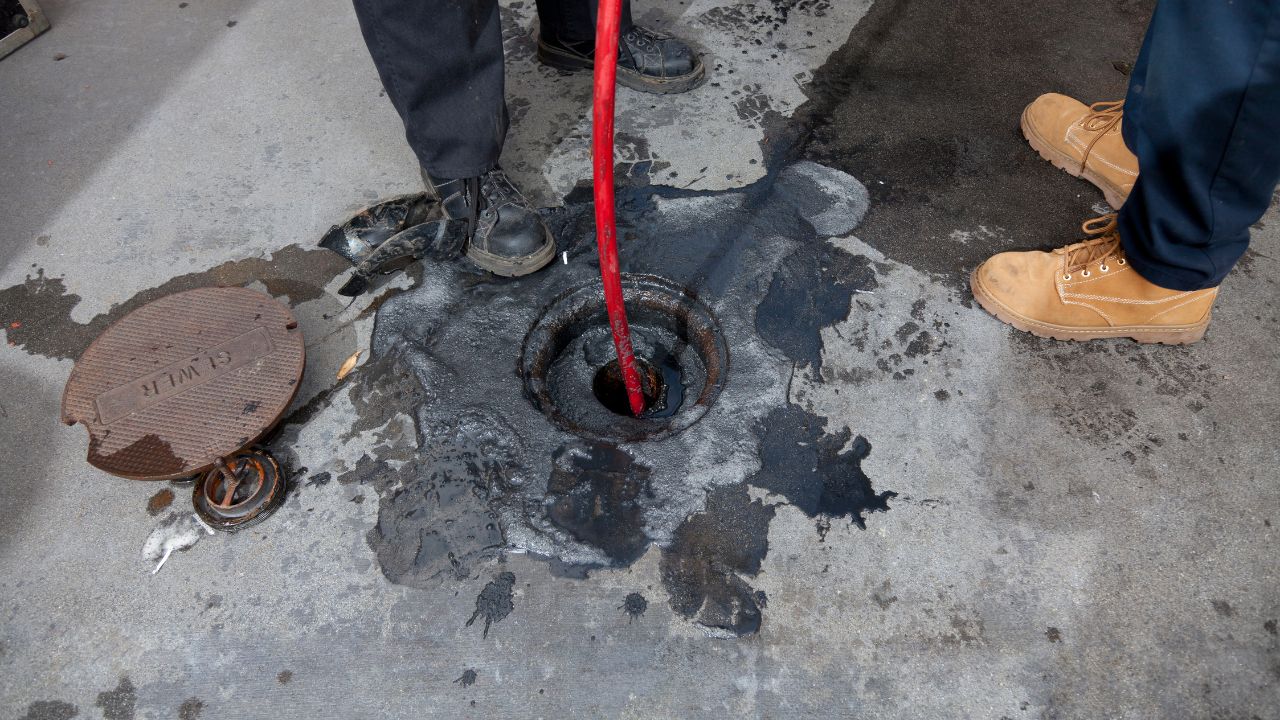
A hydro jetting service uses a specialized machine to push high-pressure water through your sewer or drain line. The equipment includes a pump, a flexible hose, and an interchangeable nozzle designed for the specific type of blockage. A plumber feeds the hose into the pipe through a cleanout access point, and pressurized water does the rest. Snaking, by comparison, uses a rotating metal cable to bore through a clog. It restores flow, but it leaves everything on the pipe walls exactly where it was. That distinction matters because wall buildup is what causes most clogs to come back.
What Water Pressure Is Used in Hydro-Jetting, and What Does It Actually Remove?
Standard residential hydro-jetting operates between 1,500 and 4,000 PSI. Heavy-duty commercial and municipal units can reach 8,000 PSI. Pressure alone doesn't tell the full story, though. Flow rate, measured in gallons per minute, determines how much flushing power the system delivers. Common residential units run at least 4 GPM, while larger equipment pushes 8 to 20 GPM to handle pipes between 3 and 18 inches in diameter.
That combination of pressure and volume is what makes professional plumbing teams effective against the full range of common blockages. A single hydro jetting service removes grease and fats, mineral scale, tree roots, silt, sand, hair, soap scum, food particles, accumulated sludge, and even bacterial growth lining the pipe interior.
How Does Hydro-Jetting Clean Pipe Walls Instead of Just Punching a Hole Through a Clog?
The nozzle design is the key. Hydro-jetting nozzles have forward-facing jets that break apart the blockage and rear-facing jets that propel the hose deeper into the line while scouring the pipe walls behind it. This means the water contacts the entire circumference of the pipe as it moves through, stripping away every layer of buildup it passes.
A drain snake does the opposite. The auger tip spins through the center of the clog and creates a narrow channel. Water flows again, so the problem feels solved. But the grease, scale, and debris coating the pipe walls remain untouched. That leftover buildup narrows the pipe diameter and catches new debris almost immediately. This is exactly why snaking often leads to recurring blockages within weeks or months, while sewer restoration through jetting keeps lines clear far longer.
What Types of Drain Lines Can Be Hydro-Jetted Safely in Most Homes?
Not every pipe can handle high-pressure water. The answer depends on the material and its current condition. PVC and ABS pipes are the most jetting-friendly. They're smooth, durable, and tolerate moderate pressures well as long as they aren't already cracked or poorly joined. Cast iron pipes can also be jetted, but a professional plumbing technician needs to check for internal corrosion and assess the remaining wall thickness first. Corroded cast iron is weaker than it looks and can fail under pressure. Clay pipes fall into a similar category. If they're intact and not brittle, jetting is safe. If age has made them fragile, the risk outweighs the benefit.
One material that should never be hydro-jetted is Orangeburg pipe. Made from layers of compressed wood pulp and tar, Orangeburg was widely used through the mid-20th century and has a limited lifespan. It's too soft and structurally weak to withstand any significant water pressure. If your home has Orangeburg lines, the right pipe repair solution is replacement, not cleaning. For all other materials, hydro-jetting equipment handles pipes from 1 inch up to 18 inches in diameter when paired with the correct nozzle. A camera inspection before service confirms whether your specific pipes are good candidates, which is a step any reputable drain cleaning technique provider will recommend.
What Causes Recurring Clogs That Hydro-Jetting Is Designed to Fix?
A single clog is usually a one-time obstruction. Recurring clogs are a different problem entirely. When blockages keep returning in the same line, the cause is almost always buildup that coats the pipe walls and gradually narrows the opening. Snaking clears a path through the middle, but the material clinging to the walls stays put and starts collecting new debris immediately. A hydro jetting service addresses the root cause by stripping those walls clean. Here are the four most common sources of repeat blockages in residential drain and sewer lines.
Why Does Grease Buildup Keep Coming Back in Kitchen Drains and Main Lines?
Fats, oils, and grease — commonly called FOG — are the leading cause of recurring kitchen drain clogs. When FOG goes down the drain in liquid form, it cools and solidifies inside the pipe. It adheres to the walls, layer by layer, gradually reducing the pipe's internal diameter until water can barely pass through. Snaking pushes a narrow channel through the grease mat, but everything on the walls remains. Within weeks, the channel closes again.
This is why restaurants and food service operations schedule professional plumbing drain cleaning every one to three months. The volume of FOG in commercial kitchens overwhelms pipes fast. Residential kitchens accumulate the same material at a slower pace, but the outcome is identical if the buildup isn't fully removed. Hydro-jetting emulsifies solidified grease on contact and flushes the entire mass downstream, restoring full pipe diameter instead of just poking a temporary hole.
Bathroom drains deal with a different mix of materials, but the buildup pattern is the same. Soap residue, hair, skin cells, and general sludge collect along the pipe walls, especially in sections with low water flow. These deposits start thin but compound over time into dense, sticky layers that trap everything else that passes through.
Hard water accelerates the problem. Minerals in the water react with soap and other substances to form scale deposits on the pipe's inner surface. Scale creates a rough texture that catches hair, sludge, and debris far more easily than a smooth pipe would. Bacterial biofilm adds another layer, producing foul odors and further narrowing the opening. As a drain cleaning technique, hydro-jetting strips all of these layers at once — soap scum, mineral scale, biofilm, and trapped debris — while also eliminating the bacteria responsible for drain odors.
How Do Tree Roots Enter Sewer Lines, and Why Do They Cause Repeat Backups?
Tree roots are drawn to moisture and nutrients. They find sewer lines through hairline cracks, deteriorated joints, or loose fittings. Even a tiny gap is enough. Once a root enters the pipe, it grows rapidly in that nutrient-rich environment, branching into dense networks that catch toilet paper, grease, and solid waste. The result is a blockage that gets worse with every flush.
Hydro-jetting cuts through root masses and clears the line, but it doesn't seal the entry point. Roots will grow back through the same crack or joint, often within months. Properties with large trees near sewer lines may need jetting on a recurring schedule just to stay ahead of regrowth. For a permanent fix, the real pipe repair solution is addressing the crack or joint itself — through lining, spot repair, or full replacement. Jetting handles the symptom. Sewer restoration handles the cause.
When Do "Flushable" Wipes and Hygiene Products Create Blockages That Won't Stay Gone?
The label says flushable. The pipe says otherwise. So-called flushable wipes do not break down the way toilet paper does. They hold their shape, snag on pipe wall irregularities, and accumulate into dense masses that resist normal water flow. Feminine hygiene products, paper towels, and cotton swabs cause the same problem. These items should go in the trash, not the toilet.
Once these products lodge inside a drain line, snaking may pull some material out, but anything caught on rough spots or buildup stays behind and collects more debris. Preventing these clogs is simpler and cheaper than clearing them. Only human waste and toilet paper belong in the drain. Installing strainers in sinks, showers, and tubs catches hair, food particles, and small objects before they enter the system. When non-flushable products have already created a recurring blockage, a professional hydro jetting service is typically the most effective way to fully clear the line and restore normal flow.
When Is Hydro-Jetting the Preferred Method for Clearing Drains, and What Situations Does It Solve That Other Methods Cannot?
Every drain-clearing method has a use case. Snaking works for isolated, soft clogs. Enzyme cleaners handle light maintenance. Chemical openers dissolve minor buildup. But none of these methods clean the pipe itself. When the problem goes beyond a single obstruction — when buildup coats the walls, roots keep returning, or the line is too long for a cable to reach — hydro-jetting is the only drain cleaning technique that fully resolves the issue.
When Do Repeated Clogs Suggest Pipe-Wall Buildup Instead of a Single Obstruction?
A one-time clog usually means something specific got stuck. Repeated clogs in the same line tell a different story. When snaking restores flow, but the problem returns within weeks or months, the blockage isn't a single object. It's an accumulated buildup, narrowing the pipe from every direction. Grease, scale, biofilm, and debris coat the walls and re-collect new material as soon as a channel is cleared through the center.
Hydro-jetting addresses this directly. Instead of boring through the middle, it strips the walls back to near-original diameter. The pipe regains its full capacity, and there's no residual layer left to catch new debris. For lines with chronic repeat blockages, this is the difference between a temporary fix and an actual sewer restoration that holds.
Traditional drain snaking costs $100 to $400 per visit. It's affordable upfront, but it doesn't clean the pipe walls. If the underlying buildup stays, you're paying for the same service again in a few months. Enzyme cleaners work slowly on organic material and can't touch mineral scale or root masses. Chemical drain openers are faster but introduce caustic substances that corrode pipes over time and send pollutants into groundwater, lakes, and streams.
A hydro jetting service costs more per visit but pays off over a longer timeline. Because it removes everything from the pipe walls, clog recurrence drops significantly. Fewer service calls, fewer emergency backups, and no chemical damage to the plumbing system. As a pipe repair solution for chronic buildup, it outperforms every alternative on durability alone. It's also the only option among these methods that is completely chemical-free, making it the safer choice for both the pipes and the environment.
What Problems Can Hydro-Jetting Solve in Long Main Sewer Lines That Snaking Often Misses?
Residential lateral lines are typically 3 to 12 inches in diameter, with 4 inches being the standard for most homes. Main sewer lines are far larger, ranging from 6 to 96 inches. A mechanical snake has limited reach and cutting power. In long or large-diameter lines, the cable loses torque, can't contact the full pipe wall, and often fails to reach the blockage at all.
Hydro-jetting scales to match the pipe. City and county crews use equipment rated at 40 to 60 GPM for 8- to 12-inch mains, and 80-plus GPM for larger infrastructure. That volume of water fills the pipe cross-section and flushes debris across distances that a snake simply cannot cover. For homeowners, this matters most when the problem sits deep in the main lateral — the stretch running from the house to the public sewer connection. Professional plumbing teams equipped for jetting can clear these lines completely, where snaking often leaves the far end untouched.
When Is Hydro-Jetting Helpful for Heavy Scale, Grease Mats, and Root Intrusion?
Heavy-duty blockages require heavy-duty cleaning. Thick grease mats resist snaking because the auger slides through soft material without removing it. Mineral scale is the opposite problem — it's too hard for a standard cable to break apart. Root masses combine both challenges, forming dense, tangled networks that trap grease and debris behind them. Hydro-jetting handles all three. High-pressure water emulsifies grease, fractures scale, and cuts through root growth in a single pass.
Jetting also plays a critical role as a pre-repair step. Before procedures like CIPP pipe lining or patching, the interior surface must be completely clean for the new material to bond properly. Without thorough cleaning first, the lining can fail. This makes hydro-jetting an essential part of any lasting sewer restoration project. For severe root intrusion, jetting clears the bulk of the growth, though extreme cases may require additional root removal services ranging from $100 to $600, depending on the extent of the damage.
What Are the Risks of Hydro-Jetting, and When Should It Be Avoided?
Hydro-jetting is powerful, but power without proper assessment causes damage. The same pressure that strips grease and cuts roots can crack weakened pipes, blow out corroded joints, and turn a routine cleaning into an emergency repair. A responsible hydro jetting service always evaluates the line before turning on the machine. Knowing when not to jet is just as important as knowing when to use it.
When Can Old, Fragile, or Partially Collapsed Pipes Make Jetting Unsafe?
High-pressure water amplifies whatever condition already exists inside a pipe. Healthy pipes handle it without issue. Pipes with existing cracks, thinning walls, or structural corrosion can split, burst, or collapse entirely under the same pressure. The damage isn't gradual — it happens during the service, and the result is a bigger problem than the original clog.
Pipe age increases the likelihood of deterioration, but age alone isn't the deciding factor. A well-maintained 50-year-old line might jet safely, while a poorly installed 15-year-old pipe might not. Condition is what matters. One well-documented case involved a homeowner who attempted DIY hydro-jetting on old cast iron pipes. The pressure cracked the line and caused water damage, turning what would have been a $400 professional plumbing cleaning into a $3,000 repair. The lesson is straightforward: assessment first, pressure second.
Why Should a Camera Inspection Happen Before Hydro-Jetting in Many Cases?
A camera inspection removes the guesswork. A small waterproof camera feeds through the line and shows the exact location of the blockage, the type of material causing it, and the condition of the pipe walls along the way. It confirms whether the pipe can handle high-pressure water before anyone turns the equipment on.
Sewer line camera inspections cost between $275 and $1,800, depending on the length and accessibility of the line. That cost is minor compared to the potential consequences of jetting a compromised pipe. Without an inspection, especially in older homes where pipe material and condition are unknown, hydro-jetting becomes a gamble. Any reputable drain cleaning technique provider will recommend — or require — a camera inspection before starting work on lines with uncertain histories.
Can Hydro-Jetting Cause Leaks, and What Conditions Increase That Risk?
Yes. Improper pressure settings, wrong nozzle selection, or poor technique can damage plumbing seals, fittings, and fixture connections. The risk goes up in older systems where joints have loosened or seal material has degraded over decades of use.
There's also a risk with blockages themselves. If a clog is too dense or solid for the water pressure to break apart, the force can push the mass further down the line and make the blockage worse. In some cases, the pressure backs up behind the obstruction and forces water back toward the property, causing sewage backflow into the home. Trained operators manage this by starting at lower pressure settings and increasing gradually, adjusting the approach based on how the line responds. This is a core reason why professional plumbing service matters for hydro-jetting — the equipment is available for purchase, but the judgment required to use it safely is not something a homeowner can replicate without training.
When Is Pipe Repair or Replacement the Smarter Solution Than Jetting?
When the pipe itself is the problem, cleaning it won't help. Collapsed pipes have no interior left to clean. Severely misaligned sections create offsets where debris will always catch, regardless of how clean the walls are. Extensive corrosion means the pipe wall is actively deteriorating, and adding high-pressure water only accelerates the failure. In all of these situations, the right pipe repair solution is structural — lining, bursting, or full replacement.
Sewer line replacement runs $60 to $250 per linear foot, with total project costs ranging from $3,000 to $25,000 depending on length, depth, and access difficulty. Trenchless methods like CIPP lining or pipe bursting offer a less disruptive alternative at $80 to $250 per linear foot, with lined pipes lasting up to 50 years. Traditional excavation takes three to seven days for the plumbing work alone, while trenchless sewer restoration typically finishes within one to two days. If a camera inspection reveals structural failure, skipping the jetting and going straight to repair saves both time and money.
Stop Guessing and Start With the Right Fix — Call Alpine Plumbing Heating and Air
Recurring clogs waste time and money when the wrong method keeps getting repeated. Hydro-jetting solves what snaking cannot by cleaning the entire pipe, not just punching through the blockage. But it's not always the right call. Damaged pipes need repair, not pressure. That's why we start every job with a proper diagnosis — camera inspection, honest assessment, and the correct solution for your specific situation. Whether you need a one-time clearing or a full sewer restoration plan, we have the equipment and the experience to get it done right. Contact Alpine Plumbing Heating and Air today to schedule an inspection.