Finding the best AC system for Southern California means matching equipment to an extended cooling season and frequent triple-digit heat days that demand air conditioning systems built to perform efficiently when temperatures climb above 100°F. Homeowners can review Alpine's AC installation and repair services in San Dimas for a sense of how local technicians size these systems before comparing the details below. Choosing the right system involves balancing upfront costs, long-term energy savings, and the ability to maintain comfort during heat waves that stress equipment beyond standard test conditions.
This guide compares central air conditioners, ductless mini-splits, and air-source heat pumps on cost, efficiency, rebates, and durability for Southern California's hot, dry climate. Homeowners will find data on installation pricing, monthly operating costs, and the equipment standards that took effect in 2026.
Key Takeaways
Central split systems and ductless mini-splits dominate the Southern California market, with SEER2 ratings of 15–22 and 20–33, respectively
Installation costs range from $3,500 to $19,400 depending on system type, home size, and ductwork requirements
Southern California Edison residential rates average 34.5¢/kWh, making high-efficiency equipment essential for controlling monthly cooling costs
TECH Clean California and HEEHRA single-family incentives are fully reserved as of early 2026, requiring homeowners to verify current rebate availability directly
Proper maintenance extends system lifespan to 15–20 years, while coastal corrosion can reduce heat pump longevity to 7–12 years
Best AC Systems for Southern California's Hot, Dry Climate
Central split systems, ductless mini-splits, and air-source heat pumps represent the primary air conditioning systems California homeowners install today. Each configuration offers distinct advantages depending on existing ductwork, zoning needs, and whether heating is required.
Central Split Systems Operate Using Existing Ductwork in SoCal Homes
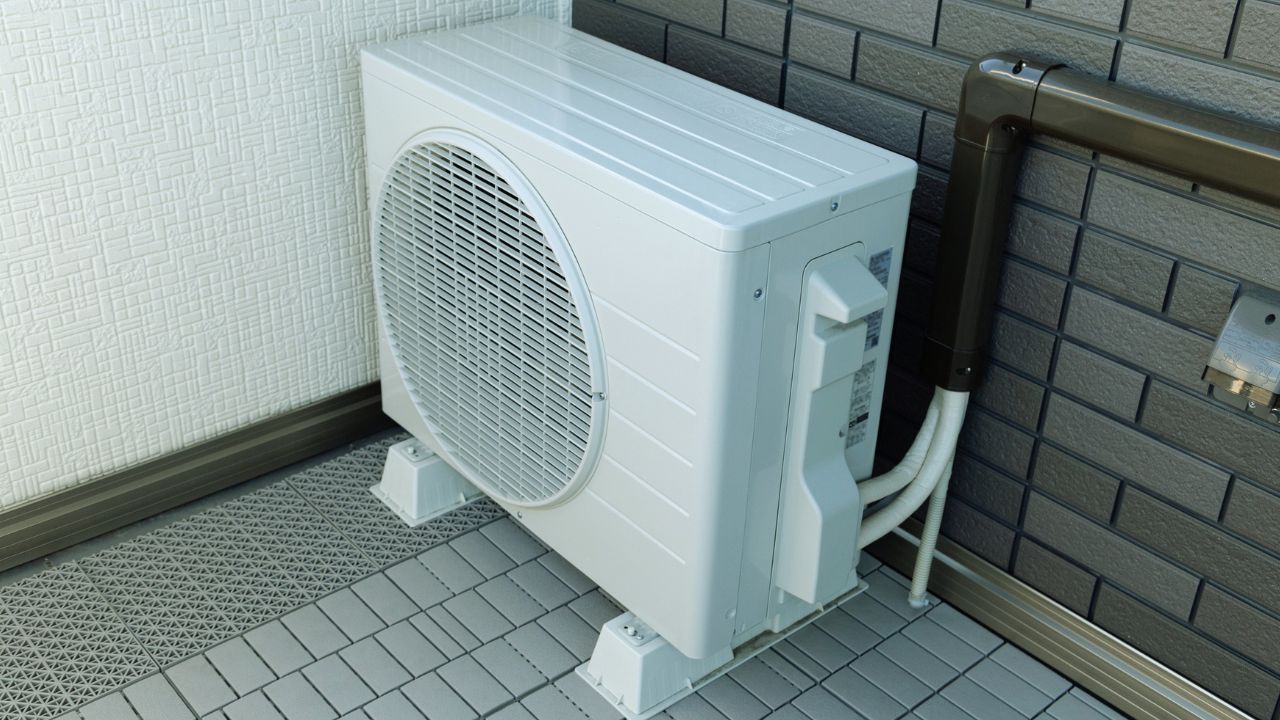
Central split systems pair an outdoor condensing unit with a separate indoor furnace or air handler connected through refrigerant lines and existing ductwork. These systems remain standard in San Dimas and San Gabriel Valley single-family homes where duct infrastructure already exists.
To handle sustained 100°F-plus days common across Southern California, central split systems require high-SEER2 equipment that maintains cooling capacity under extreme outdoor temperatures. Central air heat pumps typically achieve SEER2 ratings of 15–22, though duct losses waste 15–30% of conditioned air per ENERGY STAR estimates.
Ductless Mini-Splits Suit Southern California Homes Without Ductwork
Ductless mini-split systems eliminate ductwork entirely by delivering conditioned air directly from wall-mounted or ceiling cassette indoor units connected to an outdoor heat pump. Room additions, accessory dwelling units, and homes without existing ductwork benefit most from this configuration.
Ductless mini-splits typically achieve SEER2 ratings of 20–33, substantially higher than ducted central systems. By avoiding duct losses that waste 15–30% of energy, ductless systems reduce monthly operating costs while providing zone-by-zone temperature control.
Air-Source Heat Pumps Are Gaining Popularity in California
Air-source heat pumps deliver both heating and cooling from a single outdoor unit, eliminating the need for separate air conditioning and furnace equipment. Full system replacements increasingly favor heat pumps where rebates offset higher initial costs.
California's decarbonization initiatives and utility programs have accelerated heat pump adoption despite equipment prices rising 10–15% with the 2026 refrigerant transition. Heat pumps qualify for utility incentives unavailable to AC-only systems, though program funding fluctuates frequently.
Best AC System Costs Vary by System Type and Home Size
Installation costs depend on system type, home square footage, existing infrastructure, and refrigerant mandates that took effect in 2026. Understanding these variables helps homeowners budget accurately and compare quotes from contractors.
Typical Installation Costs by System Type
Central air conditioning replacement in homes with existing ductwork costs $3,500–$14,000, with mid-range installations averaging $6,600 nationally. The national 2026 average central AC cost sits at $5,992 for equipment and labor combined.
Single-zone ductless mini-splits cost $2,000–$6,000 installed, while new central AC installations without existing ductwork range from $8,500–$19,400. The higher end reflects the need for complete duct design, fabrication, and installation throughout the home.
System Type
Installation Cost Range
Notes
Central air (existing ductwork)
$3,500–$14,000
Mid-range installs average $6,600; 2026 national average is $5,992
Central air (no existing ductwork)
$8,500–$19,400
Includes full duct design, fabrication, and installation
Single-zone ductless mini-split
$2,000–$6,000
No ductwork required
Combined AC + gas furnace (2,000–2,500 sq ft)
~$13,430
Installed price average for both systems
Home Size Influences AC System Pricing
A 1,500-square-foot home typically requires a 2.5-ton system costing $5,500–$9,000 for minimum-to-mid efficiency equipment. For 2,000-square-foot homes, full HVAC system costs range from $6,224–$11,434, with AC-only installations averaging $8,750 for a 3-ton/16 SEER unit with new ducts.
Combined AC and gas furnace systems for 2,000–2,500 square foot homes average $13,430 installed. The baseline AC replacement cost in San Dimas and surrounding areas runs $2.90–$7.20 per square foot for new central air installations.
Refrigerant Transition Raises Equipment Costs in 2026
R-410A refrigerant is being phased out industry-wide, with R-454B and R-32 serving as replacement refrigerants in 2026 equipment. New units now use A2L refrigerant, classified as mildly flammable under updated safety standards.
2026 A2L refrigerant equipment costs roughly 10–15% more than pre-2026 R-410A units due to redesigned components and enhanced safety features. R-410A systems cannot accept R-454B refrigerant, meaning conversion typically requires complete equipment replacement rather than retrofitting existing units.
Efficiency Standards and Ratings Southern California Homeowners Should Know
Federal and California regulations set minimum efficiency thresholds for new AC equipment, while SEER2 ratings replaced the older SEER metric in 2023. These standards help homeowners identify which systems meet code and which deliver better long-term value.
SEER and SEER2 Differ in How They Measure Efficiency
SEER2 is a federally regulated metric introduced in 2023 to measure air conditioner and heat pump efficiency under updated, more realistic testing conditions that account for actual ductwork resistance. A system's SEER2 rating is typically about 4.5% lower than its equivalent SEER rating because the new test protocol uses higher static pressure.
EER2 reflects performance at a fixed high outdoor temperature rather than a seasonal average, making it particularly relevant for Southern California's sustained heat. For systems with SEER2 15.2 or greater, the minimum EER2 requirement stands at 9.8.
A 16–18 SEER2 system offers a strong mix of performance, savings, and compliance for most SoCal homeowners. SEER2 efficiency ratings provide a more accurate representation of real-world cooling capacity than older SEER measurements.
System Type
Typical SEER2 Range
What It Means
Central split system
15–22
Duct losses waste 15–30% of conditioned air
Ductless mini-split
20–33
No duct losses; higher real-world efficiency
Recommended sweet spot
16–18 SEER2
Strong mix of performance, savings, and code compliance for most SoCal homes
2026 Federal and California Minimum SEER2 Requirements
The federal Southwest-region floor for split-system AC under 45,000 BTU/h requires 14.3 SEER2 minimum efficiency. New installations must also meet airflow verification requirements of 350 CFM per ton on new systems and 300 CFM on retrofits with existing ducts.
Duct insulation minimums of R-6 or R-8 apply depending on climate zone, with inspectors verifying compliance during HERS testing. The ENERGY STAR program is sunsetting its certification for central air conditioners in 2026, shifting emphasis to manufacturer technical specifications.
Refrigerant Choice Affects Efficiency and Installation
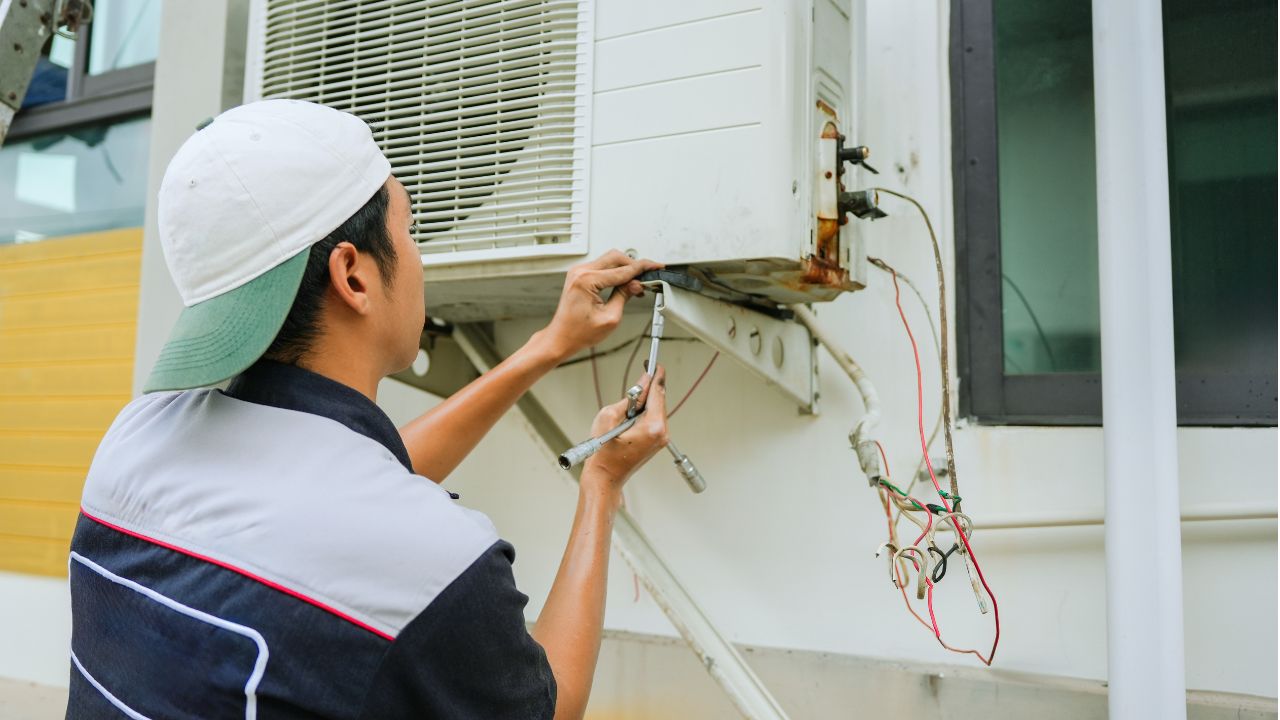
R-454B requires proper handling, line-set practices, and ventilation to meet A2L safety classifications for mildly flammable refrigerants. Only a licensed, trained HVAC installer should install or service A2L refrigerant systems.
High-efficiency units incorporate larger coils and more robust compressors to maintain performance even at 110°F outdoor temperatures. These design improvements offset some efficiency loss inherent in extreme heat conditions common throughout Southern California summers.
Monthly Operating Costs for AC Systems in Southern California
Monthly cooling costs depend on electricity rates, system efficiency, home size, and outdoor temperature extremes that force equipment to run longer cycles. Southern California Edison customers face some of the highest residential rates in the nation, making efficiency a primary cost factor.
Current Southern California Residential Electricity Rates
SCE average residential rate on the Tiered Rate Plan stands at 34.5¢/kWh as of June 2026. Tier 1 customers within baseline allocation pay 31¢/kWh, while Tier 2 usage above baseline jumps to 42¢/kWh.
SCE TOU-D-4-9 PM customers pay 24¢/kWh off-peak and 58¢/kWh during on-peak hours. These rates run roughly 1.3x–3.9x the national average of 19¢/kWh, significantly increasing the payback value of energy-efficient upgrades.
Monthly Energy Costs Compare Across AC System Types
Heat pumps serving whole-home cooling in Southern California cost $90–$220 monthly to operate depending on home size and usage patterns. Central air systems typically cost $80–$120 per month under similar conditions.
Most single-zone mini-splits cost around $30–$60 per month to run in cooling mode, while central air systems can reach $80–$120 monthly. A mini-split with SEER2 26 costs 30–40% less to operate than central air at SEER2 16 due to higher efficiency and eliminated duct losses.
System Type
Monthly Cooling Cost
Central air
$80–$120
Heat pump (whole-home)
$90–$220
Single-zone mini-split
$30–$60
Extreme Heat Affects AC Performance and Energy Use
Every degree past 95°F outdoor temperature knocks about 1% to 2% off AC efficiency as compressors work harder against greater temperature differentials. At 105°F, systems can lose 10% to 20% of effective cooling capacity compared to rated performance.
During heat waves, electricity bills jump by 20–30% as equipment runs extended cycles. At 105°F, a system delivers approximately 90 percent of rated cooling capacity—a correctly sized 4-ton unit might only provide 3.6 tons of actual cooling under extreme conditions.
Rebates and Incentives Available for AC Systems in Southern California
State and utility rebate programs change funding status frequently, with several major programs fully reserved or waitlisted as of early 2026. Homeowners must verify current program availability directly before assuming advertised incentive amounts remain accessible.
Current Status of State and Federal Heat Pump Incentives
TECH Clean California single-family incentives became fully reserved statewide on November 14, 2025, with no new reservations currently accepted. HEEHRA single-family rebates reached full statewide reservation on February 24, 2026, placing new income-verification applications on a waitlist only.
TECH Clean California commercial incentives were fully reserved as of October 31, 2025. The federal Section 25C tax credit expired December 31, 2025, making it unavailable for any 2026 installation.
Utility Programs Offer Rebates With Specific Requirements
SCE Smart Energy Program offers a $30 rebate for safely disposing of old thermostats at designated drop-off locations. LADWP eligible customers may qualify for up to $2,500 per ton on qualifying systems within Los Angeles city limits.
LADWP basic eligibility requires at least 15.2 SEER2 / 7.7 HSPF2, while maximum rebate tiers require at least 20.5 SEER2 / 9.1 HSPF2. A typical 4-ton system at maximum tier qualifies for up to $10,000 in California HVAC rebates.
Homeowners Should Verify Incentive Availability Directly
Homeowners should verify current rebate amounts directly at sce.com/save-money or with a program specialist before committing to specific equipment, rather than relying on published dollar amounts alone. Rebate funding status changes frequently, with new allocation cycles opening unpredictably.
Multiple third-party sites still advertise TECH and HEEHRA as live programs without noting the reservation freeze. Rebate programs change funding status frequently, with new allocation cycles opening unpredictably throughout the year.
Lifespan Expectations for AC Systems in Southern California
Equipment lifespan depends on system type, maintenance frequency, and environmental factors including coastal salt exposure and heat cycling. Understanding expected timelines helps homeowners budget for eventual replacement.
Factors That Influence Lifespan Variations by System Type
Central air conditioner and ductless mini-split lifespans both range from 15–20 years under normal residential use with regular maintenance. Window units last only 5–10 years, making them poor long-term investments for whole-home cooling.
Heat pump average lifespan sits at 15 years, with a typical range of 10–20 years depending on usage frequency and climate severity. Window units last only 5–10 years, making them poor long-term investments for whole-home cooling.
System Type
Typical Lifespan
Central air conditioner
15–20 years
Ductless mini-split
15–20 years
Heat pump (inland)
10–20 years (avg. 15)
Heat pump (coastal)
7–12 years
Window unit
5–10 years
Coastal Corrosion Impacts AC Equipment Durability
Heat pump lifespan in coastal and corrosive environments drops to 7–12 years as salt air accelerates deterioration of outdoor unit components. Homes within five miles of the Pacific Ocean face significantly shorter equipment life compared to inland locations.
Coastal installation requires corrosion-resistant coatings and more frequent inspection of condenser coils. Even with protective measures, heat pumps in coastal areas typically experience 30–40% shorter lifespans than identical units installed inland.
Maintenance Practices That Maximize System Longevity
Filter changes for mini-splits should occur every three months to maintain airflow and indoor air quality. Central AC and split systems need at least one annual spring service visit, with two annual visits recommended for heat pumps.
Heat pump maintenance frequency of twice yearly—spring and fall—addresses the dual-mode operation that increases component wear. A neglected HVAC system loses up to 5% of rated efficiency per year without professional service, directly impacting both performance and operating costs.
Noise Levels Homeowners Can Expect from Various AC Systems
System noise varies dramatically between ductless and ducted configurations, with indoor unit operation ranging from near-silent to conversational volume. Outdoor compressor noise stays fairly consistent across system types at similar efficiency tiers.
Mini-Split Units Run Quieter Than Central AC Systems
Mini-split indoor unit noise measures 19–35 dB, with premium models operating at 19–26 dB—quieter than a library at 40 dB or whispered conversation at 30 dB. Mini-split outdoor units generate 48–58 dB, comparable to normal conversation volume.
Central AC indoor systems produce 35–55 dB as air moves through ductwork and registers. Central AC and heat pump outdoor units range from 50–75 dB generally, though premium variable-capacity models achieve ratings as low as 58–59 dB.
System / Unit
Noise Level
Mini-split indoor unit
19–35 dB
Mini-split outdoor unit
48–58 dB
Central AC indoor
35–55 dB
Central AC outdoor
50–75 dB
Window unit
50–65 dB
Typical Noise Ranges for Packaged and Window Units
Window unit noise falls between 50–65 dB, roughly equivalent to conversational volume or typical household appliance operation. This noise level becomes intrusive in bedrooms and living spaces where occupants spend extended time.
Library noise levels measure 40 dB as a reference point for quiet indoor environments. Whispered conversation registers at 30 dB, illustrating why mini-split indoor units at 19–32 dB represent a meaningful comfort improvement.
Noise Level Influences System Selection
Mini-splits run meaningfully quieter indoors than central systems since fan motors sit separately from duct turbulence noise. Outdoor compressor noise becomes roughly comparable between system types once comparing similarly premium equipment in the 16+ SEER2 range.
Bedroom installations and home offices benefit most from the reduced indoor noise of ductless systems. Homeowners sensitive to nighttime noise disruption should prioritize mini-splits or premium variable-speed central systems with sound-dampening features.
Choosing the Best AC System for Southern California's Climate and Needs
Selecting the best AC system Southern California homeowners need comes down to climate demands, home infrastructure, and long-term costs. Central split systems remain the default for homes with existing ductwork, delivering reliable cooling at SEER2 ratings of 15–22.
Ductless mini-splits offer strong efficiency and zone control for additions, ADUs, and homes without ductwork, with SEER2 ratings of 20–33 and 30–40% lower operating costs than minimum-efficiency central systems.
Air-source heat pumps suit homeowners prioritizing electrification and year-round climate control from one system, though rebate availability needs direct verification, particularly for full replacements in homes experiencing frequent failures.
Monthly costs matter too: Southern California Edison's 34.5¢/kWh average rate, roughly double the national average, makes high-SEER2 equipment worth the extra upfront cost. Understanding SEER ratings and climate-specific performance helps homeowners identify AC units suited for hot weather that maintain efficiency when outdoor temperatures exceed 100°F.
Contact Alpine Plumbing, Heating, and Air for Expert AC Guidance
Choosing between central air, a ductless mini-split, and a heat pump involves real trade-offs in cost, efficiency, and comfort. The licensed technicians at Alpine Plumbing, Heating, and Air have served San Dimas, the San Gabriel Valley, the Inland Empire, and Lake Havasu City, AZ since 2017, and they can walk you through the right fit for your home.
Call (626) 385-4001 or request a free quote to schedule a consultation with a technician who knows Southern California's heat firsthand.
Frequently Asked Questions About AC Systems in Southern California
Which AC system is right for a Southern California home without existing ductwork?
Ductless mini-splits generally suit homes without existing ductwork since they skip duct installation entirely and connect an outdoor heat pump to one or more indoor units. They also reach SEER2 ratings up to 33, which keeps monthly cooling costs down in a hot, dry climate. Alpine's technicians typically recommend mini-splits for room additions, ADUs, and older homes that were never built with ducts.
How much does it cost to install central air conditioning in Southern California?
Central air conditioning in a home with existing ductwork typically costs $3,500 to $14,000, with mid-range installations averaging around $6,600. Homes without existing ductwork run higher, from $8,500 to $19,400, since the price includes full duct design, fabrication, and installation. A 2,000-square-foot home with new ducts averages roughly $8,750 for a 3-ton, 16 SEER unit.
What SEER2 rating should I look for in a new AC system?
A 16 to 18 SEER2 system offers a strong balance of performance, energy savings, and code compliance for most Southern California homes. The federal minimum for split-system air conditioners in this region is 14.3 SEER2, while ductless mini-splits can reach SEER2 ratings as high as 33. A licensed technician can help match the right SEER2 rating to your home's size and insulation.
Are rebates still available for heat pumps and AC systems in California in 2026?
Several major 2026 rebate programs, including TECH Clean California and HEEHRA single-family incentives, are fully reserved or waitlisted as of early 2026. Some utility programs remain active, such as LADWP's rebate of up to $2,500 per ton for qualifying systems within Los Angeles city limits. Because funding status changes frequently, homeowners should verify current availability directly with SCE, SoCalGas, or the program administrator before assuming an advertised rebate applies.
How long do AC systems typically last in Southern California's climate?
Central air conditioners and ductless mini-splits typically last 15 to 20 years with regular maintenance, while heat pumps average around 15 years with a range of 10 to 20 years. Homes within about five miles of the Pacific Ocean see shorter equipment life, since coastal salt air can reduce heat pump lifespan to 7 to 12 years. Consistent annual service, or twice-yearly service for heat pumps, helps systems reach the upper end of their expected lifespan.
Welcome to Alpine Plumbing and Rooter, serving San Dimas and the surrounding areas as your reliable source for exceptional plumbing and drainage services. We also provide reliable licensed HVAC services.
After reviewing your information, we will contact you as soon as possible.
"*" indicates required fields
Alpine Plumbing, Heating, and Air
462 Borrego Ct Unit A, San Dimas, CA 91773
CA Plumbing/HVAC License: #1041244 AZ Plumbing License: ROC 362311
Welcome to Alpine Plumbing, Heating, and Air, serving San Dimas, San Bernardino, Lake Havasu, AZ, and the surrounding areas. We are your reliable source for exceptional plumbing, Heating, and Air Conditioning needs.