Mini-splits save 30-40% on annual energy costs ($200-$800 vs $800-$2,000 for central HVAC) by eliminating duct losses and enabling strategic zoning.
Installed costs range from $2,000-$14,500 depending on zones and BTU capacity, with payback periods typically running 5-10 years and home value increases of 5-10%.
Efficiency ratings matter: SEER 18-30+ and HSPF 8-13+ significantly outperform central AC (SEER 15-18), with modern cold-climate models maintaining heating efficiency down to -15°F to -25°F.
Proper sizing prevents most problems: Room-by-room load calculations (Manual J) are essential, oversized units cause short cycling and poor humidity control, while undersized systems struggle to maintain comfort.
Federal and utility incentives reduce upfront costs by $2,200-$4,000 (up to $2,000 federal heat pump credit + $200-$2,000 utility rebates), improving payback timelines for qualifying high-efficiency systems.
If you're facing high energy bills, rooms that never seem comfortable, or the prospect of installing ductwork in an older home, a mini‑split system might offer the solution you need. These ductless heat pumps have gained popularity for their efficiency ratings (SEER 18-30+, HSPF 8-13+) that significantly outperform traditional central AC, their ability to provide independent temperature control in 2-8 zones, and their capacity to avoid the 25-40% energy losses common in ducted systems. But with installed costs ranging from $2,000 to $14,500, how do you know if the investment makes sense for your situation?
This guide cuts through the marketing claims to deliver straight answers on costs, savings, payback periods, and real-world performance, so you can make an informed decision about whether mini-splits belong in your home.
What Is A Mini-Split System, And What Makes It "Ductless"?
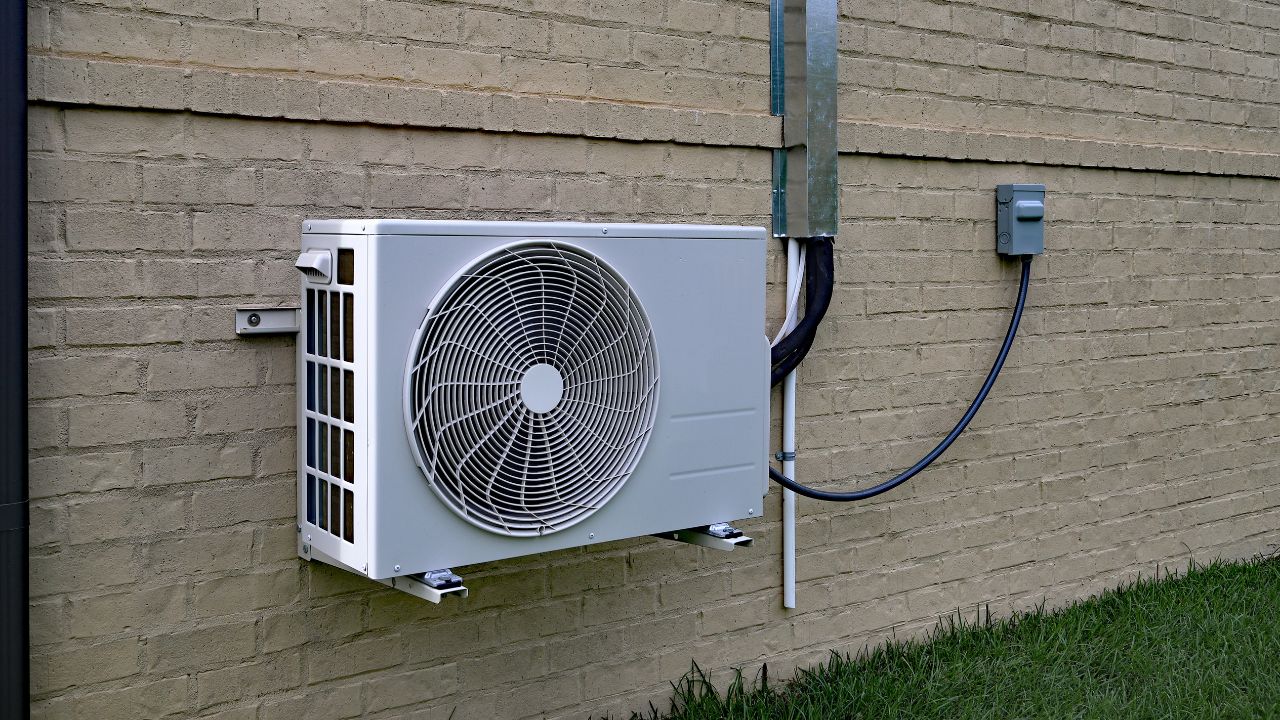
These components connect through a 3-inch hole in an exterior wall, eliminating traditional ductwork that can lose more than 30% of conditioned air. Installation requires only refrigerant lines, electrical wiring, and a condensate drain, no bulky ducts or register modifications.
Mini-split components at a glance:
Indoor unit (air handler)
Outdoor unit (condenser/heat pump)
Refrigerant line set
Condensate drain
Electrical disconnect
Controller/remote/thermostat
Mounting hardware
How one system heats and cools:
Mini-splits use heat pump technology to transfer heat rather than generate it through combustion. A reversing valve switches refrigerant flow direction, extracting indoor heat in summer, pulling outdoor heat in winter. Inverter technology allows the compressor to vary speed continuously, matching output to demand instead of cycling on and off. This delivers efficiency ratings of SEER 18-30+ for cooling and HSPF 8-13+ for heating, compared to SEER 15-18 for typical central AC systems.
Feature
Single-zone
Multi-zone
Best use case
Single room/addition
2-8 zones across home
Cost range
$500-$5,000
$1,400-$12,000
Comfort control
One thermostat
Independent per zone
Energy savings potential
Targeted efficiency
30-40% savings with smart zoning
Where Do Mini-Splits Make The Most Sense In A Home?
Best-fit scenarios:
Home additions and converted garages
Older homes without ductwork (saves $3,000-$10,000)
Rooms with hot/cold spots
Basements and finished attics
Who it's not for:
Homes with efficient ducted systems and tight, well-sealed ductwork
Renters without landlord permission
Can it replace central HVAC?
Full replacement works when the system is properly sized, zones cover all living areas, and equipment matches climate demands. In very large homes or extreme climates, mini-splits often serve as supplemental heating/cooling alongside traditional HVAC services. Hybrid setups, mini-splits for problem zones plus central HVAC for main areas, balance efficiency gains with proven whole-home coverage.
How Efficient Are Mini-Splits, And Which Ratings Matter?
Rating
What it measures
Mini-split range
Why it matters
SEER2
Cooling efficiency
18-30+ (vs 15-18 central AC)
Higher = lower cooling costs
HSPF2
Heating efficiency
8-13+
Federal minimum: 7.5; target 10+ for cold climates
COP
Heat output vs energy input
2-3:1 ratio
Shows heat pump advantage vs resistance heat
Why ductless can save energy:
Mini-splits use 800-2,000 watts/hour versus 3,000-3,500 watts for central AC, translating to the impressive energy savings mini split systems are known for, 30-40% annually. Three design features drive this efficiency: elimination of 25-40% duct losses, zoning that conditions only occupied rooms, and inverter compressors that eliminate cycling waste.
What inverter-driven compressors change:
Ramps speed up/down vs constant on/off
Tighter temperature control (±1°F vs ±3°F)
Quieter operation
20-40% efficiency gains vs single-speed
What Does A Mini-Split Cost Installed, And What Drives The Price?
Understanding the cost of mini split installation helps you budget accurately and compare quotes fairly. Professional installation typically represents 40-60% of the total project expense.
Setup
Use case
Cost range
Notes
Single-zone
Bedroom, 9,000-12,000 BTU
$500-$5,000
DIY saves $1,000-$3,000
2-3 zone
Main living areas
$1,400-$9,100
Professional install required
4+ zone
Whole-home
$2,600-$12,000+
Permits $250-$400
Top price drivers:
Number of zones (each adds $400-$1,800)
Total BTU capacity (6,000-48,000 BTU range)
Efficiency tier and cold-climate features
Line-set length (~$5/foot)
Electrical upgrades (220V circuit required)
Factor
Ductless
Ducted
Best for
Ductwork cost
$0 (saves $3,000-$10,000)
Requires ducts
Ductless: no existing ducts
Zoning
Built-in (2-8 zones)
Requires dampers
Ductless: variable occupancy
Install time
1-5 days
3-7 days
Ductless: faster
What Benefits Do Mini-Splits Offer That People Actually Notice?
Beyond efficiency ratings, the benefits of ductless HVAC include tangible comfort improvements through precise temperature control, whisper-quiet operation, and room-by-room customization. Users consistently report more stable temperatures, lower energy bills, and elimination of the hot/cold spots common in ducted systems.
Comfort and usability benefits:
Room-by-room control (2-8 independent zones)
Stable temperatures (±1°F vs ±3°F)
Quiet: 19-45 dB vs 50-70 dB for window units
Flexible placement options
How zoning reduces waste:
Annual operating costs drop from $800-$2,000 (central) to $200-$800 (mini-split) through smart zoning. Instead of conditioning the entire home whenever any space needs heating or cooling, zoned systems let you schedule unused rooms differently, target sleep/office zones for comfort, and avoid conditioning the entire home when using only 1-2 rooms.
Style
Best for
Visual impact
Key advantage
Wall-mounted
Most rooms
Visible (<3 ft wide)
Most affordable, easy access
Ceiling cassette
Large/open spaces
Flush with ceiling
Even distribution, discreet
Floor console
Limited wall space
Low-profile
Easier install, accessible
What Downsides Should You Know Before You Buy?
No HVAC solution is perfect. Mini-splits require visible indoor units, regular filter maintenance, and higher upfront costs than some alternatives. Cold-climate performance demands proper equipment selection, not all mini-splits maintain efficiency below 15°F.
Common complaints (and what they usually mean):
Indoor units visible on walls/ceiling
Multiple remotes (one per zone)
Upfront cost: $2,000-$14,500 vs $3,800-$10,000 central (excluding ducts)
Requires filter cleaning every 4-6 months
Outdoor units need snow/ice management in cold climates
Installation mistakes to avoid:
Oversizing (causes short cycling, poor dehumidification)
How Do You Estimate Mini-Split Savings And Payback For Your Home?
Mini-splits cost $2,000-$14,500 installed versus $3,800-$10,000 for central systems (excluding ductwork) but save 30-40% annually ($200-$800/year vs $800-$2,000). Payback typically runs 5-10 years. Home value increase: 5-10%. Key savings come from avoiding 25-40% duct losses, zoning efficiency, and SEER 18-30+ ratings versus central AC's 15-18.
When mini-splits save the most:
Replacing electric resistance heat (COP 2-3 = 2-3x more efficient)
Efficient existing system (SEER 18+ with tight ducts)
Running all zones 24/7 (negates zoning advantage)
Oversized or poorly placed units
Variable
Faster payback (4-7 yrs)
Slower payback (10-15 yrs)
Energy rates
High (>$0.15/kWh)
Low (<$0.10/kWh)
Current ducts
Leaky, unconditioned space
Tight, well-sealed
Usage
Targeted zoning
Whole-home 24/7
Current heat
Electric resistance
Efficient gas (95% AFUE)
What Rebates Or Tax Credits Can Reduce The Upfront Cost?
Federal heat pump tax credits offer up to $2,000, while utility rebates add $200-$1,000+, depending on location and efficiency tier. Most programs require minimum SEER2/HSPF2 ratings and proper documentation, invoices with model numbers, AHRI efficiency certification, and permit records.
Documentation: invoices, model numbers, AHRI certification
Federal heat pump credits: up to $2,000
Utility rebates: $200-$1,000+
Documents to save:
Itemized invoice with model numbers
AHRI efficiency certification
Permit/inspection records
Warranty registration
How Do You Choose The Right Mini-Split System And Installer?
Proper sizing determines system performance, energy efficiency, and comfort. Most contractors use Manual J load calculations to account for insulation, window quality, orientation, and occupancy, not just square footage. Poor sizing causes short cycling, humidity issues, and wasted energy.
Sizing and zone planning basics:
Room-by-room load calculation (not just square footage)
Head placement: avoid direct seating, ensure clearance
One head may cover 400+ sq ft in open plans
What your quote should include:
Model numbers with efficiency ratings
Zone layout diagram
Line-set routing plan
Electrical scope
Permits ($250-$400)
Warranty terms (equipment and labor)
Total cost breakdown
Questions to compare bids fairly:
How was sizing determined? (Manual J calculation?)
What's included vs excluded?
Who pulls permits?
Warranty labor coverage duration?
What Problems Can Mini-Splits Have, And How Do You Troubleshoot Them?
Most mini-split issues stem from dirty filters, improper sizing, or installation errors. Regular maintenance prevents 80% of service calls. When problems arise, start with simple checks, filters, drain lines, outdoor unit clearance, before calling a technician.
For more common HVAC questions, visit our FAQ page.
How do mini-splits perform in cold climates?
Modern models maintain heating to -15°F to -25°F with HSPF2 8-13+.
What's the realistic lifespan?
10-15 years typical; 20+ with proper maintenance (filter cleaning every 4-6 months, annual service $300-$550).
Do they increase home value?
Yes, 5-10% increase documented. On a $750K home = $37,500-$75,000.
Indoor air quality?
Better: HEPA filters capture 99.97% of particles ≥0.3 microns. Eliminates 40 lbs of dust typical in ductwork.
Do multi-zone systems lose efficiency?
Minimal if used strategically. Zoning advantage outweighs distribution losses when avoiding whole-home 24/7 operation.
Is A Mini-Split System Worth It For You?
Mini-splits make financial sense when you're avoiding ductwork installation, replacing electric resistance heat, or fixing persistent comfort problems in specific zones. The 30-40% energy savings ($600-$1,200 annually) combined with 5-10 year payback periods and potential home value increases of 5-10% justify the $2,000-$14,500 investment for most homeowners without efficient existing systems. Cold-climate performance, quiet operation, and zoned control deliver measurable comfort improvements beyond the utility bill savings.
Your next steps this week:
Map zones/problem rooms
Gather 12 months utility bills
Shortlist 2-3 installers
Request itemized quotes with model numbers
Verify incentive eligibility (up to $2,000 federal + $500-$2,000 utility)
Compare total cost vs savings (30-40% = $600-$1,200/year potential)
Ready to explore whether a mini-split system fits your home and budget? Contact Alpine Plumbing and Air for a free consultation and detailed load calculation.
Welcome to Alpine Plumbing and Rooter, serving San Dimas and the surrounding areas as your reliable source for exceptional plumbing and drainage services. We also provide reliable licensed HVAC services.
After reviewing your information, we will contact you as soon as possible.
"*" indicates required fields
Alpine Plumbing, Heating, and Air
462 Borrego Ct Unit A, San Dimas, CA 91773
CA Plumbing/HVAC License: #1041244 AZ Plumbing License: ROC 362311
Welcome to Alpine Plumbing, Heating, and Air, serving San Dimas, San Bernardino, Lake Havasu, AZ, and the surrounding areas. We are your reliable source for exceptional plumbing, Heating, and Air Conditioning needs.