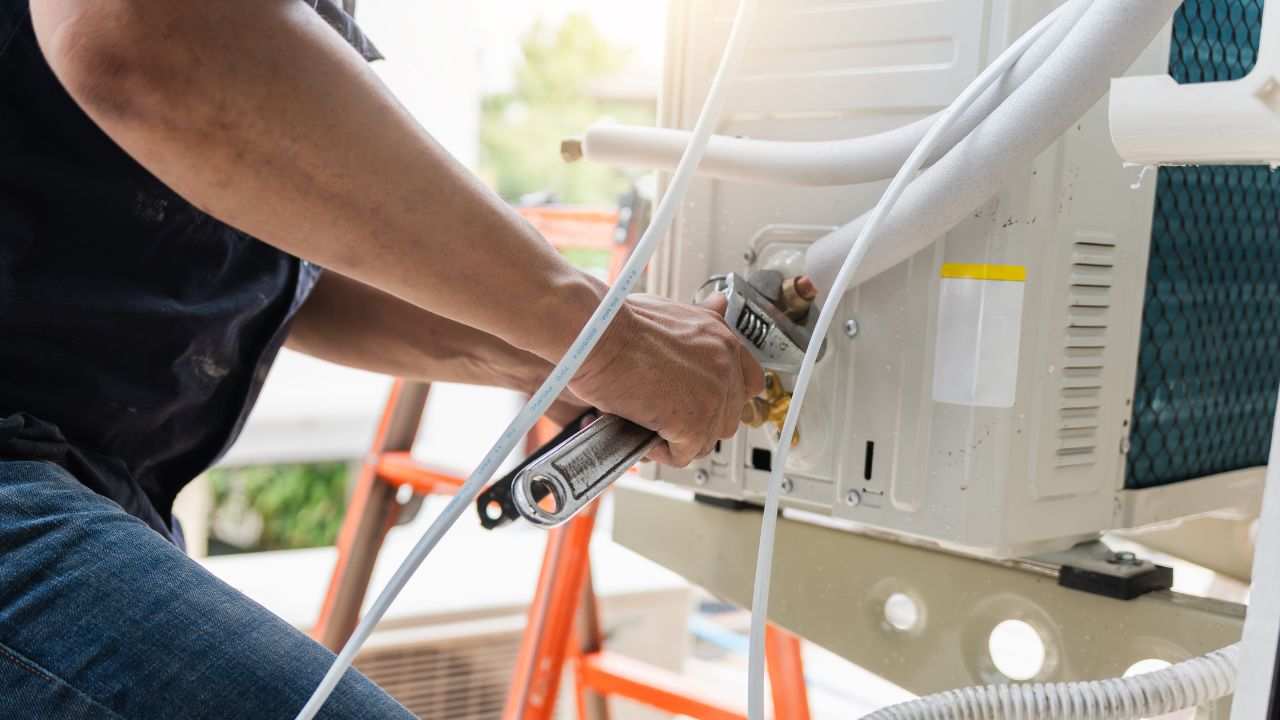
The top three AC failure causes are preventable: Improper refrigerant charge (72%), degraded compressors (60%), and restricted airflow (54%), all of which respond to regular maintenance and filter changes, basic care that costs far less than emergency repairs.
Small problems cascade into expensive failures if ignored: A $15 dirty filter can trigger coil freezing, blower damage, and compressor failure, turning a simple maintenance task into a $15,000 system replacement through neglect.
Every $1 spent on maintenance saves $5 in repairs: Annual professional tune-ups ($175-$300) reduce breakdown risk by 95% and extend system lifespan by 3-5 years, avoiding $4,000-$7,500 in premature replacement costs.
The 12-year mark is the repair-vs-replace tipping point: Replace the system if repair costs exceed 50% of replacement cost, especially on units over 12 years old; major component failures at that age signal cascading problems ahead.
Pre-season maintenance cuts summer breakdowns by 80%: Sixty percent of AC failures happen during the first heat wave, scheduling spring tune-ups before peak demand prevents most emergency breakdowns when you need cooling most.
Your AC works flawlessly, until it doesn't. Most breakdowns aren't sudden mechanical failures. They're predictable outcomes of small problems ignored until they cascade into expensive emergencies. A dirty filter restricts airflow. Coils freeze. The blower motor burns out. What started as a $15 filter replacement becomes a $7,500 system replacement.
You can prevent ac breakdowns with simple, consistent habits that cost almost nothing compared to emergency repairs. This guide breaks down the most common causes of AC breakdowns, warning signs you can spot early, and the realistic maintenance plan that keeps systems running reliably for 15-20 years instead of failing at 8-10 years.
What Are The Common Causes Of AC Failure And How Can You Prevent Costly Breakdowns?
AC failure stems from predictable issues: improper refrigerant levels, degraded compressors, and restricted airflow. Over 72% of residential systems carry incorrect refrigerant charge, while 60% have worn compressor motors and 54% suffer airflow problems. These aren't random breakdowns; they're preventable with routine maintenance and early intervention.
What Does "AC Failure" Mean, And What Are The Earliest Warning Signs?
AC failure means your system can't maintain comfortable temperatures or runs inefficiently. A properly functioning unit creates a 15-20°F temperature difference between return and supply air. When that drops, something's wrong.
Warning Sign → Likely Cause → Why It Matters → What To Do Next
Warning Sign
Likely Cause
Why It Matters
What to Do Next
Weak airflow
Dirty filter, blower issue, duct blockage
Reduced efficiency, longer run times
DIY check filter first
Warm air from vents
Low refrigerant, compressor failure
No cooling, wasted energy
Stop & call a pro
Frequent cycling
Oversized unit, thermostat issue, refrigerant problem
Compressor wear, efficiency loss
Call a pro
Buzzing/clicking sounds
Electrical issue, failing contactor
Fire risk, component damage
Stop & call a pro
Musty smell
Mold in ducts/coil, clogged drain
Health risk, water damage
Clean drain, check filter
Water around indoor unit
Clogged condensate line, frozen coil thaw
Water damage, system shutdown
DIY check drain line
Ice on lines/coils
Low refrigerant, airflow restriction
Compressor damage risk
Stop & call a pro
Rising indoor humidity
Low refrigerant, oversized unit
Discomfort, mold growth
Call a pro
When Should You Shut The AC Off And Call A Pro?
Shut off immediately: Burning smell, smoke, repeated breaker trips, loud grinding/screeching, major water leak near electrical components, ice buildup that returns quickly.
Call within 24-72 hours: Weak cooling, short cycling, water in the drain pan, intermittent startup issues.
Monitor and maintain: Slightly dusty filter, minor airflow imbalance, thermostat misreading by 1-2°F.
Why Do Minor AC Problems Turn Into Costly Breakdowns If You Ignore Them?
Emergency repairs cost 2-5 times more than routine maintenance. Every $1 spent on preventive care saves $5 in future repairs. Neglected systems drop from 12-15 years lifespan to just 8-10 years, costing $4,000-$7,500 in premature replacement. Skipping maintenance raises energy costs 15-30%, wasting $540-$900 annually.
A $15 dirty filter, left unchanged, causes the evaporator coil to freeze. Ice melts and floods the blower motor. The damaged motor can't move air, causing compressor overheat. Repair cascades from filter to coil repair ($600), blower replacement ($800), compressor failure ($2,500), or complete replacement at $15,000.
How Do Dirty Air Filters And Airflow Restrictions Cause AC Failure?
Restricted airflow kills AC systems. When filters clog, air can't move across the evaporator coil. Heat transfer stops, refrigerant gets too cold, and moisture freezes on the coil. Clogged filters cause 70% of frozen coil cases. Dirty blower components cut efficiency by 15%. Replace filters every 1-3 months.
Airflow Checks Homeowners Can Do in 10 Minutes:
Filter condition and fit (check arrow direction, no gaps)
Return vents not blocked by furniture/rugs
All supply registers are open and unobstructed
Visible duct damage in accessible areas
Unusual whistling sounds indicate restriction
Uneven room temperatures suggest duct leaks
How Do Dirty Coils Cause Poor Cooling, Freezing, And Breakdowns?
Dirty coils sabotage heat transfer. A clogged condenser coil traps heat, raising head pressure 20-30% and forcing longer run times. Dust-covered evaporator coils can't absorb heat, triggering freezing. Cleaning coils improves efficiency by 15%. Maintain 2-3 feet clearance around the outdoor unit. Ignoring dirty coils leads to compressor failure, costing $1,500-$3,500.
What a Dirty Outdoor Condenser Coil Causes:
Higher head pressure is straining the compressor
Longer run times and sharply higher energy bills
High-temperature safety shutdowns
Accelerated wear on the fan motor and compressor
How Do Refrigerant Leaks Lead To Weak Cooling And Major Compressor Damage?
Refrigerant doesn't get "used up", it circulates in a closed loop. Low refrigerant means a leak. Between 95-99% of leaks occur in evaporator coils, often from formicary corrosion. Leaks drop cooling efficiency by 50% or more. R-410A refrigerant costs $50-$150 per pound, with typical leak repairs totaling $680-$2,100, including detection, repair, and refill.
Low Refrigerant Symptoms → What to Check → Who Should Fix It
What Electrical And Power Problems Commonly Cause Sudden AC Shutdowns?
Electrical failures cause instant shutdowns. Failed sensors and controls account for 20% of all service calls. Emergency repairs during off-hours cost $140-$400 per hour, double or triple normal rates.
Electrical Symptom → Likely Issue → Next Step
Symptom
Likely Issue
Next Step
Tripped breaker (single)
Momentary surge
Reset once, monitor for repeat
Tripped breaker (repeated)
Short circuit, failing compressor
Do not keep resetting, call HVAC tech
Blown fuse at the disconnect
Compressor failure, shorted wiring
Call HVAC tech (don't replace fuse first)
Clicking, no start
Contactor issue, low voltage, bad capacitor
Call the HVAC tech
Buzzing at the contactor
Contactor coil energized but not closing
Turn off the thermostat, callthe HVAC tech
Outdoor unit is dead, indoor fan runs
No power to the outdoor, blown fuse, control board
Check the disconnect, then call the HVAC tech
Never repeatedly reset breakers. Each trip indicates overcurrent, usually from a short circuit or failing compressor. Forcing power through damaged components risks fire.
Why Are Capacitors And Contactors Such Frequent AC Failure Points?
Capacitors and contactors fail more often than any other electrical component. Capacitors store and release energy for motor starts hundreds of times per season. Contactors switch high-amperage loads on and off. Both degrade rapidly under heat, power surges, and heavy cycling. Capacitor replacement costs $100-$400 and ranks among the most common AC problems.
Part → What It Does → Failure Signs → Outcome If Ignored
Part
What It Does
Failure Signs
Outcome If Ignored
Start capacitor
Gives the compressor an initial power jolt
Hard starts, humming without starting, won't start
Compressor burns out ($1,500-$3,000)
Run capacitor
Keeps motor running efficiently
Slow fan spin, overheating compressor, increased energy use
Motor failure, compressor damage
Contactor
Relay switch for compressor/fan power
Chattering/clicking, outdoor unit won't engage, pitted contacts
Welded contacts, failed start, electrical fire risk
Heat and heavy cycling accelerate wear. Capacitors contain electrolytic fluid that evaporates in high temperatures. After thousands of cycles over 5-7 years, capacitance drops below spec. Contactors arc with every on/off cycle, pitting the metal surface.
How Do Thermostat And Control Issues Mimic (Or Cause) AC Failure?
A faulty thermostat can prevent a healthy AC from running, or cause short cycling that destroys the compressor. Replacement costs $100-$300. Proper programming saves money: 78°F is recommended when home. Each degree lower increases cooling costs 3-5%. Raising the thermostat 7-10 degrees when away saves up to 10% annually.
Thermostat Mistakes That Cause Issues:
Wrong mode selected (heat instead of cool)
Schedule conflicts in programmable thermostats
Low/dead batteries causing erratic behavior
Bad placement (direct sunlight, near vents, kitchen heat)
Incorrect temperature differential/swing settings
How Do Condensate Drain And Moisture Problems Lead To Shutdowns And Water Damage?
Every AC removes moisture from indoor air. That water drains through a condensate line, unless it clogs. A blocked drain costs just $75-$200 to clear, but ignoring it causes ceiling damage, mold, and safety shutdowns. Similar to how you'd prevent holiday plumbing problems with routine maintenance, drainage problems are preventable with simple checks.
Simple Drain-Line Prevention:
Inspect drain pan for standing water during filter changes
Confirm drain line flows (pour cup of water in pan, watch it drain)
How Do Fan And Motor Problems Lead To Overheating And System Failure?
The outdoor condenser fan must run continuously during operation to reject heat. Without it, refrigerant pressure spikes, the compressor overheats, and safety switches shut everything down. Blower motor replacement due to neglect costs $800-$1,500. Condenser fan motor replacement runs $200-$700.
Call HVAC tech for capacitor test/motor replacement
How Do Sizing And Installation Mistakes Create Repeated Breakdown Cycles?
Wrong-sized equipment creates problems no maintenance can fix. Oversized ACs short-cycle, turning on and off rapidly without dehumidifying. Undersized units run constantly. Both patterns destroy components prematurely.
Oversized System Problems:
Short cycling (unit cycles every 5-10 minutes instead of 15-20 minutes)
Clammy, humid air despite cooling
Hot and cold spots throughout home
Higher wear on electrical components
Higher energy bills despite "strong cooling"
Installation Issues Causing Failures:
Duct leaks (lose 20-30% of cooled air, starving rooms)
Undersized returns (starve system of airflow, cause coil freeze)
Incorrect refrigerant charge at installation
Inadequate condenser clearance (less than 2 feet blocks airflow)
Poor drainage setup (recurring clogs/overflows)
How Can You Prevent Costly AC Breakdowns With A Simple, Realistic Maintenance Plan?
Annual professional maintenance costs $175-$300 but reduces breakdown risk by 95%. Pre-season checks cut failures by 80%. Compare that to emergency repairs at $500-$2,000 or more.
10-Minute Monthly Prevention Routine:
Check and replace air filter if dirty
Clear supply vents and return grilles
Listen for new or unusual noises
Verify thermostat schedule and mode settings
Look for water near indoor air handler
Visual check that outdoor unit has clear 2-3 foot perimeter
Pre-Summer Seasonal Checklist:
Clear debris from around condenser unit
Gently rinse outdoor coil if visibly dirty
Pour cup of water in drain pan and verify it drains
Confirm system delivers consistent cooling (15-20°F temperature drop)
Refrigerant diagnostics only if performance indicators suggest issues
Maintenance Frequency → Best For → Breakdown Reduction
Frequency
Best For
Breakdown Reduction
Once per year (spring)
Mild climates, light use, newer systems
70-80% reduction
Twice per year (spring + fall)
Hot climates, heavy use, older systems (10+ years)
85-95% reduction
As-needed (plus tune-ups)
Older units, high allergy/dust environments, pet owners
80-90% reduction with professional service
How Can You Troubleshoot Common AC Problems Safely Before You Pay For A Service Call?
Basic troubleshooting can save a $50-$200 service call and $75-$150/hour labor, but know when to stop. Never open electrical panels, discharge capacitors, handle refrigerant, or repeatedly reset breakers.
If the AC Won't Turn On: Check thermostat power/mode (batteries, settings) → Check breaker (reset once only) → Inspect filter/airflow → Visually confirm outdoor disconnect is "on" → Call pro if breaker trips again or no obvious cause.
If the AC Runs but Doesn't Cool: Check filter/airflow → Look for ice on lines/coils → Check outdoor unit running and blowing air → Verify thermostat settings → Call HVAC tech if ice, hissing, or outdoor unit not operating.
If the AC Is Short Cycling: Replace filter and check airflow → Assess thermostat placement/settings → Inspect outdoor coil for dirt/blockage → Call pro if cycling is rapid (every 5-10 minutes) and persistent.
If There's Ice, Water, or Loud Noise:
Ice: Shut off cooling, run fan-only mode, replace filter, let ice melt (2-4 hours), call HVAC tech if ice returns
Water leak: Shut off AC, protect floor/belongings, call immediately if near electrical components
Grinding/buzzing: Shut off at thermostat and breaker, call HVAC tech (continued operation destroys motor/compressor)
When Should You Repair vs Replace An AC To Avoid Throwing Money At Repeat Failures?
Central AC systems last 15-20 years on average, but the 12-year mark is a tipping point. The repair-or-replace rule: if repair costs exceed 50% of a new unit's price, replace. Repair costs typically run $450-$1,000 for common issues, while replacement costs $3,800-$7,500. Compressor replacement alone costs $800-$3,000+, almost never worth it on units past 10-12 years. For comprehensive guidance, explore available HVAC services.
Repair Patterns That Signal "Stop Investing":
Same failure repeating within same cooling season
Refrigerant leak recurrence or multiple leak repairs
Electrical failures stacking (capacitor, contactor, control board)
Chronic short cycling/overheating that repairs don't resolve
Major component failure on unit past 12 years old
Decision Factors → Repair Makes Sense → Replace Makes Sense
Factor
Repair
Replace
Age of unit
Under 10 years
Over 12 years, or 10+ with repeated issues
Cost
Under $800, single failure
Over $1,500, or $2,000+ in repairs over 2 years
Comfort
Cooling well when working
Poor dehumidification, never comfortable
Efficiency
Bills reasonable, SEER 14+
Bills climbing, old low-SEER unit (10-12)
Parts/warranty
Parts available, warranty remaining
Parts discontinued, out of warranty
What Questions Should You Ask An HVAC Technician To Prevent Repeat Breakdowns?
Good technicians diagnose root causes, not just swap parts. Ask pointed questions that force an evidence-based diagnosis.
Questions That Prove Root-Cause Diagnosis:
What measurements did you take? (temperature split, refrigerant pressures, amperage, airflow)
What physical evidence supports this diagnosis?
What caused this part to fail? (not just "it's old")
What will prevent this from happening again?
What's covered by warranty and for how long?
Questions to Confirm Proper Sizing:
Did you perform a Manual J load calculation?
Did you evaluate duct leakage and return air sizing?
Are static pressure readings within spec?
What changes would improve airflow and humidity control?
What Are The Most Common AC Failure FAQs Homeowners Ask Right Before A Breakdown?
Sixty percent of failures occur during the first major heat wave. HVAC companies see call volume spike 300-400% during extreme heat. Southern states experience 40% more failures during peak temperatures.
"Will a dirty filter really damage my AC?" Yes. A clogged filter reduces airflow across the evaporator coil, causing it to freeze. Low airflow forces the blower motor to work harder, shortening its lifespan. Restricted airflow can allow liquid refrigerant to return to the compressor, causing catastrophic damage. Dirty filters cause 70% of frozen coil cases.
Low airflow and indoor coil icing from dirty filter
Undersized system for extreme conditions
High internal heat gains during peak sun
Electrical components overheating and tripping
Frozen Coil Causes → What You Can Do → What Requires a Pro
Cause
What You Can Do Now
What Requires a Pro
Airflow restriction (70% of cases)
Replace filter, open all registers, clear return vents
Blower motor repair, duct leak sealing
Low refrigerant (50%+ efficiency drop)
Turn off cooling, run fan-only to melt ice
Leak detection, repair, refrigerant recharge
Dirty evaporator coil
Replace filter, avoid future buildup
Professional coil cleaning if heavily clogged
Blower motor/fan issues
None, requires diagnosis
Motor capacitor or motor replacement
"Why is frequent cycling bad?" Each startup draws 5-7 times running amperage, stressing electrical components. Short cycling, every 5-10 minutes instead of 15-20 minute cycles, means hundreds of extra starts per season. That accelerates capacitor failure, contactor pitting, and compressor wear. Short cycling also prevents proper dehumidification, leaving indoor air clammy.
What Are The Highest-Impact Habits That Prevent AC Failure Year After Year?
Every $1 spent on planned maintenance saves $5 in emergency repairs, energy waste, and premature replacement. Pre-season professional checks cut breakdown risk by 80%. Proper maintenance extends system lifespan by 3-5 years, worth $4,000-$7,500 in avoided replacement costs.
This Week's Quick Breakdown-Prevention Plan:
Replace or check the air filter today
Clear outdoor unit area to 2-3 feet minimum
Check for water, ice, or new, unusual noises
Confirm thermostat schedule (78°F when home)
Schedule professional maintenance before peak season
The top AC failure causes are improper refrigerant charge (72%), degraded compressor motors (60%), improper airflow (54%), and failed sensors/controls (20%). You avoid them with AC maintenance tips: filter changes every 1-3 months, annual professional maintenance ($175-$300), proper clearance around outdoor unit, and prompt leak repairs. Systems that receive basic care run reliably for 15-20 years. Neglected systems fail at 8-10 years.
The difference between a system that lasts and one that fails isn't luck; it's habits. Change filters. Schedule tune-ups. Clear debris. Address problems early. For comprehensive support, from water treatment solutions to complete plumbing services, Alpine's team is ready to help.
Welcome to Alpine Plumbing and Rooter, serving San Dimas and the surrounding areas as your reliable source for exceptional plumbing and drainage services. We also provide reliable licensed HVAC services.
After reviewing your information, we will contact you as soon as possible.
"*" indicates required fields
Alpine Plumbing, Heating, and Air
462 Borrego Ct Unit A, San Dimas, CA 91773
CA Plumbing/HVAC License: #1041244 AZ Plumbing License: ROC 362311
Welcome to Alpine Plumbing, Heating, and Air, serving San Dimas, San Bernardino, Lake Havasu, AZ, and the surrounding areas. We are your reliable source for exceptional plumbing, Heating, and Air Conditioning needs.