Plumbing decisions often fall into a gray area between self-reliance and professional intervention. Most homeowners successfully handle minor visible repairs but struggle to identify when a problem requires licensed expertise. The stakes rise sharply when concealed pipes, pressurized systems, or recurring failures enter the picture. Understanding these thresholds protects both your property value and your household budget.
San Dimas homeowners face particularly relevant decision points due to the city's housing characteristics. Over 33% of local housing stock was built between 1970 and 1979, placing many systems at the age where corrosion, pinhole leaks, and fixture failures become statistically likely. Knowing when to call a plumber versus attempting DIY plumbing repairs becomes essential in managing these aging infrastructure challenges.
Key Takeaways
- Professional plumbers handle hidden leaks, pressurized lines, water-heater connections, and permit-sensitive work
- DIY repairs work best for visible, low-risk tasks like aerator swaps and basic clogs
- Pinhole leaks cause property damage in 92% of cases, making professional diagnosis critical
- San Dimas' older housing stock increases the likelihood of system-level plumbing failures
- Trust and reputation influence 55% of homeowners when hiring plumbing repair professionals
What Are Professional Plumbing Services and DIY Repairs?
Professional plumbing services encompass licensed diagnosis, repair, replacement, and code-compliant installation work. Residential and commercial plumbing services address both routine maintenance and emergency system failures requiring specialized tools and permits. Licensed professionals carry insurance coverage that protects homeowners from liability if installation errors cause water damage or structural problems.
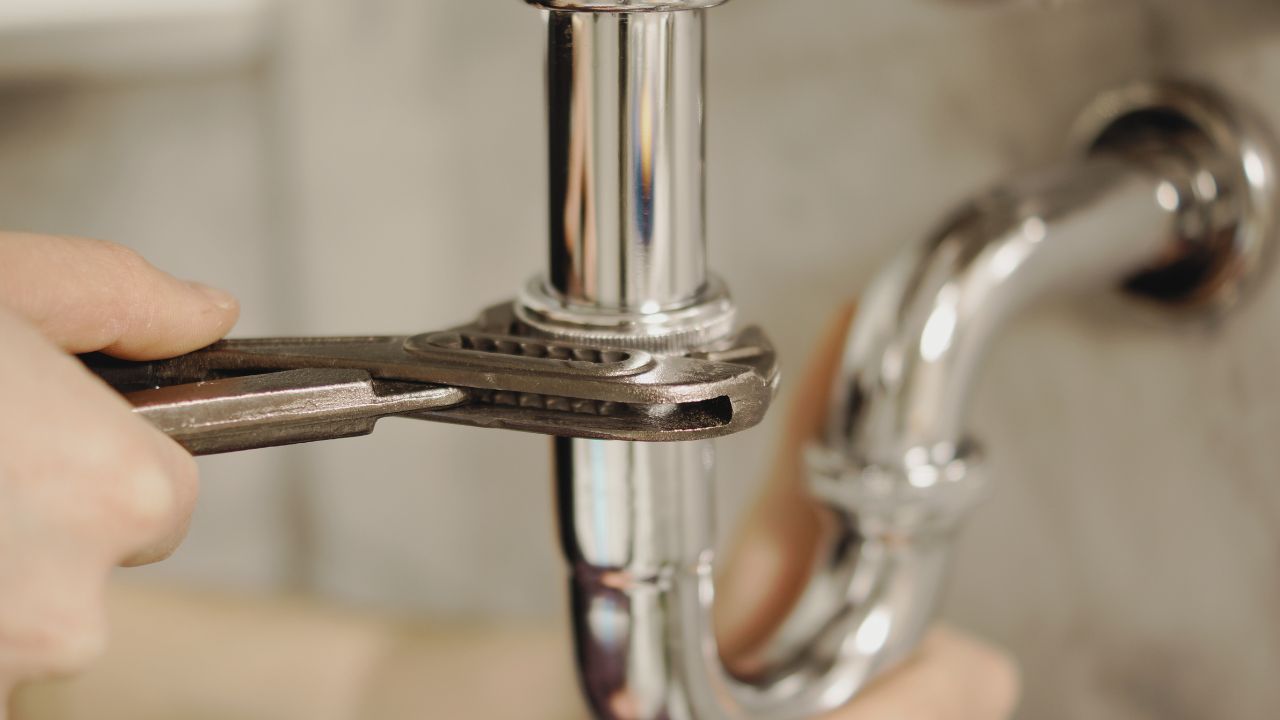
DIY plumbing repairs focus on accessible, low-consequence tasks that require minimal specialized equipment. These projects typically involve visible components where mistakes create minor inconvenience rather than catastrophic failure. The key distinction lies in whether the repair involves concealed infrastructure or pressurized connections that could flood living spaces.
What Tasks Do Professionals Handle?
Licensed plumbers specialize in hidden leaks, water-heater tie-ins, multiple-fixture shutoffs, and wall or slab access. These tasks require diagnostic equipment, code knowledge, and access to wholesale supply chains unavailable to typical homeowners. Among surveyed households addressing severe leak issues, 50 completed whole-house replumbing, while 133 replaced leaking sections.
The North America mechanical, electrical, and plumbing service market includes residential upgrade and replacement work valued at $33.48 billion. This market segment grows at 8.5% annually as aging housing stock drives system-level interventions. Professional intervention becomes statistically more likely as homes age past 40 years.
Which Repairs Are Suitable for DIY?
Replacing faucet aerators, changing supply hoses, swapping showerheads, and clearing trap-level clogs represent suitable DIY tasks. These repairs involve accessible components with standardized connections that rarely require specialized tools beyond basic wrenches. Among households reporting leak repairs, 77 used clamp repairs, while 29% spent under $100 addressing minor issues.
Leak repair spending between $100 and $500 captured 30% of households in recent surveys. This price band typically reflects DIY parts purchases combined with multiple repair attempts. However, hidden costs of DIY faucet installation often emerge when simple fixture swaps reveal corroded supply lines or improper valve shutoffs.
How Do Homeowners Typically Combine DIY and Professional Help?
Only 14% of homeowners prefer handling all projects entirely on their own. The largest segment, comprising 28%, completes what they can themselves and hires professionals when needed. This hybrid approach reflects practical risk assessment rather than pure cost minimization.
An additional 18% rely on professionals for most work but stay involved in decision-making. Fully outsourcing work attracts 20% of homeowners, often correlating with higher income levels and time scarcity. These patterns suggest that hiring a plumber represents conditional outsourcing rather than ideological preference.
When Should You Call a Professional Plumber?
Calling a professional plumber becomes necessary when repair risks exceed your diagnostic ability or insurance coverage. Water damage from failed repairs, code violations, and repeat system failures creates financial consequences that often surpass service-call costs. The decision threshold centers on whether a mistake could flood finished spaces or violate permit requirements.
Licensed expertise provides warranties, insurance backing, and accountability that DIY repairs cannot match. Professional diagnosis also prevents misidentification of root causes, which frequently leads homeowners to fix symptoms while underlying corrosion continues. When to call a plumber depends primarily on whether the problem involves concealed infrastructure or pressurized connections.
What Are the Risk Factors of DIY Plumbing?
Water damage risk from failed DIY repairs represents the most significant financial exposure for homeowners. Pinhole leaks caused property damage in 92% of surveyed cases, with 37% reporting total costs exceeding $500. Misdiagnosis risk increases sharply when visible symptoms like low pressure or discolored water reflect hidden corrosion.
Code compliance issues with DIY work create liability during home sales and insurance claims. Repeat failure conditions requiring professional intervention often cost more than an initial professional diagnosis would have. Many municipalities require permits for water-heater replacement, supply-line work, and fixture additions, making unpermitted DIY work a disclosure problem.
Which Conditions Require Licensed Expertise?
DIY approaches prove unsuitable for concealed piping work where leak locations remain hidden behind walls or slabs. Pressurized line repairs demand proper shutoff procedures and pressure-testing that most homeowners cannot perform safely. Permit-sensitive work, including water-heater installation, gas-line modifications, and main-line connections, legally requires licensed contractors in most jurisdictions.
Multiple-fixture shutoff scenarios create household disruption that professionals minimize through staged work and temporary bypass configurations. Finding reliable plumbers in San Dimas becomes particularly important when permit coordination and inspection scheduling determine project timelines. Slab leaks and supply-line failures inside wall cavities require specialized leak-detection equipment unavailable to typical homeowners.
How Does Plumbing Complexity Affect the Decision?
Plumbing complexity increases with system age, material variety, and the number of interconnected fixtures. Homes built before 1990 often mix copper, galvanized steel, and plastic supply lines, complicating material compatibility. Single repairs in these systems frequently reveal additional corrosion that escalates simple fixes into section replacements.
System-level failures require diagnostic logic that traces pressure drops, temperature inconsistencies, and drainage patterns across multiple branches. Professional assessment identifies whether localized repairs address root causes or merely postpone inevitable whole-system interventions. Complexity thresholds typically arise when repairs require shutting off water to more than one fixture simultaneously.
How Do Consumer Preferences Shape Plumbing and Repair Choices?
Consumer preferences in plumbing decisions prioritize trust, cost transparency, and demonstrated expertise over lowest bid pricing. Homeowners evaluate service providers using reputation signals, including licensing status, online reviews, and referral networks. These preferences reflect plumbing's high-consequence nature, where workmanship failures create immediate property damage.
Decision frameworks balance upfront service costs against risk exposure from failed DIY attempts. Most homeowners segment tasks by visibility and reversibility rather than pure cost avoidance. Preferences shift toward professional help as household income rises and available time for multi-day projects decreases.
What Role Do Trust and Reputation Play in Hiring Pros?
Trust and reputation rank as the top priority for 55% of consumers choosing home-improvement businesses. Quality of work follows as the second-highest priority at 28%, indicating that homeowners value reliability over cost. These preferences intensify in plumbing because failed repairs cause water damage that exceeds original service-call costs.
Things to consider when hiring a local plumber include license verification, insurance coverage, and warranty terms. Reputation builds through consistent performance across emergency calls, where response time and accurate diagnosis determine customer satisfaction. Online reviews and community referrals provide verification signals that help homeowners filter licensed professionals from unlicensed operators.
How Do Age and Housing Characteristics Affect DIY vs. Professional Use?
Owners under 35 devoted roughly 29% of home-improvement spending to DIY projects. Owners aged 65 and older reduced their DIY spending share to approximately 12%, reflecting physical limitations and accumulated income. San Dimas' 65-and-older population reaches 20.3%, compared to California's 16.5%, suggesting stronger local demand for professional services.
Men report fully independent project execution at 16% versus 12% for women. Women complete 15% of projects with friends or family, indicating collaborative rather than solo DIY approaches. Housing age drives professional engagement more strongly than age demographics alone, as older systems require specialized diagnostic equipment.
What Are Homeowner Priorities When Choosing Materials?
Corrosion resistance, proven market performance, and warranty length rank among the top material-selection priorities. Homeowners evaluate plumbing materials through health effects, taste and odor impact, and installation convenience. Material cost remains important but rarely overrides durability concerns when replacing entire supply systems.
Copper historically dominated 90% of installed residential plumbing but faces cost and labor challenges in retrofit scenarios. PEX has gained adoption in whole-house replumbing due to lower installed costs and corrosion resistance. Home plumbing services cost varies significantly based on material choice, with copper installations typically running 50% to 100% higher than comparable PEX systems.
What Are the Pros and Cons of DIY Plumbing Repairs?
DIY plumbing repairs offer immediate cost savings and scheduling flexibility for minor visible problems. Homeowners avoid service-call minimums and hourly labor charges when replacing aerators, clearing trap clogs, or swapping showerheads. These advantages apply primarily to isolated component failures where mistakes create minimal property-damage risk.
The disadvantages center on misdiagnosis risk, code violations, and water-damage exposure from failed repairs. DIY attempts often address visible symptoms while missing underlying corrosion or pressure issues. Insurance coverage typically excludes damage caused by unpermitted homeowner work, creating financial exposure that exceeds professional service costs.
Which Minor Repairs Are Ideal for DIY?
Faucet aerator replacement, showerhead swaps, and supply-hose changes represent low-risk DIY opportunities. These tasks involve hand-tightened connections or basic wrench work with minimal flooding potential. Trap-level drain clogs beneath sinks and tubs remain accessible without wall access or specialized augering equipment.
Toilet flapper and fill-valve replacements fall within typical DIY capabilities when fixtures use standard mounting configurations. Shutoff-valve handle replacements and hose-bib winterization require only basic tools and reversible procedures. Success rates remain high when repairs involve single fixtures with accessible shutoff valves and visible connection points.
What Are the Common Risks of DIY Plumbing?
Water damage from over-tightened fittings, cross-threaded connections, and improper sealing compounds creates the primary DIY risk. Failed repairs frequently require emergency shutoffs that interrupt service to multiple fixtures or entire households. Mismatched materials between old galvanized pipes and new brass fittings accelerate corrosion through galvanic reaction.
Code violations occur when homeowners add fixtures, relocate supply lines, or modify drain configurations without permits. Common plumbing problems homeowners face often stem from previous unpermitted modifications that created pressure imbalances or inadequate venting. Insurance claims for water damage may be denied when adjusters discover unpermitted DIY work caused the failure.
How Can Homeowners Mitigate DIY Mistakes?
Photographing existing connections before disassembly creates reference documentation for reassembly. Testing repairs under low pressure before restoring full system pressure allows early leak detection. Keeping detailed records of part numbers, supplier sources, and installation dates supports future maintenance.
Knowing when to stop DIY attempts and call professionals prevents minor mistakes from escalating into major damage. Having emergency shutoff locations clearly marked and accessible reduces flood damage when leaks occur. Maintaining relationships with licensed plumbers allows quick professional intervention when DIY repairs exceed skill levels.
How Does San Dimas' Housing Market Influence Plumbing Decisions?
San Dimas' housing market combines high property values with aging infrastructure that drives plumbing-service demand. The median owner-occupied home value reaches $801,800, creating strong financial incentives to protect assets through professional maintenance. Homeowners in high-value properties typically prioritize system reliability over short-term repair-cost savings.
The city's 72.4% owner-occupancy rate indicates a stable resident base likely to invest in long-term system improvements. Piping and repiping services become particularly relevant as housing stock ages past the 40-year threshold, where supply-line failures increase. Market conditions favor professional intervention over deferred maintenance that could compromise property values.
Why Is San Dimas a Relevant Plumbing-Repair Market?
San Dimas' 2024 population of 33,226 supports 12,071 households with substantial plumbing-service demand. The city's 72.4% owner-occupancy rate creates a stable customer base for maintenance and replacement work. Median home values of $801,800 justify preventive investments in system upgrades and leak prevention.
The local plumbing market reaches an estimated $18.09 million annually when scaled from California industry benchmarks. This figure reflects residential repair, replacement, and upgrade spending concentrated in owner-occupied single-family homes. Plumbing repairs in San Dimas address both routine maintenance and age-related system failures in the dominant housing cohorts.
How Does Housing Age Affect Repiping Needs?
Housing built between 1970 and 1979 represents 33.4% of San Dimas units. An additional 19.8% was constructed between 1980 and 1989, placing over half the housing stock in age ranges prone to supply-line failures. Homes from the 1990s contribute another 8.2%, extending the repiping-relevant inventory.
Single-family detached homes comprise 70.6% of San Dimas housing stock, favoring whole-house service opportunities. These structural characteristics make section repairs less practical than complete system replacements when multiple pinhole leaks occur. Copper supply lines from the 1970s often show corrosion patterns that make comprehensive repiping more cost-effective than repeated patch repairs.
What Demographics Impact Plumbing Service Demand?
San Dimas' median household income of $105,321 exceeds state averages and supports professional-service spending. Higher income correlates with a preference for outsourced maintenance rather than DIY project attempts. The 65-and-older population reaches 20.3%, compared to California's 16.5%, indicating a demographic more likely to hire professionals.
Older homeowners typically reduce DIY participation due to physical limitations and accumulated financial resources. Emergency plumber services become particularly important for senior households facing sudden system failures. Income stability and housing equity create conditions where homeowners prioritize service quality and response time over cost minimization.
Navigating Plumbing Repairs: Balancing DIY and Professional Services
The evidence supports a threshold-based approach where homeowners handle visible, low-risk tasks and outsource concealed, pressurized, or code-sensitive work. DIY success concentrates on aerator swaps, showerhead changes, and accessible trap clogs where mistakes create minimal property damage. Professional intervention becomes rational when repairs involve hidden leaks, water-heater connections, permit requirements, or recurring failures that suggest system-level problems.
San Dimas homeowners benefit from this framework due to local housing age and property values that justify preventive professional maintenance. The city's concentration of 1970s and 1980s housing creates a statistical likelihood of supply-line corrosion and fixture-branch failures. Alpine Plumbing, Heating, and Air serves this market with licensed expertise in both emergency repairs and planned system replacements.
Making informed decisions between DIY attempts and professional help protects both immediate budgets and long-term property values. Understanding your skill limits, insurance coverage, and permit requirements prevents minor leaks from escalating into major damage claims.
Still Unsure If Your Plumbing Problem Needs a Pro? Let Alpine Help You Decide.
A dripping faucet is one thing. A hidden leak behind your 1970s copper supply line is another — and the wrong call can turn a small repair into a flooded floor, a denied insurance claim, or a permit headache at resale. Alpine Plumbing, Heating, and Air has served homeowners across San Dimas and the San Gabriel Valley since 2017 with licensed, insured technicians who pinpoint the real problem, walk you through every option, and quote honest pricing before any tools come out.
If you've been weighing DIY against professional help, we'll give you a straight answer — even if that answer is "you've got this." Schedule your free, no-pressure estimate and get clarity from a plumbing team your neighbors already trust. Contact our licensed team to schedule a no-pressure system assessment and receive transparent pricing for repairs or replacements.