Refrigerant leaks reveal themselves through performance loss; watch for ice formation, longer run times, hissing sounds, and 10-30% energy bill increases signaling charge problems before complete failure.
Evaporator coils cause 60% of refrigerant leaks due to formicary corrosion; modern thin-wall coils often fail in 3-6 years, making replacement more cost-effective than repeated repairs.
"Topping off" without fixing the leak wastes money; refrigerant doesn't evaporate, so a low charge always means a leak requiring locate-repair-test-evacuate-recharge procedures.
Proper leak repair costs $680-$2,100 but saves thousands; running systems with low refrigerant damages compressors, turning $500 coil leaks into $800-$3,000 compressor replacements.
Annual maintenance ($150-$300) prevents 70-95% of leaks; every $1 spent saves $5 in emergency repairs by catching corrosion, loose connections, and airflow issues early.
AC refrigerant leaks are among the most misunderstood HVAC problems homeowners face. Unlike clogged filters, refrigerant issues require professional diagnosis, yet many unknowingly pay for temporary "recharge" fixes that don't address underlying leaks. The result? Repeated service calls, wasted money, and eventual compressor damage.
This guide explains what refrigerant does, how to recognize leak warning signs early, which professional solutions work (and which don't), and how to prevent leaks. Whether you're seeing ice on your indoor unit, hearing hissing sounds, or noticing higher energy bills with weaker cooling, understanding refrigerant leaks helps you protect your investment and avoid costly mistakes.
What Is An AC Refrigerant Leak, And Why Is It A Big Deal?
What Does Refrigerant Do in the Cooling Cycle, and Why Can't It "Just Run Low"?
Refrigerant absorbs indoor heat at the evaporator coil and releases it outdoors at the condenser in a continuous sealed loop. Unlike fuel, it doesn't get consumed; it circulates indefinitely. Properly functioning systems maintain a 15-20°F temperature differential between return and supply vents. When refrigerant escapes, heat transfer efficiency collapses. Over 72% of residential systems have improper refrigerant charge, typically from undetected leaks.
Why Is "Topping Off" Refrigerant Not a Real Fix if There's a Leak?
Topping off without repair creates costly repeat cycles:
Refrigerant doesn't evaporate – Low charge always means a leak exists
It's temporary – Refrigerant escapes again through the same hole
It compounds problems – Leaks drop efficiency 50%+, stressing the compressor
It wastes money – Multiple charges cost more than one proper repair
Proper fixes follow this sequence: locate → repair → pressure test → evacuate → recharge to spec. Every $1 spent on maintenance yields $5 in savings.
What Are The Most Common Signs Of An AC Refrigerant Leak?
Recognizing refrigerant leak signs early prevents compressor damage and expensive emergencies.
What Performance Problems Usually Show Up First (Warm Air, Weak Cooling, Longer Run Times)?
Symptom
What It Suggests
Next Step
Warm/less-cool air
Temperature differential below 15-20°F
Check filter, then call for inspection
Longer run times
System struggling with reduced refrigerant
Monitor cycles; schedule service if persistent
Weak airflow vs weak cooling
Airflow = blower issue; cooling = refrigerant
Temperature difference indicates refrigerant problem
What Noises Can Indicate Refrigerant Escaping (Hissing or Bubbling)?
Noise
Source
Action
Hissing
Lines, coils, valves
Turn off system; call technician immediately
Bubbling/gurgling
Low charge flow behavior
Schedule inspection
Not all noises confirm leaks. Expansion valves create normal sounds. Technicians use pressure testing and electronic detection for verification.
What Visual Clues Should You Look For (Ice, Frost, Oily Residue)?
Clue
Location
Significance
Ice/frost on coil or suction line
Indoor unit, copper line
Low refrigerant over-freezes coil
Oily residue at fittings
Service ports, joints
Refrigerant carries oil; marks leak spots
Unusual condensation patterns
Lines, connections
Abnormal temperatures create irregular moisture
What Comfort And Utility Changes Point To Low Refrigerant?
Change
Cause
Sticky air/poor dehumidification
Reduced cooling capacity limits moisture removal
Higher bills (10-30% increase)
Longer runtimes compensating for lost refrigerant
Comfort swings
Weak cooling struggles with heat load
What Causes Refrigerant Leaks In Home AC Systems?
Understanding failure points helps prioritize inspections. For comprehensive system maintenance, explore our HVAC services.
How Serious Is A Refrigerant Leak, And What Damage Can It Cause?
Can a Leak Damage the Compressor or Shorten System Lifespan?
Yes. Low refrigerant reduces heat absorption. The compressor receives warmer refrigerant than designed, reducing cooling and lubrication. This increases operating temperature and friction. Compressor replacement costs $800-$3,000+. Well-maintained systems last 12-15 years; neglected systems with chronic leaks fail in 8-10 years.
When Is a Refrigerant Leak a Health Concern?
Stop the system immediately if you notice:
Strong chemical odor with dizziness, nausea, or respiratory irritation
Loud continuous hissing suggesting major refrigerant release
Ice buildup is progressing rapidly with visible frost expansion
Most residential leaks are slow with minimal health risk. Modern R-410A refrigerants are generally safe with normal ventilation. If symptoms occur, open windows, turn off the AC, and seek fresh air.
How Does Low Refrigerant Change Ice Buildup and Water Risk?
Low refrigerant causes evaporator coils to operate below freezing instead of the normal 40-50°F. Condensation freezes on contact. When ice melts, water volume exceeds drain capacity, creating overflow and ceiling leaks. Note: clogged filters cause 70% of frozen coil cases. Look for: ice blocking fins, dripping sounds when the system stops, wet ceiling spots, and emergency drain pan activation.
What Should You Do Right Away If You Suspect A Refrigerant Leak?
Should You Shut the AC Off When You See Ice or Hear Hissing?
Yes, turn off immediately. Ice indicates a freezing coil that can flood when melting. Hissing suggests active refrigerant loss worsening with operation. Switch to "fan only" briefly (5-10 minutes) only to thaw light ice before technician arrival. Extended fan operation risks water overflow.
What Safe Checks Can You Do Without Tools?
Verify thermostat: cooling mode active, temperature below room temp, fan on "auto"
Check filter condition for clogs (cause 70% of frozen coil cases)
Confirm open registers, unblocked vents, and clear return grilles
Look for frost on the copper line entering the house, ice on air handler
Note when hissing/bubbling occurs and the location
Verify outdoor unit fan spins, no visible damage
Track continuous runtime without reaching setpoint, humid feel despite cooling
Don't use DIY recharge kits without diagnosis, masks real problem
Don't scrape ice off coils, damages fins easily
Don't accept "top-off only" as final fix
Don't run system with visible ice, escalates compressor damage
How Do Professionals Diagnose And Confirm An AC Refrigerant Leak?
Systematic diagnosis prevents misidentifying leaks when other issues create similar symptoms. Explore detailed answers to common queries for diagnostic details.
How Do Technicians Confirm "Low Refrigerant" Versus Other Problems First?
Inspect electrical/controls, test capacitor, sensors (20% of service calls)
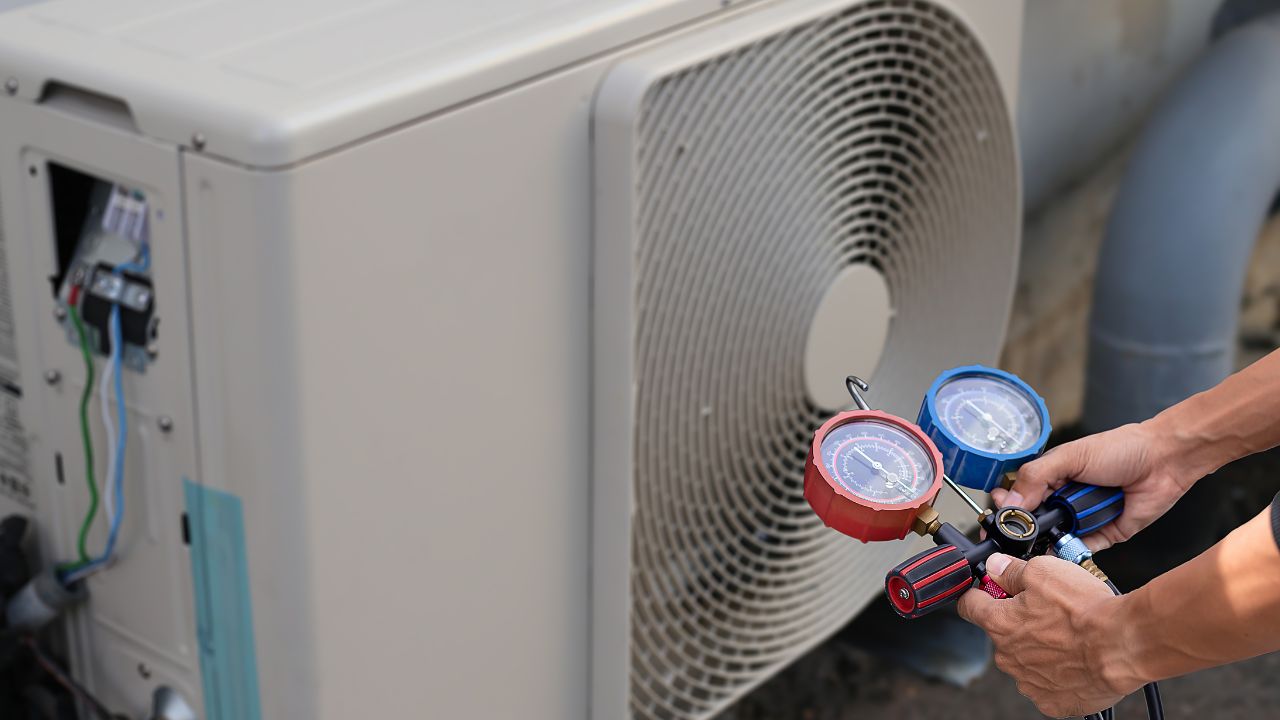
Measure operating conditions, temperature split, superheat/subcooling, line temperature
Proceed to leak detection only after ruling out obvious causes (60% of faults involve refrigerant, compressor, or controls together)
What Professional Leak Detection Methods Are Most Reliable?
Method
Best For
Strengths
Limitations
Electronic detector
Active accessible leaks
Fast; pinpoints location
Can't detect sealed/hidden areas
UV dye
Slow/hidden leaks
Detects up to 25 feet; finds difficult spots
Requires UV light; needs return visit
Nitrogen pressure test
New installs; hidden leaks
Highly reliable; confirms before charging
Requires refrigerant evacuation first
Bubble confirmation
Suspected joints
Visual verification
Only works on exposed fittings
Professional detection costs $150-$450. Electronic detectors run $250-$1,000+. UV dye kits start at $16.99. Nitrogen testing ranges from $178.85 to $2,000+.
Where Do Technicians Check First?
Indoor: Evaporator coil (60% of leaks), brazed joints at line connections, service ports, and drain pan area
Outdoor: Service valves (20%), line set connections, condenser coil (10%), compressor fittings, reversing valve (heat pumps)
What Are The Professional Solutions For An AC Refrigerant Leak?
Proper HVAC refrigerant solutions address root causes, not just symptoms.
When Is Repairing A Leak The Best Option?
Proper refrigerant leak repair includes:
Locate and confirm leak (electronic, pressure test, dye)
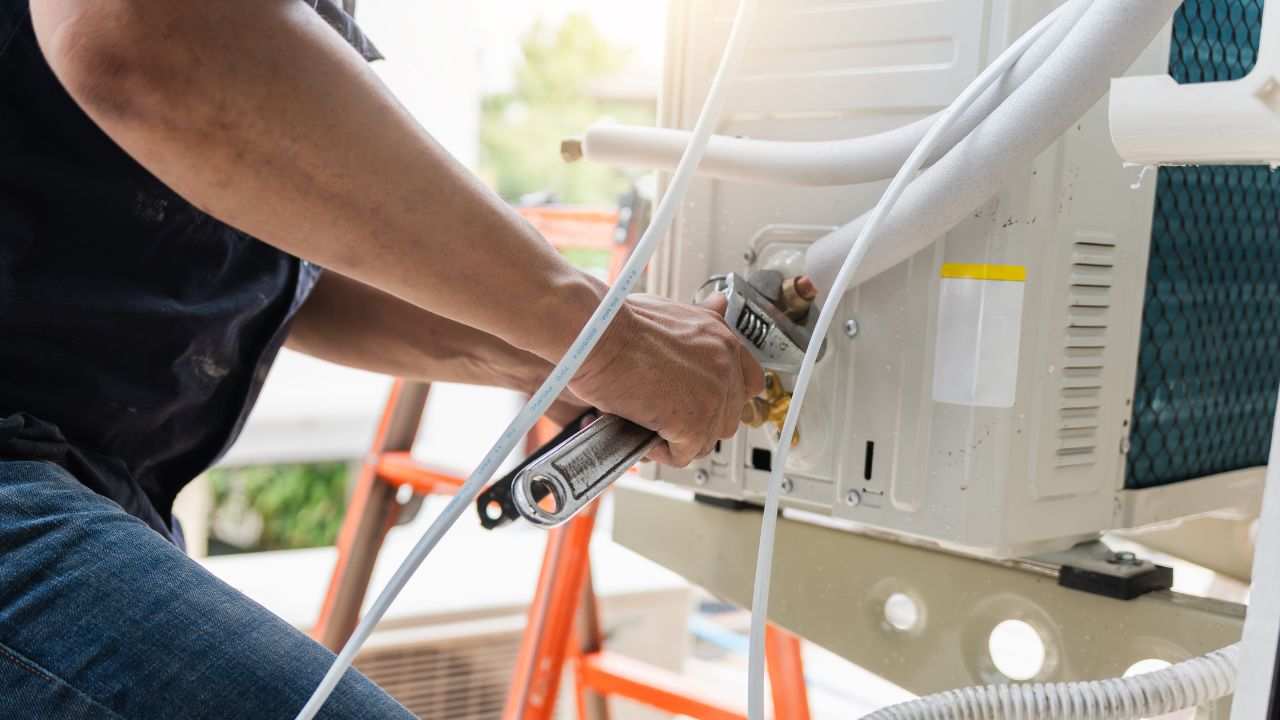
Repair/replace failing part (braze joint, replace valve/component)
Pressure test to verify repair holds
Evacuate/dehydrate system (remove air and moisture)
Charge to manufacturer spec (by weight or superheat/subcooling)
What Does Proper Evacuation Accomplish Before Recharging?
Evacuation removes air and moisture using vacuum pumps. Air contains moisture forming acids with refrigerant, causing corrosion. Deep vacuum (500 microns) removes non-condensable gases reducing efficiency 10-30%. Process runs 30-60 minutes depending on system size.
Skipping evacuation causes: acid formation corroding components, ice blockage at expansion device, reduced capacity from gases, repeat failures from contamination.
How Do Technicians Recharge Accurately and Verify Performance?
Recharge by weight (most accurate) or superheat/subcooling measurement. R-410A costs $50-$100/pound installed. Systems need 2-4 pounds per ton (3-ton = 6-12 pounds total).
Verification checklist:
Charge method aligned with specs
Stable temperatures/pressures within normal range
No abnormal icing on lines or coil
Temperature differential restored to 15-20°F
System cycles properly without continuous runtime
How Much Does Refrigerant Leak Diagnosis And Repair Cost?
What Factors Change Cost the Most?
Factor
Impact
Lower vs Higher
Location
Accessibility = labor time
Service valve (1 hr) vs buried coil (4+ hrs)
Parts
Component replacement
Valve core $150-$500 vs coil $600-$2,000
Labor/skill
Diagnosis, recovery, repair, testing
Outdoor leak 2-3 hrs vs hidden leak 6+ hrs
Refrigerant type/quantity
R-410A $50-$100/lb; 2-4 lbs/ton
2-ton top-off (2 lbs) vs 5-ton recharge (15 lbs)
Emergency timing
After-hours service
Weekday $75-$150/hr vs weekend double rates
Average repair: $350. Refrigerant work: $100-$3,000. Compressor: $800-$3,000+.
What Should a Written Estimate Include?
Specific diagnostic method (electronic, UV dye, nitrogen test)
Welcome to Alpine Plumbing and Rooter, serving San Dimas and the surrounding areas as your reliable source for exceptional plumbing and drainage services. We also provide reliable licensed HVAC services.
After reviewing your information, we will contact you as soon as possible.
"*" indicates required fields
Alpine Plumbing, Heating, and Air
462 Borrego Ct Unit A, San Dimas, CA 91773
CA Plumbing/HVAC License: #1041244 AZ Plumbing License: ROC 362311
Welcome to Alpine Plumbing, Heating, and Air, serving San Dimas, San Bernardino, Lake Havasu, AZ, and the surrounding areas. We are your reliable source for exceptional plumbing, Heating, and Air Conditioning needs.