April-May timing saves 10-30% on service costs: Off-season scheduling provides same-week appointments with discounts, while June-July brings 2-4 week waits and 50-100% emergency premiums
Spring tune-ups prevent 80-95% of summer breakdowns: Pre-season maintenance catches failing capacitors, refrigerant leaks, and electrical issues before they cause system failures during peak heat
Professional maintenance extends equipment life by 3-7 years: Annual service worth $150-$300 protects your $3,000-$8,000 system investment, delivering $2,142-$5,000 in avoided replacement costs
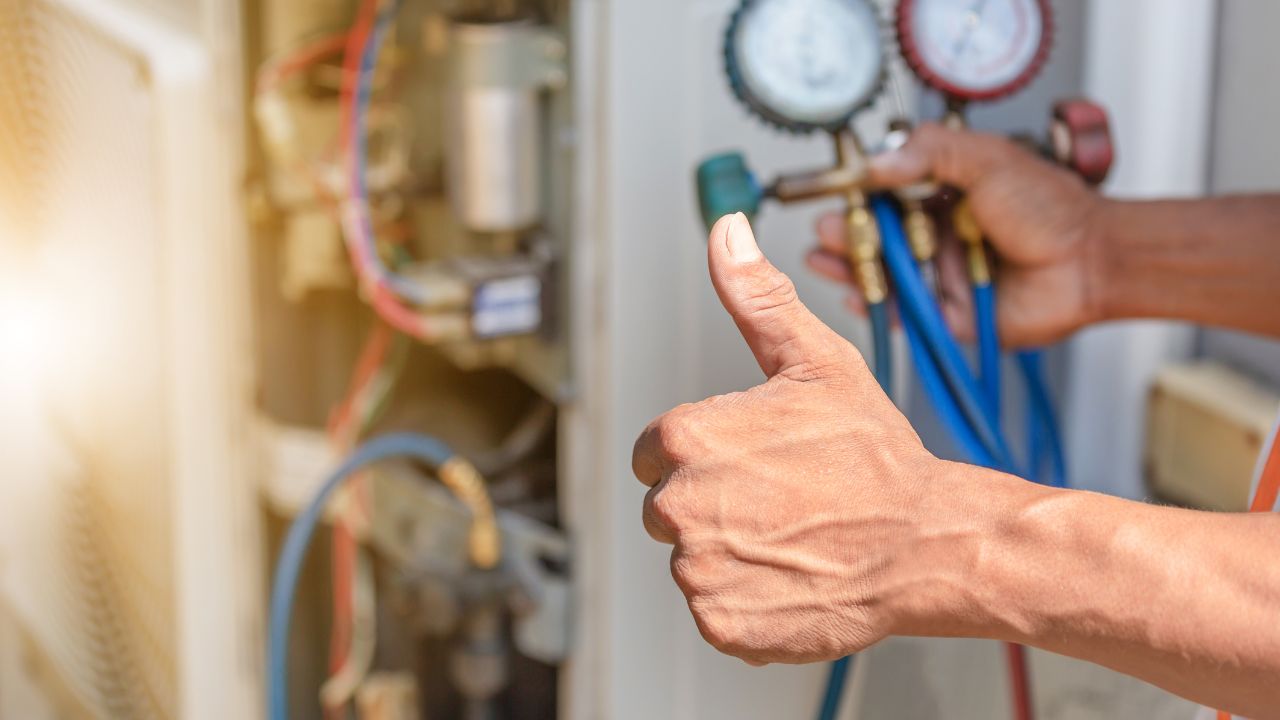
Refrigerant "top-offs" are red flags, not routine maintenance: Low refrigerant always means a leak exists; proper service finds and fixes the leak before recharging the system
DIY tasks complement but don't replace professional service: Monthly filter changes ($10-$30) and debris clearing help, but only licensed technicians can safely handle refrigerant, electrical systems, and performance diagnostics
Spring temperatures may feel comfortable now, but waiting until summer's first heat wave to think about AC maintenance guarantees expensive delays, emergency pricing, and uncomfortable days without cooling. Smart homeowners schedule tune-ups during April and May, when contractors offer same-week service at 10-20% discounts and have time for thorough inspections.
This comprehensive guide reveals exactly what professional spring AC maintenance includes, why timing matters more than most people realize, and how a $150-$300 investment prevents $500-$2,500 emergency repairs while extending your system's life by 3-7 years.
What Is An AC Tune-Up, And What Does Spring Maintenance Include?
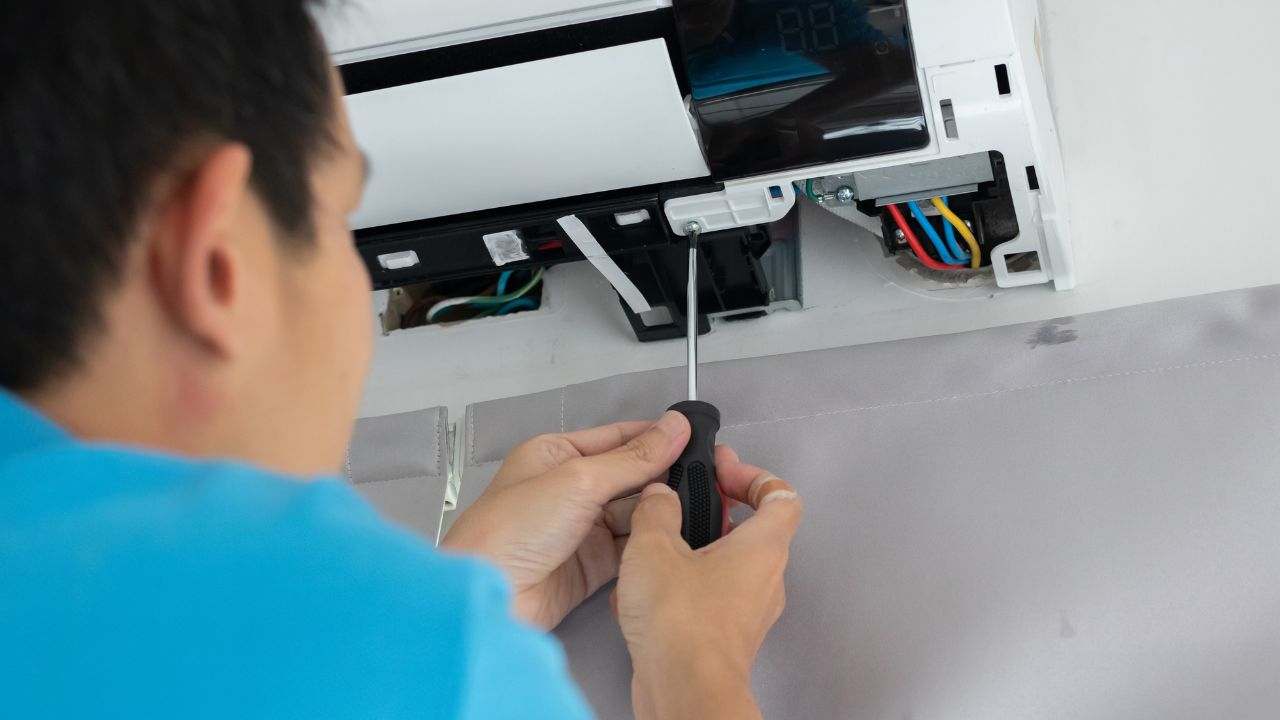
An AC tune‑up is a comprehensive inspection and cleaning service performed by HVAC professionals to ensure your cooling system operates at peak efficiency. Spring HVAC maintenance prepares your system for summer's heat by identifying problems before they become costly breakdowns.
What Is The Difference Between Maintenance And Repair?
Category
Preventive Maintenance
Emergency Repair
Timing
Scheduled, pre-season (April-May)
Unplanned, often during peak heat
Cost
$150-$300 annually
$500-$2,500 per incident
Purpose
Prevent failures, optimize efficiency
Fix broken components
Wait Time
Same-week service in off-season
2-4 weeks in peak season
Breakdown Prevention
Prevents 75-95% of failures
Addresses existing failures only
Equipment Lifespan
Extends life by 3-7 years ($2,142-$5,000 value)
No lifespan benefit
Emergency Premium
Standard rates, 10-20% discounts
50-100% higher rates
What Does A Standard AC Tune-Up Checklist Cover?
A professional tune-up includes these essential tasks:
Air filter inspection and replacement: Dirty filters cause 30% of HVAC breakdowns and reduce efficiency by 5-15%
Evaporator and condenser coil cleaning: Average cost $250 (range $75-$700); dirty coils reduce cooling capacity by 25%
Electrical connection inspection and tightening: Prevents safety hazards and component failures
Refrigerant level verification: Correct charge essential for efficiency; recharge costs $150-$600 if needed
Condensate drain clearing: Prevents water damage and humidity issues
Thermostat calibration: Ensures accurate temperature control and energy savings
Temperature differential testing: Should measure 15-20°F between supply and return air
Airflow verification: Should deliver 350-400 CFM per ton of cooling capacity
Safety control testing: Confirms all shutdown and protective systems function properly
Blower motor lubrication: Reduces friction and electricity consumption
Why Is Spring the Best Time to Schedule An AC Tune-Up?
Scheduling AC maintenance in April or May positions you ahead of the summer rush when HVAC companies become overwhelmed with emergency service calls. Pre-season service ensures your system is ready when temperatures spike, preventing uncomfortable breakdowns and expensive emergency repairs.
Why Does Pre-Season Service Help Avoid The Summer Rush?
Off-season advantages (April-May) provide immediate benefits. Contractors offer same-week or next-day appointments with 10-20% discounts. Technicians have time for thorough inspections rather than rushed service. You avoid 2-4 week wait times common during June-July peak season.
Peak season penalties hit hard. Emergency service rates run 50-100% higher than standard pricing. AC installation markups increase 10-30% during the summer months. First heat waves trigger breakdown spikes; systems that skipped maintenance fail when you need them most.
Strategic timing saves money. Scheduling pre-season tune-ups costs $150-$300 versus $500-$2,500 for emergency repairs. You gain budget predictability and avoid the stress of mid-summer system failures. Maintenance contracts ($150-$500 annually) lock in priority service and repair discounts of 10-20%.
What Benefits Do You Get From A Spring AC Tune-Up?
Spring tune-ups deliver measurable returns:
Efficiency improvement of 5-15%: Well-maintained systems use less energy to cool your home
Energy savings of 100-300 kWh per season: Translates to $13-$39 annual savings at $0.13/kWh rates
Breakdown prevention of 80-95%: Pre-season inspection catches problems before they cause failures
Equipment lifespan extension of 3-7 years: Worth $2,142-$5,000 in avoided replacement costs for a $5,000 system
Cooling cost reduction of 15-50%: When combined with high-efficiency SEER2-rated upgrades
Smart thermostat integration savings of 10-23%: Nest and Ecobee save $200-$400 annually when paired with maintained systems
Ductwork sealing prevents 20-40% energy loss: Professional inspection identifies leaks, reducing cooling efficiency by up to 30%
Warranty compliance: Most manufacturers require annual professional maintenance to maintain coverage
What Problems Happen When You Skip Spring AC Maintenance?
Neglecting spring maintenance leads to predictable failures during summer's peak heat. Systems that haven't received pre-season service are significantly more likely to break down during the first heat wave, leaving you without cooling when you need it most, similar to how skipping annual maintenance resolutions leads to preventable plumbing emergencies.
What Symptoms Suggest Your AC Needs Attention Now?
Watch for these warning signs:
Weak airflow from vents: Indicates clogged filters, duct leaks, or blower problems; airflow issues reduce efficiency by 15%
Warm air instead of cool: Suggests refrigerant leaks, compressor failure, or thermostat issues
Short cycling (frequent on/off): Often caused by oversized units (10% efficiency loss) or electrical problems
High indoor humidity: System isn't running long enough to dehumidify or has drainage issues
Unusual noises: Rattling, buzzing, squealing, or banging sounds signal mechanical problems
Musty or burning odors: May indicate mold growth or electrical issues requiring immediate attention
Water pooling near indoor unit: Blocked condensate drain or refrigerant leak
Frozen evaporator coils or refrigerant lines: Low refrigerant, restricted airflow, or thermostat problems
Energy bills increased 15-30%: Inefficient operation from lack of maintenance
Broken or loose internal component, compressor failure
High
Stop use; schedule emergency service
Compressor: $1,500-$3,000
Musty smell
Mold in ductwork or evaporator coil, clogged drain
Medium
Filter change, coil cleaning, duct inspection
Coil cleaning: $75-$700
Burning odor
Electrical fault, overheating motor, dust on heat exchanger
High
Shut down immediately; call professional
Circuit board: $550-$1,100
How Do You Prepare For Spring AC Maintenance? (DIY Steps)
A few quick DIY tasks can improve cooling system health and performance and keep your pro tune-up efficient, but they don’t replace annual maintenance.
Step 1: Replace The AC Filter (Correctly)
Find it: return grille or air handler (check the manual if needed).
Install it right: the arrow points toward airflow (into the blower).
Choose the right type:
Fiberglass ($5–$10): every 30 days
Pleated MERV 8–12 ($15–$25): every 60–90 days(60 with pets / 30 with multiple pets)
MERV 13–16 ($25–$40): about every 60 days (or per manufacturer)
Confirm compatibility: higher MERV can reduce airflow, don’t “upgrade” without checking specs.
Set a reminder: dirty filters cause 30% of breakdowns and 5–15% efficiency loss.
Step 2: Clear Debris Around The Outdoor Unit
Shut off power at the breaker + outdoor disconnect.
Remove leaves/vegetation and keep 2 ft clearance on all sides.
Rinse the fins gently with a garden hose (no pressure washer).
Fix bent fins with a fin comb if needed.
Check its level, a tilted unit can stress the compressor.
Step 3: Test the System Before Hot Weather
In early spring, run the AC for 10–15 minutes:
Set thermostat to cool, 5°F below room temp.
Confirm 15–20°F colder air at supply vs. return.
Watch/listen for odd noises, ice, or water leaks.
Make sure vents are open and unobstructed.
Check thermostat accuracy (more than 1°F off may need calibration).
Call a pro immediately if you smell burning, see sparks, hear loud banging, or the system won’t start.
What Should A Professional AC Tune-Up Include?
Professional tune-ups go beyond DIY maintenance to inspect, test, and optimize components homeowners cannot safely access. Technicians use specialized tools to measure system performance and identify problems before they cause failures.
What Refrigerant Checks Are Normal vs. Red Flags?
Service Approach
Normal Professional Practice
Red Flags to Avoid
Diagnostic Method
Superheat and subcooling calculations; temperature and pressure measurements
"Top-off" without diagnosis or measurements
Leak Detection
UV dye, electronic leak detector, bubble solution on connections
No leak discussion; assumes refrigerant "depletes naturally"
Problem Identification
"Your system has a leak at [location]. Here's the repair estimate."
"All systems lose refrigerant. Let's just add more."
Service Process
Find leak → Repair leak → Evacuate system → Recharge to specification
Explains refrigerant is sealed system; low charge proves leak exists
Suggests annual "top-offs" are normal maintenance
Follow-up
Pressure test after repair; warranty on leak fix
No confirmation leak is actually fixed
Critical fact: Refrigerant operates in a sealed system. If levels are low, a leak exists. Adding refrigerant without finding and fixing the leak wastes money; you'll need another "top-off" soon.
What Tasks Require Professional Service vs. DIY?
Category
DIY Tasks (Annual Cost: $150-$400)
Professional Required Tasks
Air Filters
✓ Replace monthly or quarterly ($10-$30/filter)
Advanced filtration system maintenance
Outdoor Unit
✓ Clear debris, rinse fins gently
Deep coil cleaning with specialized chemicals ($75-$700)
Visual Inspection
✓ Check for leaks, ice, unusual sounds
Thermal imaging, electrical diagnostics
Thermostat
✓ Battery replacement, basic programming
Calibration, wiring inspection, zone control setup
✓ Gas line inspection, pressure testing, combustion analysis
Internal Components
✗ Requires disassembly and expertise
✓ Blower motor cleaning ($850-$2,000 if replacement needed)
Performance Testing
✗ Needs specialized meters
✓ Airflow measurement (350-400 CFM/ton), temperature differential (15-20°F)
Warranty
DIY doesn't satisfy manufacturer requirements
✓ Documentation maintains warranty coverage
Safety
Basic tasks with power off are safe
✓ Licensed professionals trained for hazards
Long-term Value
Basic upkeep
$2,742-$7,800 value over equipment lifespan through efficiency, prevented repairs, extended life
Professional maintenance protects your investment. The $150-$500 annual cost prevents $500-$2,500 emergency repairs, extends equipment life by 3-7 years (worth $2,142-$5,000), and maintains warranty coverage that DIY work voids.
How Much Does An AC Tune-Up Cost?
Tune-up pricing varies by service scope and regional market rates. Understanding what's included at each price point helps you identify fair pricing versus overcharges, just as understanding plumbing service costs helps you budget for home maintenance.
High-efficiency systems, large homes, or problem systems
Common add-on services (typically extra):
Coil cleaning: $75-$700 (average $250); severe cases up to $1,500
Refrigerant service: $150-$600 if leak repair and recharge needed
Ductwork sealing: $300-$1,000 for accessible duct improvements
Thermostat calibration: Usually included, but replacement $115-$500
Emergency/weekend service: 50-100% premium over standard rates
Contract benefits outweigh single-visit costs for most homeowners. Annual contracts provide two services (spring AC, fall furnace) for less than paying individually, plus repair discounts and priority scheduling during peak season.
When Does A Tune-Up Turn Into A Repair?
Legitimate scenarios where additional work is needed:
Failed capacitor ($150-$400): Cannot be repaired; replacement required when bulging, leaking, or testing shows incorrect microfarad readings
Verified refrigerant leak: After pressure testing confirms leak location, repair ranges from $200-$1,500 depending on component; recharge adds $150-$600
Blower motor bearing failure ($850-$2,000 for replacement): Excessive noise, overheating, or seized motor requires replacement; cannot be lubricated back to health
Severe coil restriction: Deep chemical cleaning may be insufficient; heavily corroded coils need replacement ($400-$1,200 installed)
Electrical safety issues: Burned wiring, corroded connections, or damaged contactors create fire hazards; immediate replacement is mandatory
Cracked heat exchanger (furnace): Carbon monoxide hazard; system must be shut down; replacement $500-$1,500 or full furnace $3,000-$7,000
Compressor problems ($1,500-$3,000): Hard start, overheating, or electrical issues; often indicates need for full system replacement if unit is 10+ years old
Ductwork leaks reducing efficiency by 30%+: Major duct sealing or replacement ($2,000-$7,500) may be cost-effective for severe cases
How to evaluate recommendations:
Request photos or video of the problem
Ask for written estimate before authorizing work
Get second opinion for repairs exceeding $500
Verify the problem affects safety, efficiency, or imminent failure
Compare repair cost to 50% rule, if repair exceeds half of replacement cost and system is 15+ years old, consider replacement
What Questions Should You Ask Before Booking?
Essential Questions to Ask HVAC Contractors
"Can you provide your written service checklist?": Legitimate companies detail every inspection and test they perform
"What specific measurements will you take?": Should mention superheat/subcooling, temperature differential, airflow CFM, amp draw
"What's included in the base price versus additional cost?": Clarifies if coil cleaning, refrigerant check, or other services cost extra
"How long should the service take?": Thorough tune-ups require 45-90 minutes; 15-minute visits skip essential checks
"Will you get my approval before performing any repairs?": Reputable technicians never perform unauthorized work
"Are your technicians licensed and insured?": Verify EPA 608 certification for refrigerant work, state/local licensing, and liability insurance
"What warranties apply to your service and repairs?": Should warranty labor (typically 1 year) and parts (manufacturer warranty 5-10 years)
"Do you offer maintenance contracts, and what's included?": Compare contract benefits, pricing, and cancellation terms
"What payment methods do you accept?": Beware cash-only or full payment upfront demands
"Can you provide references or reviews from recent customers?": Check Google, Yelp, BBB, or Angi for verified reviews
"What happens if you find a problem during the tune-up?": Process for presenting options, getting approval, and scheduling repairs
"Do you guarantee your work?": Service guarantee should cover callbacks if the problem recurs within 30-90 days
Yes. “Seems fine” can still hide 15–30% efficiency loss and energy waste. A $150–$300 annual tune-up prevents 80–95% of breakdowns and helps avoid $500–$2,500 emergency repairs. Techs often catch issues early, low refrigerant/leaks, dirty coils (up to 25% capacity loss), and weak electrical connections, before they fail under summer load
How Often Should You Change AC Filters?
It depends on filter type and conditions, but it’s the most important DIY task: dirty filters cause 30% of HVAC breakdowns and create 5–15% efficiency loss, like how water treatment protects your plumbing system’s health.
Fiberglass: every 30 days
Pleated MERV 8–12: every 60–90 days
MERV 13+: about every 60 days Adjust sooner for pets, allergies, or heavy runtime.
When Should You Turn On Your AC For The First Time?
Test it in spring when it’s 65–75°F outside, 4–6 weeks before daily cooling. Run 10–15 minutes, set the thermostat 5°F below room temp, and confirm: 15–20°F temp drop, no odd noises, no ice on lines, and no indoor leaks. Early testing helps you avoid June 2–4 week delays and 50–100% higher emergency rates.
What Should You Do Next?
Replace your AC filter today ($10–$30): dirty filters cause 30% of breakdowns and can lead to $500+ repairs.
Clear the outdoor unit (power off): remove debris and keep 2 ft of clearance.
Run a 10–15 minute test: confirm a 15–20°F drop between return and supply vents.
Book an April–May tune-up now: better availability + 10–20% off before peak season.
Set monthly filter reminders: adjust frequency for pets, allergies, or heavy use.
Update thermostat schedules: aim for 78°F home / 85°F away.
Track your baseline utility bill: compare after tune-up and changes.
Watch for red flags: strange noises, warm air, high humidity, or leaks = call a pro.
Best Time To Book
Schedule in April or May for same-week appointments and off-season pricing. Waiting until June can mean 2–4 week delays and 50–100% higher rates, with more rushed service.
Bottom Line
A spring tune-up ($150–$300/year) prevents 80–95% of breakdowns, cuts energy costs by $13–$39 per cooling season, and can extend system life 3–7 years, often $2,142–$5,000 in avoided replacement costs.
Ready to schedule your spring AC tune-up? Contact Alpine Plumbing & Air today for same-week service and off-season savings before the summer rush begins.
Welcome to Alpine Plumbing and Rooter, serving San Dimas and the surrounding areas as your reliable source for exceptional plumbing and drainage services. We also provide reliable licensed HVAC services.
After reviewing your information, we will contact you as soon as possible.
"*" indicates required fields
Alpine Plumbing, Heating, and Air
462 Borrego Ct Unit A, San Dimas, CA 91773
CA Plumbing/HVAC License: #1041244 AZ Plumbing License: ROC 362311
Welcome to Alpine Plumbing, Heating, and Air, serving San Dimas, San Bernardino, Lake Havasu, AZ, and the surrounding areas. We are your reliable source for exceptional plumbing, Heating, and Air Conditioning needs.