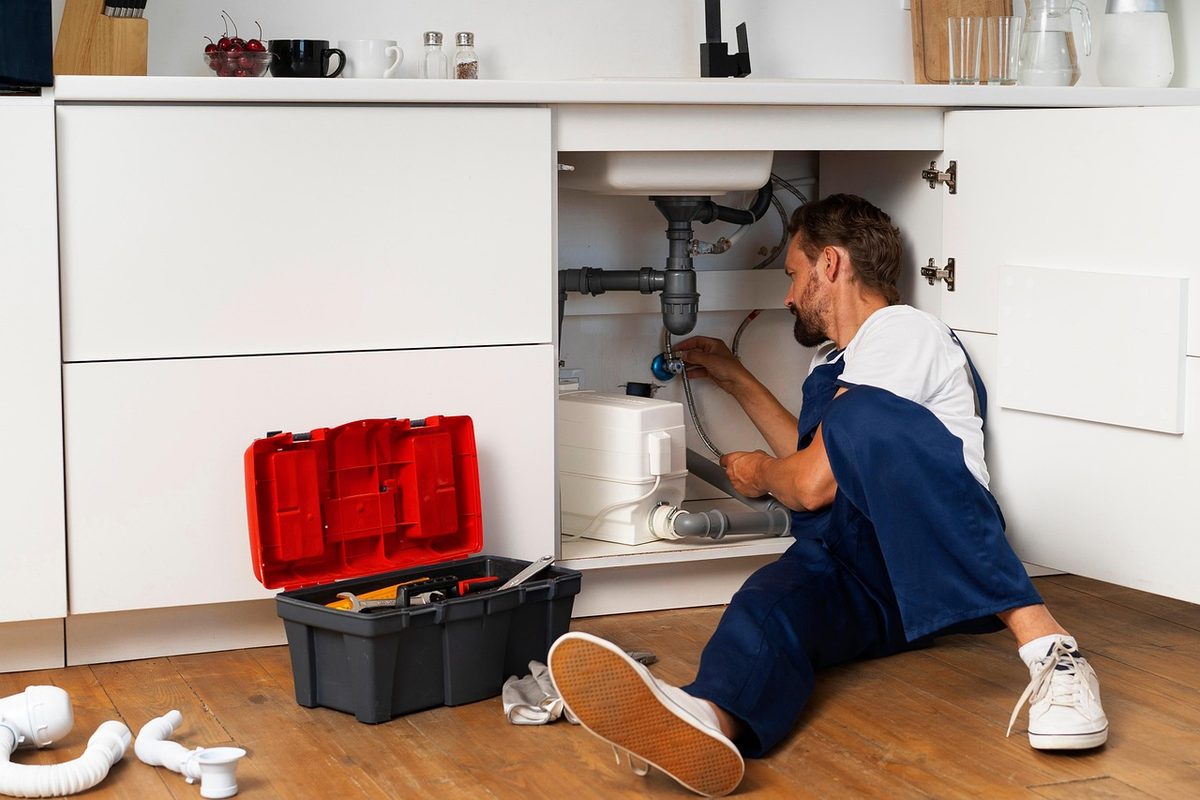
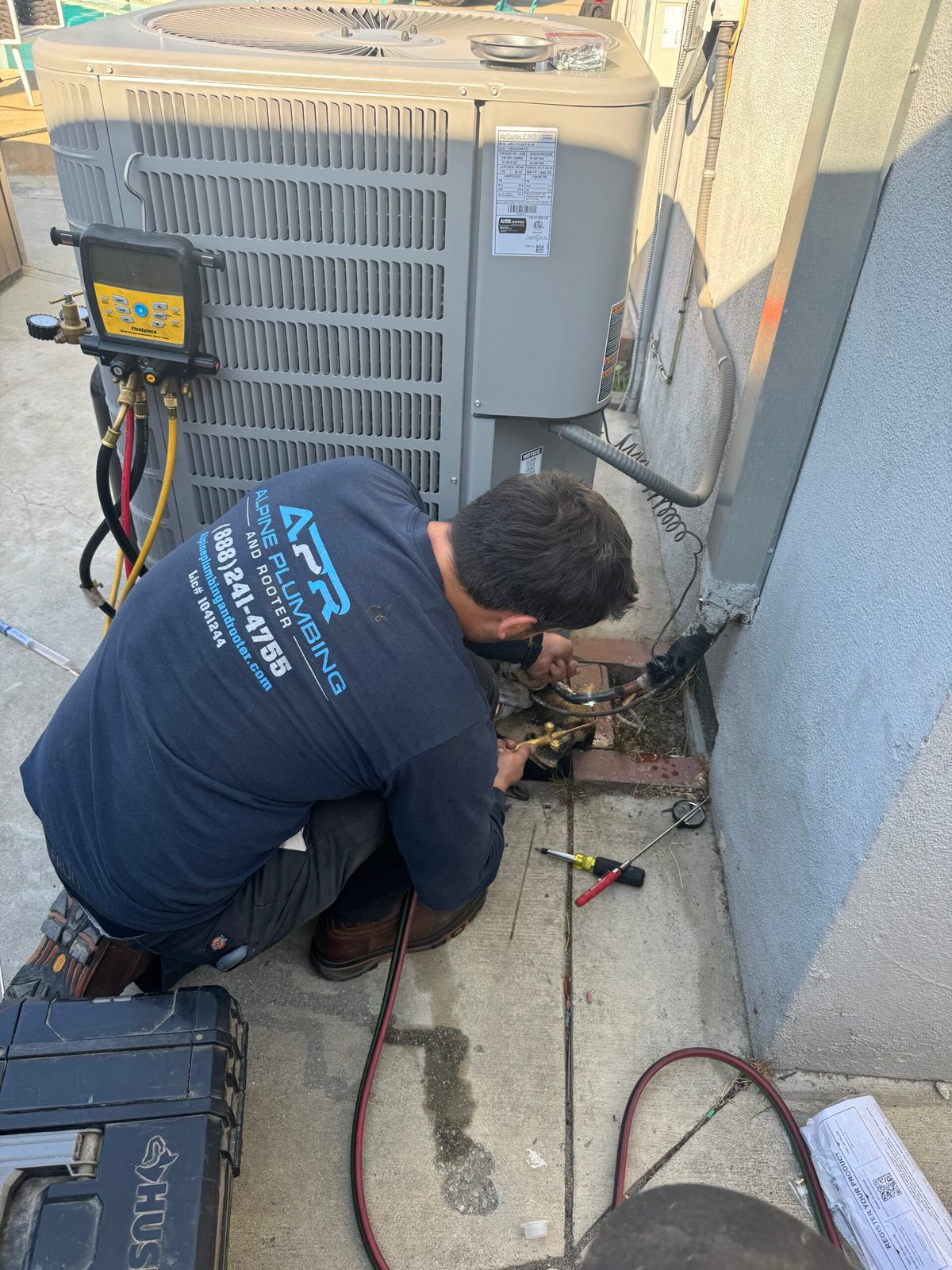
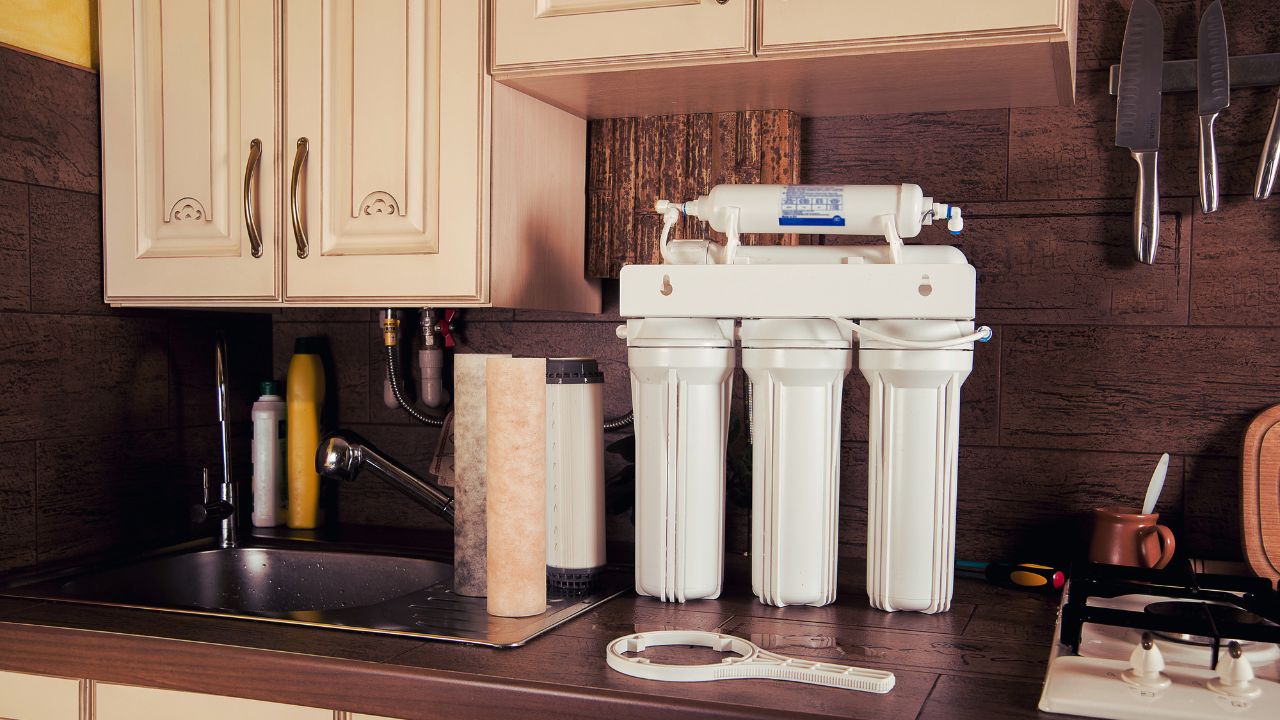
Emergency plumbers handle life-safety issues like gas leaks, burst pipes, and sewage backups with immediate response
California law limits unlicensed handyman work to jobs under $1,000 that require no building permits
Emergency plumber rates range from $100 to $500 per hour plus dispatch fees of $150 to $500
Unlicensed plumbing work voids homeowners' insurance coverage and creates personal liability exposure
Licensed C-36 plumbers are legally required for pipework, gas lines, and any permitted plumbing projects
Homeowners facing plumbing problems decide whether to call an emergency plumber or handyman based on job scope and legal requirements. California licensing laws strictly regulate who can perform plumbing work, with violations carrying criminal penalties and insurance consequences.
Here’s what we break down: when California law requires a licensed C-36 plumber, how the two options compare on cost, and how insurance coverage shifts based on who does the work. The choice between handyman vs plumber services affects repair quality, legal compliance, and financial protection. Understanding these distinctions prevents costly mistakes and ensures proper resolution of plumbing issues.
Emergency Plumber Vs. Handyman: Core Differences in Licensing and Scope
Emergency plumbers are licensed C-36 contractors authorized to handle all plumbing work regardless of complexity or cost. Handymen operate under California's minor-work exemption, limited to jobs under $1,000 that require no permits.
The fundamental distinction lies in licensing authority and legal scope of work. Emergency plumbers carry state-verified credentials, bonding, and insurance required for code-compliant installations and repairs.
Emergency Plumbers Handle Life-Safety and High-Urgency Failures
Emergency plumbers respond to life-safety hazards, including gas leaks and sewage exposure, with a target response time around 30 minutes when delayed action would endanger occupants or property. Burst pipes causing active flooding require an emergency plumber in San Dimas 24 hour response due to water volume discharge rates. A half-inch line under household pressure releases 10 to 12 gallons per minute at 60 PSI.
Sewage backups constitute biohazard emergencies requiring licensed plumber intervention due to E. coli and Salmonella contamination. Raw sewage contains pathogens creating health risks requiring proper safety protocols and disposal procedures. Water heater failures with active leaks demand same-day emergency plumber service to prevent flooding and potential gas-line hazards. Homeowners must shut off water supply and fuel sources while awaiting professional arrival.
Main water line breaks require emergency licensed plumber diagnosis to prevent contamination from pressure loss. Prolonged system depressurization allows soil contaminants to enter household water supply through compromised connections.
Handymen Can Legally Perform Minor, Non-Permitted Repairs
Minor leaks under sinks fall within handyman scope where local rules allow, though California's $500 to $1,000 threshold sensitivity applies. These small drips involve low water volume and pose no immediate structural threat.
Fixture installations like faucet swaps and toilet seat replacements qualify as handyman-eligible for small non-permitted jobs. These cosmetic upgrades require no structural modification or code-compliance verification when properly scoped. Caulking work represents handyman-eligible maintenance tasks without plumbing-code implications. These cosmetic applications prevent water intrusion but involve no pressurized water system modification.
Running toilet repairs using basic fix kits fall within handyman capability for simple mechanism adjustments. These repairs replace internal tank components without altering supply lines or drainage connections.
Handymen cannot perform work requiring building or plumbing permits regardless of project cost under California law. Pipe work, gas lines, and structural plumbing changes require licensed C-36 plumber authorization.
California Licensing Rules Define Each Professional's Legal Scope
California's handyman exemption allows unlicensed individuals to perform work under $1,000 combined labor and materials without CSLB licenses. This threshold increased from $500 effective January 1, 2025, under Assembly Bill 2622.
The exemption requires no employees hired and no building permit needed for the specific work performed. These conditions protect consumer safety while allowing minor maintenance without contractor licensing requirements. California's aggregation rule prevents splitting jobs into smaller invoices to circumvent the $1,000 threshold artificially. Total project scope determines licensing requirements, not individual invoice amounts or payment schedules.
Licensed C-36 Plumbing Contractor classification becomes mandatory for work above the exemption threshold or requiring permits. Pipe modifications, gas line work, and permitted installations require this license regardless of dollar amount.
Emergency Plumber Vs. Handyman Costs: How Pricing Structures Compare
Emergency plumber rates significantly exceed handyman pricing due to licensing overhead, insurance requirements, and immediate availability commitments. Understanding cost structures helps homeowners budget appropriately and recognize value differences between service categories.
Pricing transparency varies between local independent shops and national chains, with flat-rate models becoming industry standard. How much does a plumber cost in San Dimas depends on job complexity and service-provider business model.
Typical Hourly Rates for Emergency Plumbers and Handymen
Hourly rates vary by provider type, licensing overhead, and business model. The table below compares national rate ranges.
Provider Type
Hourly Rate Range
Typical Average
Emergency plumber (national)
$100–$500/hr
~$170/hr
Local independent plumber
$75–$150/hr
~$80/hr (residential)
National chain plumber
$100–$200/hr
Standardized pricing
Master plumber
$100–$200/hr
~$135/hr
Handyman
$50–$80/hr
General maintenance scope
Emergency Call-Out Fees and After-Hours Rates by Provider Type
Call-out and after-hours fees add to hourly rates and vary by provider and timing.
Fee Type
Typical Range
Notes
Local service call fee
$75–$150
Covers travel and diagnostic time
National chain trip fee
$75–$300
Standardized corporate pricing
Emergency dispatch fee
$150–$500
Applies to immediate-response calls
After-hours/holiday multiplier
1.5x–3x standard rate
Can reach $600/hr on holidays
Pricing Transparency Differs Between Independent Shops and National Chains
Local plumbers mix hourly and flat-rate approaches with variation by individual shop, often marketing transparency as a competitive differentiator. Independent operators frequently emphasize "no hidden fees" messaging to distinguish from corporate competitors. National chain pricing transparency relies on standardized flat-rate menu pricing marketed as eliminating guesswork for customers. These companies implement consistent estimate processes across franchise locations to reduce pricing unpredictability.
Flat-rate pricing has become the industry-preferred model, replacing traditional hourly billing for many service categories. This shift provides cost certainty before work begins but may increase total bills for simple repairs. National franchises typically charge 120 to 160 percent of local independent pricing for comparable non-emergency work. Franchise royalties and national marketing fees are contractually passed to customer bills as overhead recovery.
When to Call an Emergency Plumber
True emergencies involve immediate threats to safety, property, or health that cannot wait for regular business hours. emergency plumbing service guide providers maintain 24-hour dispatch systems specifically for these critical situations.
Distinguishing genuine emergencies from urgent but manageable problems prevents unnecessary premium-rate service calls. Homeowners who understand emergency criteria make better decisions about response timing and service-provider selection.
These Plumbing Emergencies Require Immediate Licensed Response
Gas leak response requires immediate evacuation followed by calls to 911 and the gas utility emergency line first. Licensed plumbers should only be contacted after the utility company clears the property for safety. Active flooding from burst pipes demands emergency licensed plumber response while homeowners shut off main water valves. Household water pressure enables rapid flooding that causes structural damage within minutes of pipe failure.
Water heater leaks require shutting off the water supply plus gas or electrical power to the unit before calling emergency plumbers. These failures combine flooding risk with potential fuel-line hazards requiring professional assessment and repair. Sewage backups contain E. coli, Salmonella, and other pathogens, creating biohazard exposure requiring immediate professional intervention. Licensed plumbers follow safety protocols for contaminated waste handling that protect occupant health.
Gas leaks must be addressed through utility emergency lines and 911 first, never through handyman services. Gas work requires specialized licensing in all jurisdictions due to explosion and carbon monoxide poisoning risks.
Response Time Expectations for True Emergencies
Life-safety emergencies target response times around 30 minutes or less, the industry benchmark for immediate-danger calls. These aggressive timelines apply to gas leaks, sewage exposure, and situations with immediate occupant danger.
General emergency plumbing calls target 45- to 60-minute response windows for urgent but non-life-safety situations. Active flooding and major leaks fall into this category when occupants face no direct health threats. Real-world emergency arrival times average 1 to 3 hours across markets despite aspirational response-time targets. Geographic coverage areas, traffic conditions, and simultaneous call volume affect actual field arrival consistency.
After-hours emergency calls experience longer wait times due to reduced technician availability and dispatch-center routing complexity. Homeowners should set realistic expectations while taking interim mitigation steps like valve shutoffs.
Insurance and Liability Risks in Emergency Plumbing Work
Unlicensed work voids insurance coverage and exposes both handymen and homeowners to personal liability for resulting damages. Homeowners insurance policies exclude damage caused by negligent, substandard, or improper installation and workmanship. Flooding from unlicensed plumber work can result in denied insurance claims at exactly the moment coverage becomes critical. Insurers evaluate installation quality and licensing compliance when processing water-damage claims following plumbing failures.
Unpermitted work discovery triggers insurance premium increases or outright policy non-renewal in many cases. Carriers view code violations as increased risk factors that justify coverage modifications or termination. Unpermitted plumbing modifications may cause insurers to deny damage claims outright when discovered during loss investigation. California real estate law requires disclosure of known unpermitted work during property sales.
Homeowners insurance generally excludes damage caused by improper workmanship regardless of who performed the installation. Coverage applies to sudden accidental damage but not to the cost of correcting substandard work.
When a Handyman Is the Right Choice
Handymen appropriately handle minor maintenance tasks and cosmetic repairs within California's legal exemption thresholds. These professionals provide cost-effective solutions for simple problems that don't require licensed contractor oversight.
Understanding legal boundaries prevents homeowners from inadvertently hiring unlicensed contractors for work requiring CSLB-licensed professionals. Questions to ask before hiring help verify appropriate service-provider selection for specific project types.
Minor Plumbing Tasks Handymen Can Safely Perform
Handymen safely perform faucet aerator cleaning, supply-line tightening, and basic fixture adjustments that require no system modification. These maintenance tasks prevent minor problems from escalating without triggering licensing requirements.
Toilet wax ring replacement falls within handyman scope when performed as isolated floor-seal maintenance without drainage-system alterations. This common repair prevents water damage from failed seals using readily available replacement kits. Showerhead replacements and similar fixture swaps qualify as handyman-appropriate when installations use existing supply connections without modification. These upgrades improve aesthetics and water efficiency through simple threaded connections.
Drain strainer installation and trap cleaning represent basic maintenance tasks suitable for handyman service under exemption thresholds. These preventive measures reduce clogging without altering drainage pipe configurations or venting systems.
California Law Limits on Handyman Plumbing Work
California's current handyman exemption threshold stands at $1,000 effective January 1, 2025 under Assembly Bill 2622. The previous $500 threshold applied through December 31, 2024 before the legislative increase. Unlicensed contracting first-offense penalties include up to 6 months jail time as criminal misdemeanor charges. Financial penalties range from $500 to $5,000 criminal fines plus administrative fines of $200 to $15,000.
Second unlicensed contracting convictions carry mandatory minimum 90-day jail sentences plus fines of 20 percent of contract price. Alternative $4,500 fines apply when percentage calculations produce lower penalty amounts. Administrative fines ranging from $200 to $15,000 apply separately from criminal penalties for unlicensed contracting violations. The Contractors State License Board imposes these civil penalties through administrative enforcement proceedings.
Risks of Using a Handyman Beyond Their Legal Scope
Property owners may face personal liability for medical costs and lost wages when unlicensed workers sustain injuries on-site. Homeowners insurance policies often exclude coverage for unlicensed contractor injuries occurring during prohibited work. Exceeding licensed handyman scope voids insurance coverage for resulting damage from the improper work performed. Carriers deny claims when investigations reveal unlicensed individuals performed work requiring contractor licensing.
Gas work without proper licensing creates explosion and carbon monoxide poisoning risks from improper installations and connections. These life-safety hazards justify California's strict licensing requirements for all fuel-system modifications. California real estate transactions expose unpermitted work as negotiating leverage or required repair obligations at sale time. Sellers must disclose known code violations, and buyers commonly demand corrections before closing.
Unlicensed contracting administrative fines range from $200 to $15,000 as civil penalties separate from criminal prosecution. These enforcement actions protect consumers and maintain industry standards through financial deterrence.
Verifying Licensing and Service Quality Before You Hire
License verification protects homeowners from fraudulent contractors and ensures compliance with California's consumer-protection laws. The Contractors State License Board maintains public databases allowing instant credential confirmation before hiring decisions.
Service quality assessment combines license verification with insurance confirmation, reference checking, and review analysis. Comprehensive vetting reduces risk when selecting between emergency plumbing vs handyman service providers for specific projects.
Confirming a Plumber's or Handyman's License Status
Homeowners verify plumber licenses by checking license numbers through state licensing board databases. California residents use the CSLB website license lookup tool at CSLB.ca.gov for instant verification. The Contractors State License Board requires $25,000 contractor bonds for all licensure classifications as consumer protection. These bonds provide financial recourse when licensed contractors fail to complete work or violate contract terms.
General liability insurance for licensed contractors typically costs $600 to $1,500 annually for standard coverage levels. This insurance protects homeowners from property damage and injury claims arising during contractor work. Handyman liability insurance ranges from $300,000 to $1,000,000 coverage with monthly premiums around $73 to $82. Annual costs span $876 to $984 for policies protecting against third-party damage and injury claims.
Property managers and HOAs commonly require $1,000,000 minimum liability coverage for handymen despite no legal mandate. These elevated thresholds protect association assets and reduce exposure from contractor-caused damage.
License verification through the CSLB database confirms active status, bond currency, and disciplinary history, and reveals expired or suspended credentials before hiring. Ask for physical license documentation and an insurance certificate naming the homeowner as an additional insured, since this extends liability coverage directly to the property owner during the job.
California also phases in mandatory workers’ compensation insurance for all licensed contractors starting January 1, 2028, with CSLB exemption verification beginning January 1, 2027.
References from three to five recent, similar-scope projects, combined with reviews across Google, the Better Business Bureau, and trade directories, reveal patterns in service quality and pricing transparency.
CSLB complaint history flags contractors with unresolved disputes, while a written warranty on the finished work shows confidence in the repair and gives homeowners recourse if something fails.
Selecting and Contracting with a Licensed Plumbing Contractor
Choosing the right water heater and other major installations requires contractors with manufacturer certification and installation training. These credentials ensure proper equipment setup and preserve manufacturer warranty validity. Estimate comparison between multiple licensed contractors identifies pricing outliers and prevents overpayment for standard services. Obtaining three written bids establishes market-rate baselines while revealing scope interpretation differences.
Payment terms should specify milestone-based disbursements rather than large upfront deposits before work commences. California law limits initial deposits to $1,000 or 10 percent of contract value, whichever is less.
Contract documentation must include license numbers, specific work scope, materials specifications, completion timeline, and total cost breakdown. Written agreements protect both parties and establish enforceable performance standards for dispute resolution.
Permit acquisition responsibility should be clearly assigned in contracts for work requiring building department approval. Licensed contractors typically secure permits as part of service scope, but homeowners must verify this contractual obligation.
Understanding the distinction between emergency plumbers and handymen protects homeowners from licensing violations, insurance complications, and unsafe repairs. California's legal framework strictly delineates which professionals can perform specific plumbing work based on job complexity and cost thresholds. Making informed decisions about service-provider selection ensures code compliance, preserves insurance coverage, and delivers reliable solutions.
Call Alpine Plumbing, Heating, and Air for the Right Fix the First Time
Guessing wrong on an emergency plumber vs. handyman decision can void your insurance and leave the problem unresolved. Alpine Plumbing, Heating, and Air is a licensed and insured C-36 plumbing contractor (CA #1041244, AZ ROC 362311) serving San Dimas, the San Gabriel Valley, the Inland Empire, and Lake Havasu City, AZ, since 2017. We diagnose the problem and give you an upfront quote before any work begins. Call us today at (626) 385-4001 for 24/7 emergency dispatch, or request your free quote from Alpine Plumbing, Heating, and Air.
Frequently Asked Questions
Can a handyman legally fix a leaking pipe in California?
A handyman can only address a leaking pipe if the total job stays under California's $1,000 minor-work exemption and needs no permit. Once the repair involves cutting into supply lines, altering drainage, or exceeds that threshold, state law requires a licensed C-36 plumbing contractor. Hiring outside these limits risks denied insurance claims and CSLB penalties.
How much does an emergency plumber cost compared to a handyman?
Emergency plumbers typically charge $100 to $500 per hour depending on licensing, insurance, and immediate-availability overhead, plus a separate dispatch fee of $150 to $500. Handymen charge roughly $50 to $80 per hour for general maintenance. The gap reflects the licensed contractor's bonding, code compliance, and legal authority to perform permitted plumbing work.
What plumbing problems always require a licensed emergency plumber?
Gas leaks, sewage backups, burst pipes with active flooding, water heater failures with active leaks, and main line breaks always require a licensed plumber. These situations involve biohazard exposure, explosion risk, or rapid structural damage that unlicensed workers are not authorized or insured to handle. Gas leaks specifically require an evacuation and a call to 911 and the utility company before any plumber is contacted.
Does homeowners insurance cover damage from unlicensed handyman work?
Most homeowners insurance policies exclude damage tied to negligent, substandard, or improperly licensed workmanship. If an unlicensed handyman performs plumbing work outside California's exemption and something fails, insurers commonly deny the resulting claim during their investigation. Confirming a contractor's license status through the CSLB before work begins protects both the repair and the coverage behind it.
How do I check if a plumber or handyman is properly licensed in California?
Homeowners can verify license status, bond currency, and disciplinary history instantly through the CSLB license lookup tool at CSLB.ca.gov. It is also worth requesting physical license documentation and proof of insurance before work starts, since licensed contractors carry current wallet cards and certificates showing their classification and expiration date.
Welcome to Alpine Plumbing and Rooter, serving San Dimas and the surrounding areas as your reliable source for exceptional plumbing and drainage services. We also provide reliable licensed HVAC services.
After reviewing your information, we will contact you as soon as possible.
"*" indicates required fields
Alpine Plumbing, Heating, and Air
462 Borrego Ct Unit A, San Dimas, CA 91773
CA Plumbing/HVAC License: #1041244 AZ Plumbing License: ROC 362311
Welcome to Alpine Plumbing, Heating, and Air, serving San Dimas, San Bernardino, Lake Havasu, AZ, and the surrounding areas. We are your reliable source for exceptional plumbing, Heating, and Air Conditioning needs.