A sewer camera inspection reveals hidden sewer pipe conditions without excavation or property disruption. Modern video inspection technologies enable homeowners and professionals to identify blockages, structural damage, and slow drains before they escalate into costly emergency repairs.
The inspection process combines visual assessment with advanced detection methods to deliver accurate results. Understanding what happens during each stage helps property owners make informed decisions about sewer maintenance and plumbing repair.
Key Takeaways
- Sewer camera inspection provides a real-time visual assessment of pipe conditions using CCTV technology
- Multiple diagnostic methods, including FELL, acoustic detection, and thermal imaging, improve accuracy when combined
- Average residential inspections cost $999, with prices ranging from $270 to $1,730 depending on technology
- CCTV systems hold 65% market share but miss 81% of defective connections according to benchmark studies
- Experts recommend scheduling inspections every 1-2 years for older homes to prevent costly failures
What Is a Sewer Camera Inspection?
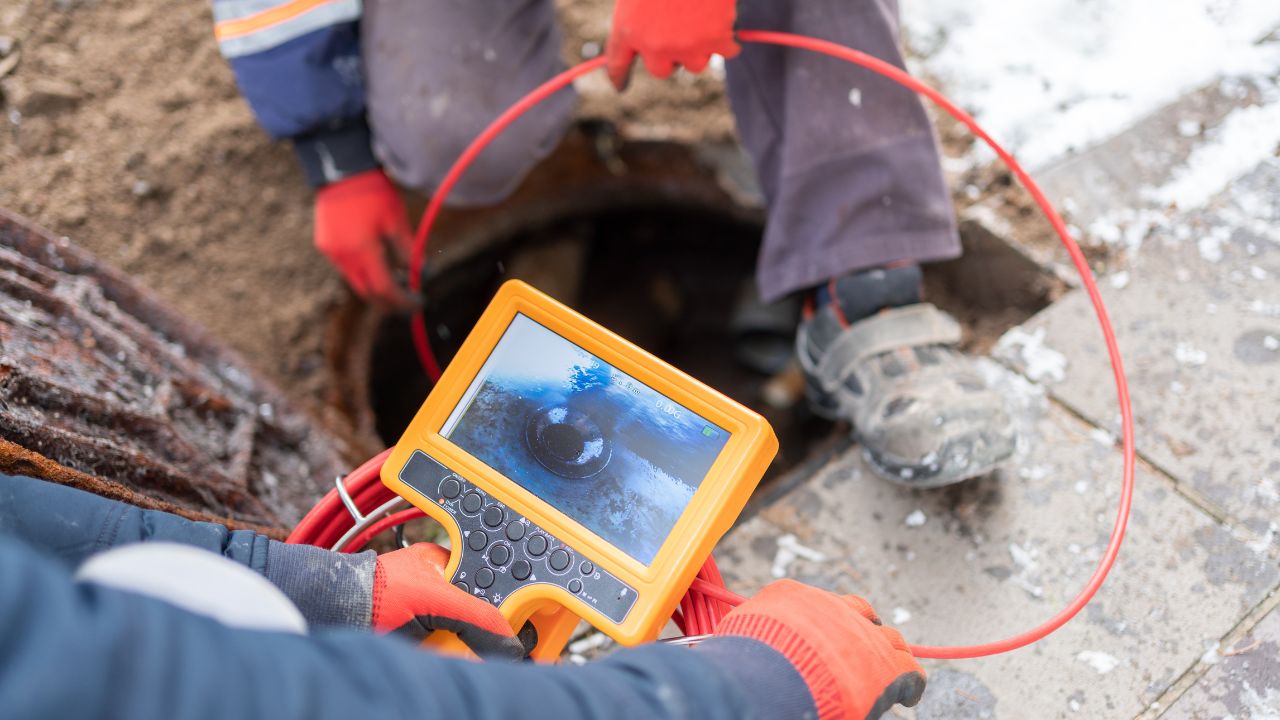
A sewer scope inspection uses specialized CCTV equipment to examine the interior of sewer pipes. Technicians insert waterproof cameras mounted on flexible cables into access points to transmit live video footage.
This non-invasive sewer line inspection allows professionals to assess pipe conditions, locate blockages, and identify structural defects. The video inspection process creates a visual record that helps prioritize plumbing repair and avoid unnecessary excavation.
How Do Sewer Cameras Work?
CCTV inspection involves high-definition cameras mounted on flexible cables or robotic crawlers through the sewer pipes. These systems transmit live video feeds to technicians monitoring above ground during the inspection.
The cameras rotate 360 degrees to capture complete pipe interior views while recording depth measurements. Built-in LED lighting illuminates dark passages, revealing cracks, tree roots, and corrosion.
What Are the Main Types of Sewer Inspection Technologies?
CCTV systems account for 65% of the global market share due to cost-effectiveness and widespread adoption. These traditional systems provide visual documentation but cannot detect water infiltration through intact-looking joints.
Robotic inspection systems are growing at 10.5% CAGR as municipalities adopt automated solutions for complex networks. Advanced robotics enables thorough inspections of pipes with multiple laterals and difficult access points.
Why Are Sewer Inspections Important?
Inflow and infiltration (I&I) refers to water entering sewer systems from outside sources like groundwater. This excess water overwhelms treatment facilities and causes billions in infrastructure damage annually.
Regular sewer line inspections detect problems before catastrophic failures occur, protecting property value and public health. Early identification of issues — from slow drains and tree roots to pipe collapse — allows planned plumbing repair instead of costly emergency repairs during system failures.
What Diagnostic Methods Are Commonly Used Alongside Camera Inspections?
A comprehensive sewer system diagnostic combines multiple technologies for complete accuracy. Each method addresses specific detection challenges that single-technology approaches cannot solve alone.
Professional technicians layer complementary tools to narrow suspect areas before invasive repair work begins. This multi-tool strategy reduces property disruption and eliminates false positives.
How Does Acoustic Leak Detection Complement Sewer Cameras?
Acoustic detection relies on pressurized water escaping a pipe, generating distinct sound frequencies. Technicians use sensitive microphones and amplification equipment to listen for anomalies through concrete and soil.
This method narrows leak locations to smaller points when the leak is active and pressurized. Acoustic detection accuracy improves to 70-85% with analytics integration that filters ambient noise patterns.
Acoustic detection struggles in high ambient noise environments like busy streets or mechanical rooms. Sound can be dampened by certain pipe materials, reducing effectiveness for extremely small leaks.
When Is Thermal Imaging Applied in Sewer Diagnostics?
Thermal imaging visualizes surface temperature patterns influenced by moisture, evaporative cooling, or heat transfer. Infrared cameras detect temperature variations without requiring direct contact with suspected leak areas.
This technology quickly scans broad areas to define suspect zones before detailed investigation begins. Thermal imaging excels at identifying hot water line leaks where temperature differences are pronounced.
Thermal imaging can be misled by uniform ambient temperatures that mask subtle variations. External factors like sun exposure and HVAC ducts affect readings, and deep underground leaks remain invisible.
Thermal imaging does not directly see water but interprets temperature anomalies as potential indicators. This limitation requires confirmation through additional diagnostic methods for accurate leak location.
What Is Focused Electrode Leak Location (FELL)?
FELL (Focused Electrode Leak Location) utilizes electrical current to locate leaks in non-metallic pipes. This technology measures the variation of electric current flow through the pipe wall to identify defects.
FELL locates leaks to within 3/8 inches (1 cm) with precision that visual methods cannot match. It successfully quantifies each leak in gallons per minute and matches locations to specific joints.
FELL is limited to non-metallic pipes only and cannot inspect metal sewer systems. The technology requires specific operational conditions, including proper grounding and system isolation during testing.
How Should Homeowners and Professionals Prepare for an Inspection?
Proper preparation ensures accurate results and prevents delays during the camera inspection process. Understanding requirements beforehand helps property owners coordinate access and clear potential obstacles.
Professional technicians provide specific instructions based on pipe type, property configuration, and suspected issues. Following preparation guidelines maximizes inspection efficiency and diagnostic value.
What Are the Steps Before the Camera Inspection?
Electronic locating and CCTV confirm exact repair spots before invasive work begins. Technicians first identify cleanout access points or establish entry locations if existing access is unavailable. Pre-inspection may include hydro-jetting to clear slow drains or remove tree roots and debris that obstruct camera movement and visibility. Clearing the line ensures cameras can travel the entire distance without premature stoppage.
What Should You Expect During the Inspection Process?
Technicians insert the camera through cleanout access points or established entry locations in the sewer line. Live video feeds display on monitors as the camera advances through the pipe network.
The inspection typically takes 30-90 minutes, depending on pipe length and complexity of findings. Technicians mark defect locations using cable footage counters that correspond to surface measurement points.
How Are Results Communicated After the Inspection?
The technician reviews recorded footage with property owners immediately following the inspection completion. A detailed pipe condition report documents all findings, including defect locations, severity ratings, and recommended actions.
Professional reports include timestamped video clips, still images, and written descriptions of observed conditions. This documentation supports repair prioritization decisions and provides records for preventative maintenance planning.
What Are the Key Differences Among Sewer Inspection Technologies?
Each diagnostic technology offers distinct capabilities and limitations that affect inspection outcomes. Comparing performance data reveals significant accuracy gaps between visual and electronic detection methods. Understanding these differences helps property owners and municipalities select appropriate technologies for specific situations. Cost considerations must be balanced against accuracy requirements and potential repair consequences.
How Does CCTV Compare to FELL and Acoustic Methods?
A 14-mile North American benchmark study comparing CCTV versus FELL examined 322 gravity sewer mains. CCTV operators identified only 78 joint defects in 54,500 linear feet of pipe during visual inspection.
CCTV recorded only 19% of defective tap connections that FELL subsequently detected and quantified. Over 99% of joints were incorrectly ranked as 'leak-free' by CCTV because cameras cannot determine if visible cracks penetrate pipe walls.
Acoustic detection is less effective for extremely small leaks that generate insufficient sound pressure. Electronic leak detection often requires a combination with other methods rather than serving as a standalone diagnostic tool.
What Are the Strengths and Limitations of Thermal and Electronic Detection?
Electronic methods involve tools that trace lines and pinpoint leak locations through system testing. These technologies excel at confirming suspect areas identified through preliminary screening methods. Thermal imaging proves ineffective for deep underground leaks where surface temperature variations become negligible. Electronic methods are not suitable as standalone broad-search tools without complementary screening technologies.
Which Methods Are Best Suited for Different Pipe Types and Conditions?
CCTV excels for baseline visual documentation of pipe interiors regardless of material composition. This technology identifies obvious blockages, pipe collapse, and severe structural damage in all sewer pipes. FELL provides precise leak quantification specifically for non-metallic gravity sewer systems, including PVC and clay. Acoustic methods work best on pressurized water lines where active leaks generate detectable sound frequencies during trenchless repair evaluations.
How Much Does a Sewer Camera Inspection Typically Cost?
The average residential sewer camera inspection costs $999 for standard drain line inspection services. Most homeowners spend between $270 and $1,730, depending on pipe length and diagnostic complexity. Regional variations, property accessibility, and required equipment affect final pricing for inspection services. Understanding cost factors helps property owners budget appropriately and compare service provider quotes.
What Are the Price Ranges for Various Inspection Technologies?
CCTV inspection costs range from $150-$300 budget options to $600-$1,500+ premium comprehensive assessments. Mid-range CCTV services typically cost $300-$600 and include basic video documentation with written reports.
Electronic leak detection costs span $500-$1,500 for budget services up to $3,000-$5,000+ for premium applications. Acoustic and ultrasonic methods range from $250-$500 budget options to $1,000-$2,500+ for professional-grade equipment.
How Do Equipment Costs Affect Inspection Pricing?
CCTV push cameras cost $300-$1,000 for entry-level systems, while professional equipment ranges $2,500-$10,000+. Robotic crawlers represent significant investments at $15,000-$50,000+ for professional purchase and deployment.
Acoustic imagers range from $2,000-$4,000 entry-level to $8,995-$10,000+ for professional ultrasonic systems. Thermal cameras cost $300-$1,000 entry-level, while professional-grade infrared systems reach $3,000-$10,000+. CCTV daily rental rates run $100-$200, making temporary equipment access affordable for one-time inspections. Equipment investment costs influence service pricing as providers recover capital expenses through inspection fees.
What Factors Influence Cost Variation by Region and Property Type?
Urban areas typically charge higher inspection rates due to elevated business operating costs and property values. Rural regions may have lower base rates but charge additional travel fees for remote locations. Commercial properties require more extensive inspections due to complex pipe networks and larger diameter lines. Multi-unit residential buildings incur higher costs than single-family homes because of increased system complexity.
How Do Consumer Preferences Influence Inspection Choices?
Accuracy ranks as the primary concern for commercial and municipal clients aiming to avoid unnecessary excavation. Cost considerations drive residential consumers toward basic CCTV inspections as budget-friendly diagnostic options.
Convenience and non-invasive characteristics are highly valued across all customer segments to minimize disruption. Technology awareness increases as consumers learn about advanced options beyond traditional camera-only approaches.
What Factors Drive Method Selection Among Different Demographics?
Homeowners aged 25-40 show a higher inclination toward technologically advanced methods, including thermal and electronic detection. Older homeowners aged 60+ tend to rely on traditional plumbing recommendations and standard CCTV inspections. Income levels above $100K demonstrate a higher willingness to pay for premium multi-tool diagnostic services. These affluent property owners prioritize accuracy and protection of significant real estate investments.
How Do Urban, Suburban, and Rural Areas Differ in Technology Adoption?
Urban areas show 72% CCTV preference despite higher adoption of advanced robotic and acoustic methods. Complex infrastructure and severe excavation disruption costs drive urban investment in comprehensive diagnostic approaches.
Suburban areas show 68% CCTV preference for routine maintenance and real estate transaction inspections. Rural regions demonstrate lower overall adoption rates with higher reliance on traditional methods until failures occur.
What Role Do Accuracy, Cost, and Convenience Play for Clients?
Accuracy prevents unnecessary excavation expenses that can exceed $10,000 for extensive repair projects. Property owners value precision because an incorrect diagnosis leads to wasted repair budgets and continued problems.
Cost sensitivity varies inversely with property value and problem severity as emergency situations override budget constraints. Convenience matters most for commercial clients who cannot afford operational disruptions during extended sewer line repair projects.
What Are Best Practices Recommended by Industry Experts?
Industry experts emphasize proactive sewer maintenance strategies that prevent emergency failures and costly plumbing repair. A multi-tool video inspection approach delivers the most accurate results while minimizing property disruption. Professional standards recommend regular inspection schedules based on pipe age and historical performance. Municipal case studies demonstrate efficiency gains from integrated software and advanced inspection technologies.
Experts recommend layering technologies in sequence to progressively narrow suspect areas before excavation. Thermal imaging quickly scans broad areas, acoustic detection pinpoints active leaks, and CCTV confirms exact locations. This workflow eliminates false positives that waste repair budgets on incorrect excavation locations. Combined methods achieve 85%+ accuracy compared to 19% defect detection rates for CCTV-only approaches.
How Often Should Sewer Inspections Be Scheduled?
Residential properties should schedule a sewer scope inspection every 1-2 years, especially for homes over 40 years old. Real estate transactions warrant mandatory inspections to identify hidden defects before property purchase completion.
Municipal systems benefit from biennial inspection programs that prevent catastrophic failures in aging infrastructure. Regular scheduling allows planned maintenance during favorable weather and budget cycles rather than emergency responses.
What Can Be Learned From Municipal Case Studies Like Boulder, Colorado?
Boulder, Colorado, integrated ITpipes software with Esri ArcGIS in 2019 to modernize inspection data management. The city manages a 388-mile sanitary sewer network that previously relied on labor-intensive manual entry.
Boulder's integration streamlined data management and improved workflow efficiency through real-time inspection media accessibility. This technological advancement enabled proactive asset management decisions based on comprehensive network condition assessments.
What to Expect From a Modern Sewer Camera Inspection and Its Broader Impact
The Global Sewer Inspection Systems Market was valued at USD 1.2 billion in 2024. The market is projected to reach USD 2.5 billion by 2034, registering 7.8% CAGR from 2024 to 2034.
North America holds 38% of the global market share, driven by infrastructure investment and regulatory requirements. Asia Pacific is projected to grow at 9.5% CAGR as urbanization accelerates infrastructure development needs. Modern sewer camera inspections now incorporate software integration that enables real-time reporting and asset management. Advanced analytics improve defect detection accuracy beyond visual assessment capabilities alone.
The convergence of CCTV, FELL, acoustic, and thermal technologies creates comprehensive diagnostic solutions for complex systems. Property owners benefit from reduced excavation costs and faster problem resolution through multi-method approaches. Industry projections indicate 75% of water and sewer projects will use trenchless technology within ten years. This shift reflects growing preference for minimally invasive methods that preserve property and reduce project timelines.
Technological advancement continues to improve accuracy while reducing costs for residential and commercial inspection services. Homeowners gain access to professional-grade diagnostic tools that were previously available only to large municipalities.
A sewer camera inspection provides essential information for informed maintenance decisions and emergency prevention. Understanding available technologies and preparation requirements helps property owners maximize diagnostic value and investment protection through comprehensive drain and sewer services.
Schedule Your Sewer Inspection With Alpine Plumbing, Heating, and Air
Slow drains, recurring clogs, or a yard that smells like a problem waiting to happen? Don’t wait for a pipe collapse or full sewer backup to take action. Alpine Plumbing, Heating, and Air uses high-definition cameras and proven video inspection techniques to examine your sewer pipes from the inside out.
Whether you need a routine sewer scope inspection, preventative sewer maintenance, or emergency repairs for a damaged line, our licensed team in Southern California is ready to help. We provide a full sewer line inspection report with honest findings, clear options, and transparent pricing — no pressure, no guesswork. Contact Alpine Plumbing, Heating, and Air today to schedule a sewer camera inspection and get a detailed pipe condition report with clear, actionable recommendations.