Whole house filters treat every tap and appliance; under-sink systems target a single faucet for drinking water
Installation costs range from $500–$8,000 for whole house systems versus $90–$595 for under-sink units
Point-of-use RO systems achieve 90–99.9% PFAS reduction with NSF P473 certification at lower upfront cost
Whole house filters require professional installation and space near the main line; under-sink units are renter-friendly DIY projects
Maintenance frequency differs: whole house systems need 3–5 year media swaps; under-sink cartridges require 6–12 month replacements
Homeowners evaluating water filtration system vs under sink filter options face distinct trade-offs in coverage, cost, and contaminant removal. Whole house systems protect every outlet, while point-of-use filters deliver high-purity drinking water at a single tap. Understanding these differences helps match filtration technology to household priorities and water quality concerns.
A well-matched whole house water filter excels at broad chlorine and sediment reduction across all plumbing fixtures and appliances, while under-sink configurations concentrate advanced filtration stages, often including reverse osmosis, where water quality matters most for ingestion. Below, you’ll find a full breakdown of coverage, cost, installation, contaminant removal, and maintenance for both filter types, drawing on the same fundamentals covered in our guide to water treatment solutions for hard water in San Dimas, so you can match the right system to your household’s water quality needs.
Whole House Water Filter Vs. Under-Sink Filter Basics Explained
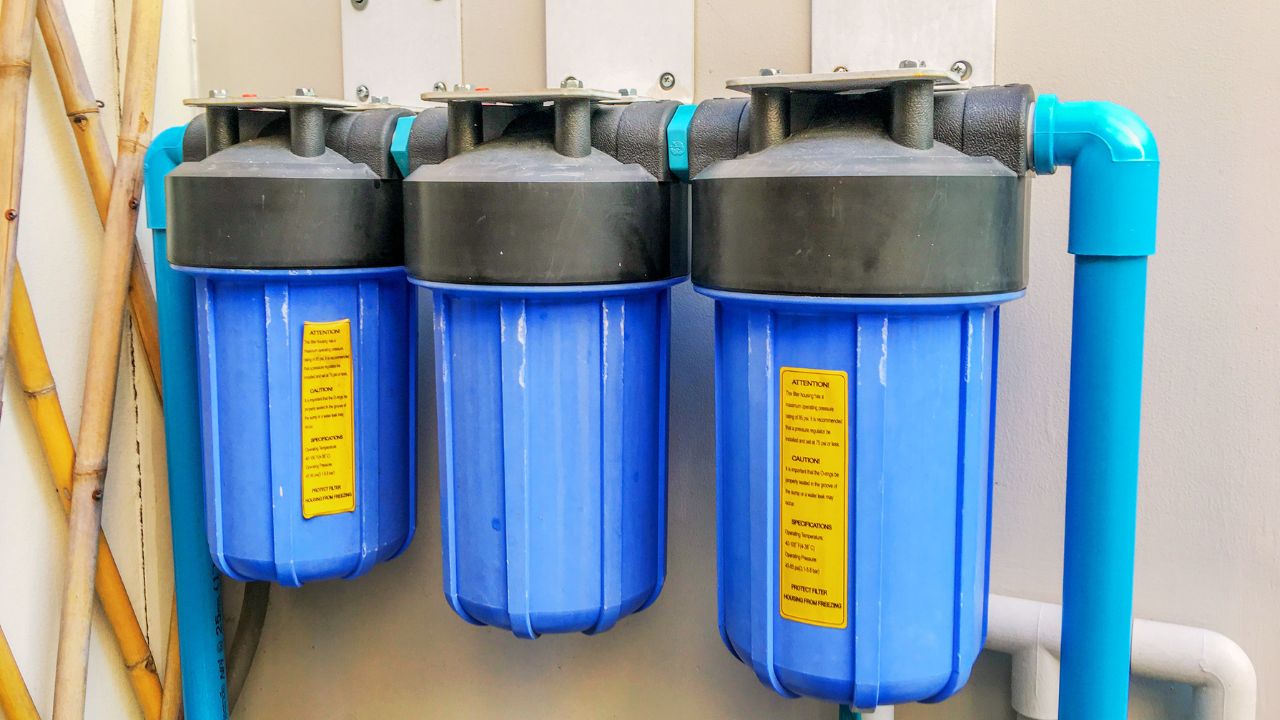
Whole house filters attach to the main supply line and treat water flowing to every fixture, shower, and appliance. Under-sink systems install beneath a kitchen cabinet and purify water at a dedicated faucet.
Whole house units are rated in gallons per minute (GPM) to match household flow demand during simultaneous use. Under-sink reverse osmosis units are rated in gallons per day (GPD), reflecting their role in providing filtered drinking and cooking water.
A Whole House Water Filter Treats Every Tap and Appliance
A whole house filter treats water before distribution to every tap, shower, appliance, and laundry connection. This centralized approach protects plumbing fixtures, water heaters, and washing machines from sediment and chlorine damage. Filtration capacity is measured in GPM, with residential models typically ranging from 7 to 26 GPM.
Single-family homes with multiple bathrooms require higher flow rates to prevent pressure drops during peak demand. Under-sink configurations serve only the kitchen faucet, making them unsuitable for whole-home chlorine or sediment control.
An Under-Sink Water Filter Treats Water at a Single Faucet
Under-sink filters connect to the cold water line beneath the kitchen cabinet and divert water through filtration stages before reaching a dedicated faucet. Multi-stage carbon and ion-exchange cartridges remove chlorine, lead, and volatile organic compounds. Reverse osmosis models add a semi-permeable membrane that rejects dissolved solids, PFAS, and heavy metals.
Output capacity for RO systems is measured in GPD because these units produce purified water slowly and store it in a pressurized tank. Tankless RO models like the Waterdrop G3 P800 deliver 800 GPD, eliminating storage lag while maintaining high rejection rates.
Each System Includes Distinct Filtration Components
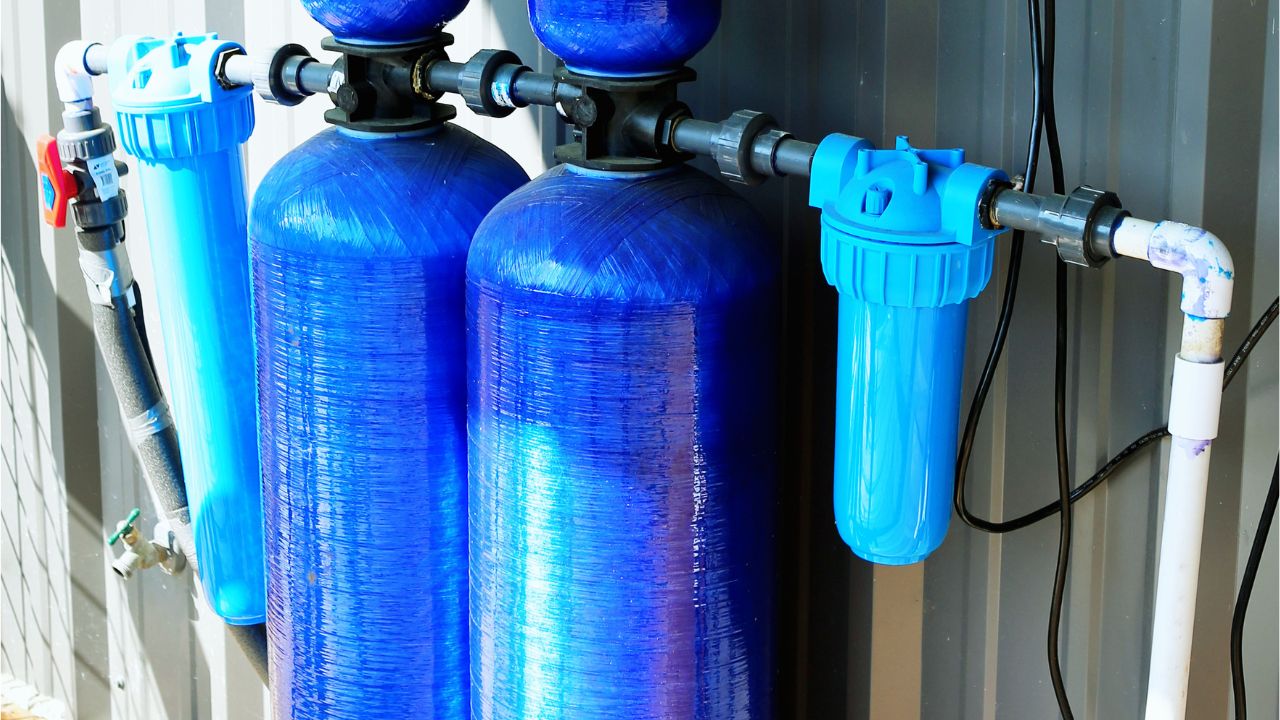
Whole house filters typically include 1 to 3 filtration stages: a sediment pre-filter rated to 5 microns, KDF or activated carbon media for chlorine removal, and optional UV or salt-free conditioner stages. Systems like the iSpring WGB22B-KS combine sediment and carbon in a compact two-stage housing. Premium configurations add UV sterilization for bacteria and virus reduction up to 99.9%.
Under-sink systems range from 2 to 6 stages, often beginning with sediment filtration and progressing through carbon blocks, ion-exchange resins, and RO membranes. Six-stage RO units include post-filtration remineralization to restore beneficial minerals removed during reverse osmosis.
Whole House Water Filter Vs. Under-Sink Filter Costs and Installation Compared
Equipment costs for basic whole house carbon systems start at $500 to $1,500, while entry-level under-sink filters range from $90 to $280. Mid-range whole house units with multi-stage sediment and carbon filtration cost $1,000 to $3,000. Premium whole house RO systems reach $3,000 to $8,000, whereas 6-stage under-sink RO units with remineralization fall between $219 and $595.
Total installed costs reflect both equipment and labor, with whole house systems typically requiring $1,800 to $5,400 for professional installation. Under-sink installations range from $250 to $450 when factoring in minor plumbing modifications.
Feature
Whole House Filter
Under-Sink Filter
Coverage
Every tap, shower, and appliance
Single kitchen faucet
Equipment cost
$500 – $8,000
$90 – $595
Total installed cost
$1,800 – $5,400
$250 – $450
Installation
Licensed plumber, main-line tie-in
DIY-friendly, under 1 hour
Flow rating
7 – 26 GPM
Up to 800 GPD (RO models)
Typical media life
3 – 5 years
6 – 12 months
Ideal for
Homeowners protecting the whole property
Renters and drinking-water focus
Equipment and Installation Costs Vary by System Type
Professional installation labor for whole house filters ranges from $200 to $2,000, with simple inline carbon units at the lower end and multi-stage UV or RO systems requiring extensive plumbing tie-ins at the upper end. Labor for under-sink installations is often included in the $170 to $580 total installed price. Many homeowners complete under-sink installations without professional help, reducing total cost to equipment price alone.
Whole house filter professional installation labor can reach $1,500 to $3,000 for complex setups involving UV sterilization, backwash drains, or main-line modifications. Under-sink systems avoid these complications by tapping existing cold water lines beneath the cabinet.
DIY Installation Differs Significantly Between the Two Filters
Whole house filters are rarely DIY projects because most manufacturers recommend a licensed plumber for main supply line integration. Proper sizing, pressure regulation, and code compliance require professional expertise. Many renters self-install under-sink filters in under 1 hour using basic hand tools and flexible supply tubing.
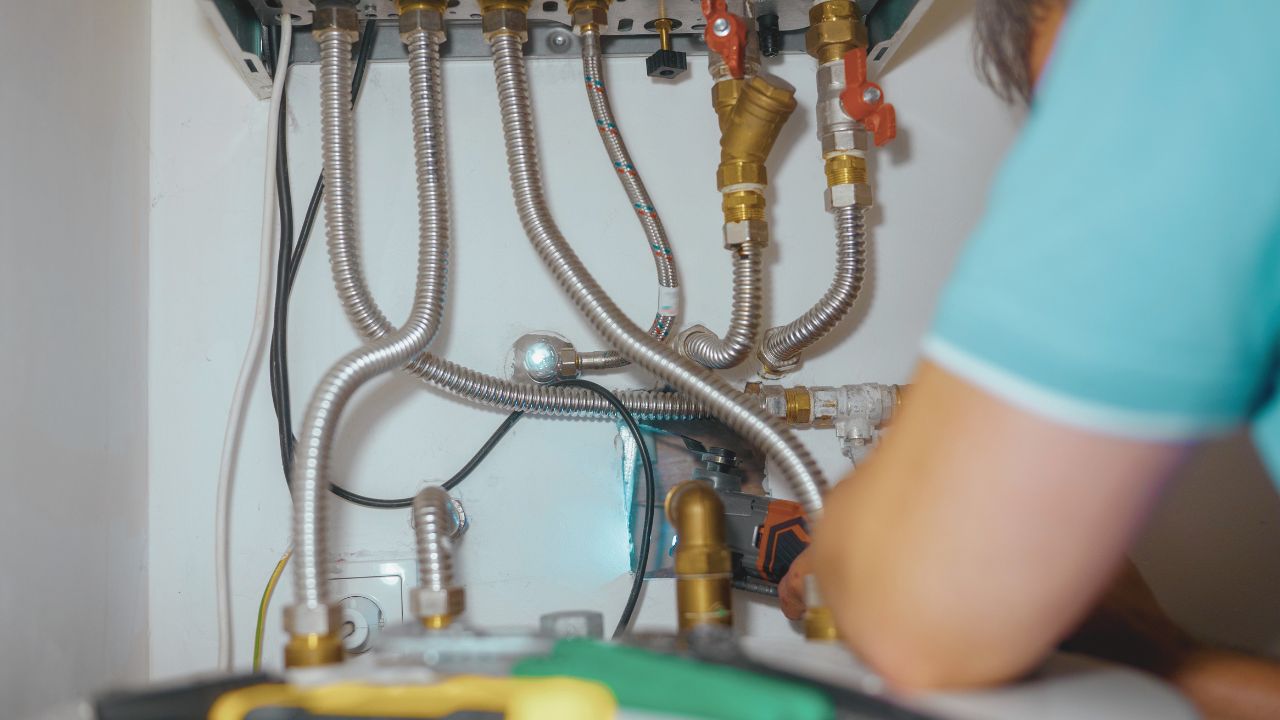
Under-sink cartridges click into place for tool-free replacement, making routine maintenance accessible without plumbing experience. Whole house installations require cutting the main supply line, installing a bypass loop, and ensuring proper drainage for backwash cycles.
Space and Plumbing Requirements Differ by System
Whole house filters require accessible space near the main water line entry point, typically in a garage, basement, or utility closet. Vertical clearance must accommodate filter housings ranging from 20 to 40 inches tall.
Under-sink configurations fit within standard kitchen cabinet dimensions, occupying roughly 15 to 20 inches of horizontal space. RO systems include a storage tank that sits alongside the filter housing. Whole house installations also require a floor drain or standpipe for backwash discharge if the system includes automatic cleaning cycles.
Each Filter Type Removes a Different Range of Contaminants
Both filter types reduce sediment, chlorine, and volatile organic compounds through activated carbon stages. Whole house systems handle these contaminants at every outlet, protecting appliances and plumbing from chlorine corrosion and sediment buildup. Under-sink filters concentrate higher-grade media in compact cartridges, achieving chlorine reduction rates of 95% to 99%+ at the drinking water tap.
Contaminant removal effectiveness depends on certification rather than system type, with NSF/ANSI 53 and P473 standards verifying heavy metal and PFAS claims. Six of seven highly rated PFAS filters in independent testing are point-of-use systems starting around $90.
Both Systems Reduce Sediment, Chlorine, and VOCs Effectively
Dedicated sediment pre-filters in whole house systems remove particles down to 5 microns, protecting downstream appliances from grit and rust. KDF and granular activated carbon media achieve whole-house filter chlorine reduction up to 97%. Under-sink carbon blocks deliver chlorine reduction typically between 95% and 99%+, supported by longer contact time in slower-flow cartridges.
Volatile organic compounds bind to activated carbon in both configurations, with effectiveness tied to carbon volume and contact duration. Point-of-use configurations compensate with denser carbon blocks and multiple filtration passes, often surpassing whole house VOC removal rates at the drinking tap.
Both Systems Can Reduce Heavy Metals and PFAS
Whole house KDF and granular activated carbon media reduce water-soluble heavy metals up to 98%, though smaller carbon volumes can be overwhelmed by high lead or mercury loads. The iSpring WGB32B-PFKS achieved 99% PFAS reduction in SGS testing, while the SpringWell CF1 reports 99.6% removal of all tested contaminants including PFAS. Only NSF/ANSI P473-certified products should be presented as verified for PFAS and heavy metal removal, as manufacturer-funded lab results lack independent oversight.
NSF/ANSI P473-certified under-sink systems achieve PFAS reduction between 90% and 99.9%+, with models like the Waterdrop G3 P800, AquaTru, and Aquasana AQ-5300+ holding verified certifications. RO membranes and ion-exchange resins bring lead to non-detectable levels in most third-party tests.
Bacteria and Virus Removal Depends on UV Sterilization
UV stages added to whole house systems reduce bacteria, viruses, and cysts up to 99.9% when properly maintained and paired with pre-filtration. Base carbon and sediment whole house systems do NOT remove bacteria without UV sterilization. Standard carbon-only under-sink units similarly lack pathogen removal capability.
RO membranes reduce cysts and bacteria through physical rejection of particles larger than 0.0001 microns. UV bulbs in whole house configurations require annual replacement to maintain germicidal effectiveness.
Maintenance and Lifespan Compare Differently Between the Two Filters
Whole house carbon media lasts 3 to 5 years before requiring replacement, while sediment pre-filters need changes every 3 to 6 months depending on water quality. UV bulbs lose sterilization effectiveness after 1 to 2 years even if the lamp still illuminates. Under-sink carbon and sediment cartridges require replacement every 6 to 12 months, with RO membranes lasting 2 to 3 years before rejection rates decline.
Annual whole house filter replacement costs range from $100 to $500 depending on sediment load and media type. Under-sink systems cost $40 to $100 annually for basic carbon units and up to $100+ per year for multi-stage RO configurations.
Filter Replacement Intervals and Costs Vary by Component
Whole house sediment filters clog faster in homes with well water or aging municipal infrastructure, requiring 3-to-6-month replacement cycles at $20 to $50 per cartridge. Carbon media in whole house tanks lasts 3 to 5 years at $100 to $250 per media refill. UV bulbs cost $50 to $150 and require replacement every 1 to 2 years to maintain pathogen reduction effectiveness.
Under-sink carbon and sediment cartridges cost $15 to $40 each and require replacement every 6 to 12 months depending on household water consumption. RO membranes represent the most expensive under-sink component at $50 to $150 but last 2 to 3 years before flux rates decline.
Water Pressure and Flow Rate Respond Differently to Each Filter
Whole house filter flow rates range from 7 to 26 GPM depending on model, with the Aquasana EQ-1000-AST-UV delivering 7 GPM, the SpringWell CF1 producing 8 to 9 GPM, and the iSpring WGB22B-KS rated at 15 GPM. Whole house filters can reduce pressure if undersized for household peak demand during simultaneous use of multiple bathrooms and appliances.
Under-sink filters impose minimal impact on whole-home pressure because they treat only the volume drawn at one faucet. The Waterdrop G3 P800 RO produces 800 GPD in tankless mode, eliminating the wait for tank refilling between large-volume draws.
System Lifespan Depends on Components and Maintenance
Whole house system tanks and housings last 10 to 15+ years with periodic media and cartridge replacement. Valve bodies and bypass loops rarely fail before the 15-year mark unless subjected to water hammer or freeze damage. Under-sink system housings endure 5 to 10 years before fittings crack or O-rings degrade.
Long-term cost-effectiveness favors whole house systems for homeowners planning to remain in their residence, while under-sink units suit renters and short-term ownership scenarios.
Each Filter Suits Different Household Needs
Under-sink filters excel for renters and apartment dwellers because they require no permanent plumbing alteration and remain removable when relocating. Many renters self-install under-sink filters in under 1 hour using reversible compression fittings. Basic under-sink filter unit costs range from $90 to $280, fitting tight budgets without sacrificing contaminant removal at the drinking tap.
Whole house filters treat the entire home, delivering chlorine-free water to every tap, shower, appliance, and laundry connection. Well water with multiple contaminant types often requires whole house treatment to address sediment, iron, hardness, and bacteria before water reaches any end use.
Renters and Apartment Dwellers Benefit From Under-Sink Filters
Renters avoid lease violations by choosing under-sink systems that attach with compression fittings and leave no permanent modifications to plumbing. Installation typically takes under 1 hour without specialized tools. Under-sink configurations fit beneath kitchen cabinets in apartments where basement or garage access to the main line does not exist.
Entry-level under-sink filter unit costs between $90 and $280, making them affordable for short-term housing. Portability allows renters to uninstall the system and take it to the next residence.
Homeowners Seeking Whole-Home Water Quality Benefit From Whole House Filters
Whole-house filters treat every tap, shower, appliance, and laundry connection, protecting skin and hair from chlorine during bathing and extending the lifespan of water heaters and washing machines. Chlorine and sediment reduction throughout the home prevents corrosion in copper piping and preserves fixture finishes.
Whole-home filtration also benefits households with skin sensitivities or respiratory conditions aggravated by chlorine vapor during hot showers. Protecting home value during long-term ownership justifies whole-home water filtration and softening systems despite higher installation complexity.
Well Water and Specific Contaminant Concerns Guide Filter Choice
Very hard water or iron-heavy well water may require pre-filtration or a traditional softener before reaching whole-house carbon or UV stages. UV sterilization reduces bacteria, viruses, and cysts up to 99.9% in well water systems, addressing pathogen risks absent in treated municipal supplies.
Households concerned specifically with PFAS or lead at the drinking tap achieve faster ROI with NSF/ANSI P473-certified under-sink systems costing $150 to $400. Six of seven highly rated PFAS filters in independent testing are point-of-use systems starting around $90. Well water requiring comprehensive treatment benefits from whole house filtration protecting every outlet, with water filtration 101 concepts guiding system selection.
Choosing Between Whole House and Under-Sink Filters by Use Case
Drinking and cooking water filtration priorities favor under-sink systems when budget constraints or rental restrictions limit whole house installations. Point-of-use configurations concentrate advanced filtration media where ingestion risk is highest. Budget considerations often determine feasibility, with under-sink total installed costs between $250 and $450 compared to $1,800 to $5,400 for whole house systems.
Whole-home protection justifies higher investment for homeowners addressing appliance longevity, fixture preservation, and whole-family chlorine exposure during bathing. Assessing coverage scope before purchasing prevents mismatched expectations, as how to choose a water filtration system for your California home depends on whether single-faucet purity or comprehensive household treatment takes priority.
Drinking and Cooking Water Priorities Shape the Decision
PFAS and heavy metal concerns at the drinking tap are most cost-effectively addressed with NSF/ANSI P473-certified under-sink RO or ion-exchange systems achieving 90% to 99.9%+ reduction. Six of seven highly rated PFAS filters in independent testing are point-of-use systems starting around $90, delivering verified contamination reduction at a fraction of whole-house PFAS system costs.
Taste and odor improvement for drinking and cooking water requires only modest carbon filtration stages available in basic under-sink configurations. Chlorine reduction to 95%+ eliminates most objectionable flavors without the flow-rate capacity or installation complexity of whole-house systems.
Budget and Installation Considerations Influence the Choice
Whole house filter total installed costs range from $1,800 to $5,400 for typical mid-range systems, compared to $250 to $450 for under-sink installations. Whole house filters are rarely DIY projects because most manufacturers recommend a licensed plumber for main supply line integration. Many renters self-install under-sink filters in under 1 hour, avoiding professional labor costs entirely.
Annual whole house filter replacement costs between $100 and $500 depending on sediment load and media type, adding recurring expense beyond initial installation. Under-sink systems cost $40 to $100 annually for basic carbon units, with homeowner-friendly cartridge swaps eliminating service call fees. Budget-limited households prioritizing PFAS or lead reduction achieve faster protection with water filtration systems in San Dimas certified for point-of-use contaminant removal.
Whole-Home vs Point-of-Use Filtration Importance Depends on Priorities
Whole house filters treat the entire home, delivering filtered water to every tap, shower, appliance, and laundry connection, while under-sink systems address only a single faucet. Households prioritizing skin and hair health, appliance protection, and comprehensive chlorine removal require whole house coverage. Families concerned primarily with drinking water purity achieve targeted protection with under-sink configurations at lower cost.
Whole house filters can reduce pressure if undersized for household peak demand when multiple bathrooms and appliances run simultaneously. Properly sized systems maintain flow rates between 7 and 26 GPM.
Filter Selection Carries Practical Implications for Home Water Quality
Only NSF/ANSI 53 or P473-certified products should be presented as verified for PFAS and heavy metal removal, as manufacturer-funded lab testing lacks independent oversight. Smaller carbon volumes in whole house filters can be overwhelmed by high heavy-metal loads in well water or aging municipal systems.
Whole house filters have lower replacement frequency but higher-complexity swaps often requiring professional service calls at $100 to $200 per visit. Under-sink units have higher filter replacement frequency but low-complexity DIY swaps homeowners complete without tools. Matching filtration scope to household water use patterns prevents over-investment in unused capacity, with water treatment options in San Dimas addressing both comprehensive and targeted needs.
Whole House Water Filter Vs. Under-Sink Filter: Comparative Insights and Recommendations
Homeowners evaluating home water filter options face a fundamental trade-off between comprehensive whole-home coverage and targeted high-purity drinking water filtration. Whole house systems protect plumbing, appliances, and every outlet from chlorine corrosion and sediment damage. Under-sink configurations concentrate advanced filtration stages where ingestion risk and taste concerns are highest, often delivering superior contaminant rejection at a fraction of whole house costs.
The under-sink water filter comparison reveals that point-of-use RO systems achieve PFAS and heavy metal reduction rates comparable to or exceeding whole house units while requiring minimal installation expertise and space. Whole house filter pros and cons include comprehensive appliance protection and whole-family chlorine exposure reduction balanced against higher upfront costs, professional installation requirements, and potential pressure impacts. Assessing household priorities—whether whole-home water quality or targeted drinking water purity—guides selection between these complementary filtration approaches, and understanding whether water softeners are worth it alongside filtration completes a comprehensive water quality strategy.
Budget-conscious households prioritizing PFAS or lead reduction achieve faster protection with NSF-certified under-sink systems starting around $90. Homeowners investing long-term in appliance protection and whole-home chlorine elimination benefit from whole-house installations despite $1,800 to $5,400 total costs. Renters and apartment dwellers gain removable, DIY-friendly protection with under-sink configurations requiring no permanent plumbing modifications. California homeowners weighing water softener vs water filter decisions benefit from evaluating whether hardness reduction, contaminant removal, or both address their specific water quality concerns.
Get Expert Help From Alpine Plumbing, Heating, and Air
Choosing between a whole house water filter and an under-sink filter comes down to your water quality concerns, your budget, and how much of your home you want protected. Alpine Plumbing, Heating, and Air has installed both system types across San Dimas, the San Gabriel Valley, the Inland Empire, and Lake Havasu City, AZ, since 2017, and our licensed technicians explain your options in plain terms before any work begins.
Call (626) 385-4001 to schedule a water quality assessment, or request a free quote online to get straightforward, upfront pricing on the whole house or under-sink filtration system that fits your household.
Whole House Water Filter Vs. Under-Sink Filter: Frequently Asked Questions
Can I install both a whole house filter and an under-sink filter?
Yes, and many households in hard water areas do exactly this. A whole house filter handles broad chlorine and sediment reduction for every tap, shower, and appliance, while an under-sink RO unit adds a second, high-purity stage specifically for drinking and cooking water. Pairing the two systems addresses both appliance protection and drinking water quality without asking one system to do a job it was not designed for.
How long does whole house water filter installation take?
A straightforward inline carbon system can often be installed in a few hours, while multi-stage units with UV sterilization or backwash drains typically take a full day due to the plumbing tie-ins involved. Licensed technicians need to cut into the main supply line, install a bypass loop, and confirm proper drainage, which is why professional installation is recommended over a DIY approach for whole house systems.
Will an under-sink filter reduce my water pressure?
Under-sink filters treat only the water drawn at one faucet, so they have minimal impact on pressure elsewhere in the home. Some multi-stage RO systems can slightly slow flow at that single tap, though tankless RO models are designed to maintain higher output without the wait for a storage tank to refill. Whole house systems are more likely to affect pressure if undersized for peak household demand.
Do I need a whole house filter if I already have a water softener?
A water softener addresses hardness minerals like calcium and magnesium, but it does not remove chlorine, sediment, or organic compounds the way a carbon-based whole house filter does. Households with both hard water and chlorine or taste concerns often benefit from pairing a softener with a whole house filtration stage. A technician can test your water to confirm which combination addresses your specific concerns.
Which filter type is better for removing PFAS from drinking water?
NSF/ANSI P473-certified under-sink RO or ion-exchange systems generally deliver the most verified PFAS reduction at the drinking tap, with certified models achieving 90% to 99.9%+ removal. Whole house systems can reduce PFAS as well, but smaller carbon volumes may be overwhelmed by high contaminant loads in well water or aging municipal supplies. Only products carrying independent NSF/ANSI P473 certification should be trusted for verified PFAS performance claims.
Welcome to Alpine Plumbing and Rooter, serving San Dimas and the surrounding areas as your reliable source for exceptional plumbing and drainage services. We also provide reliable licensed HVAC services.
After reviewing your information, we will contact you as soon as possible.
"*" indicates required fields
Alpine Plumbing, Heating, and Air
462 Borrego Ct Unit A, San Dimas, CA 91773
CA Plumbing/HVAC License: #1041244 AZ Plumbing License: ROC 362311
Welcome to Alpine Plumbing, Heating, and Air, serving San Dimas, San Bernardino, Lake Havasu, AZ, and the surrounding areas. We are your reliable source for exceptional plumbing, Heating, and Air Conditioning needs.