Homeowners facing slow drains or complete blockages must choose between snaking and hydro jetting. Snaking uses a rotating mechanical cable to break through clogs, while hydro jetting clears pipes with high-pressure water. Understanding when to use snaking vs hydro jetting prevents wasted money on temporary fixes and protects aging pipe systems from damage.
Below, you'll find a full comparison of costs, effectiveness, safety risks, and result longevity for hydro jetting vs. snaking. Soft clogs like hair respond well to snaking at a lower cost, while heavy grease buildup, tree roots, and mineral scale call for hydro jetting's complete pipe-wall cleaning power. Choosing the right drain cleaning service comes down to blockage type, pipe material, and how long you want the results to last.
Key Takeaways
Snaking costs $100-$525 and works well for soft, localized clogs like hair and paper
Hydro jetting costs $300-$1,500 and removes grease, roots, and mineral scale completely
Camera inspection before hydro jetting prevents pipe damage on older clay, cast iron, and Orangeburg lines
Hydro jetting results typically last 2-3 years compared to 4-6 months for snaking
Modern PVC and ABS pipes handle full jetting pressure safely, while older materials require reduced pressure
Hydro Jetting Vs. Snaking: How Each Method Works
Hydro jetting and snaking represent the two primary professional drain cleaning options. Snaking removes localized blockages mechanically, while hydro jetting scours the entire pipe interior clean. Both methods address different clog types and pipe conditions.
The drain cleaning comparison between these methods centers on effectiveness, cost, and result longevity. Professional drain cleaning options range from simple cable snaking to advanced camera-guided hydro jetting systems.
How Snaking Works
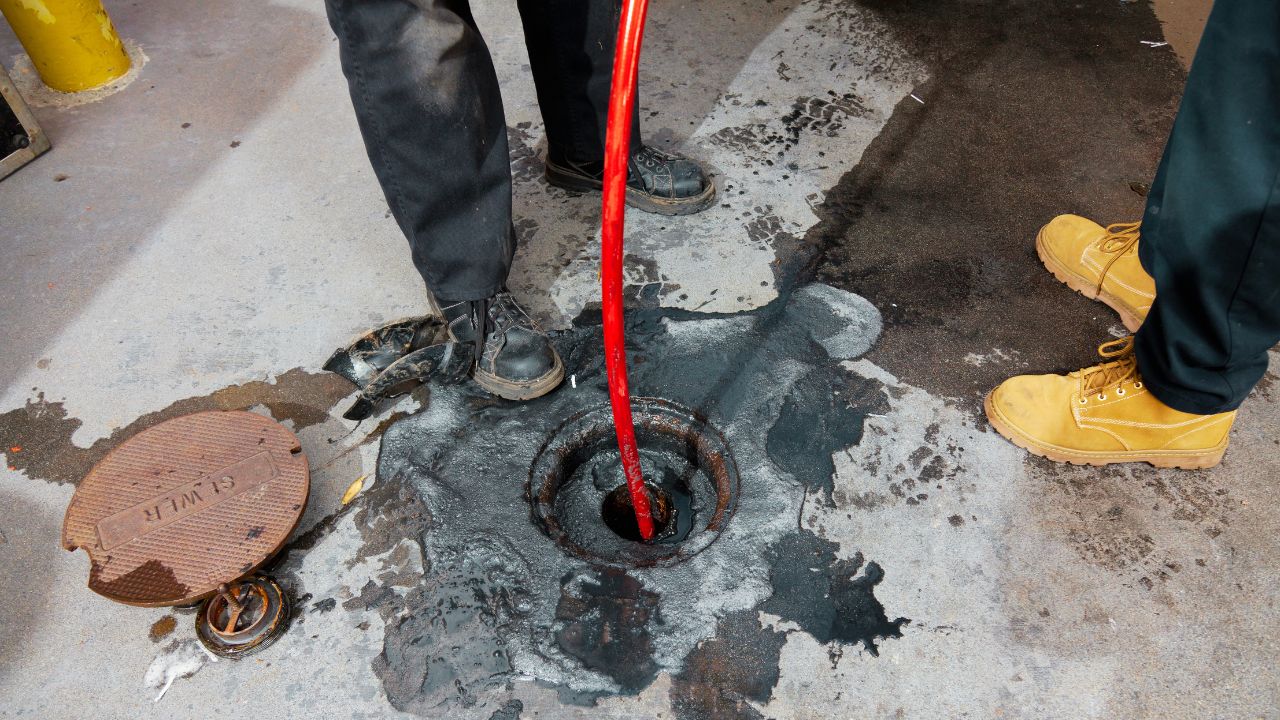
Snaking uses a flexible rotating mechanical cable to break through drain blockages. The technician feeds the cable through the pipe until it reaches the clog, then rotates it to cut through or pull out debris.
Standard snaking service takes 30 minutes to 2 hours. The cable punches through soft blockages but often leaves material coating pipe walls, explaining why snaked drains frequently clog again within months.
What Hydro Jetting Is and How It Works
Hydro jetting clears drains using high-pressure water streams typically ranging from 3,000 to 4,000 psi. A specialized nozzle directs water jets in multiple directions to scour pipe walls clean. The technician works from downstream to upstream, pushing debris toward the sewer main.
Standard residential hydro jetting takes 30 to 90 minutes. Grease and sludge-specific jetting uses 2,000 to 3,000 psi at 12 to 18 GPM. Severe root intrusion may require pressures up to 4,000 to 5,000 psi.
Equipment Used for Each Method
The most popular residential jetter operates at 4,000 psi and 18 GPM. Higher flow models reach 4,000 psi at 25 GPM for larger-diameter lines. Trailer and municipal-grade jetters deliver 3,000 to 4,000 psi at 12 to 25 GPM for pipes ranging from 1.5 to 36 inches in diameter.
Manual drain snakes for DIY use cost $10 to $80. Professional snaking equipment includes motorized augers with various cable lengths and cutting heads. Jetting equipment requires specialized training and safety protocols that homeowners should not attempt without proper licensing.
Hydro Jetting Vs. Snaking: Matching the Method to the Clog
Selecting between snaking and hydro jetting depends primarily on blockage type. Each method excels at removing specific clog types while performing poorly on others. Matching the right tool to the blockage saves money and delivers longer-lasting results.
Pipe age and material also influence safe method selection, since knowing the layout of your drainage system helps identify pipe material before cleaning begins. Modern PVC handles aggressive cleaning, while older clay pipes require gentler approaches.
Clog Types Snaking Handles Well
Snaking delivers high effectiveness for soft and localized blockages like hair, food particles, and paper products. The rotating cable cuts through these materials quickly at lower cost than hydro jetting. For simple toilet or tub clogs, snaking represents the faster, more economical choice.
Snaking shows low to moderate effectiveness against grease buildup because it merely punches through without removing pipe-wall coating. Tree roots receive moderate treatment as snaking cuts main root masses but leaves root hairs intact, with roots typically regrowing within 6 to 12 months.
Clog Types That Require Hydro Jetting
Hydro jetting achieves high effectiveness against grease buildup by stripping pipe walls to bare surfaces. The high-pressure water removes every trace of fats, oils, and grease that snaking leaves behind.
Tree roots, mineral scale, and hard compacted blockages all require hydro jetting for effective removal. The water pressure pulverizes root masses and flushes debris completely from the line. Mineral scale that narrows pipe diameter over time responds only to hydro jetting's thorough cleaning action.
How Pipe Materials and Conditions Affect Method Choice
Modern PVC and ABS pipes present low risk during hydro jetting because they generally handle full 3,000 to 4,000 psi pressure safely, and copper pipes in good condition also accept standard jetting pressures without damage.
Older cast iron pipes manufactured before 1980 carry moderate to high risk with both snaking and hydro jetting when corroded. The rotating cable can crack aged cast iron, while pressure worsens existing corrosion. Orangeburg fiber pipes should never receive full-pressure jetting due to their high failure risk.
Cost and Time Differences Between Hydro Jetting and Snaking
Cost differences between snaking and hydro jetting reflect equipment investment, labor time, and result longevity. Snaking delivers immediate savings for simple clogs but often requires repeat service within months. Hydro jetting costs more upfront yet provides years of clear drainage. Time investment varies based on clog severity and whether camera inspection precedes the work.
Factor
Snaking
Hydro Jetting
Cost (standard drain)
$100 – $525, typically $150 – $275
$300 – $1,500, typically $350 – $800
Cost (main sewer line)
$100 – $800, typically $160 – $450
$450 – $1,400, typically $600 – $950
Service time
30 minutes to 2 hours
1 to 3 hours, including camera inspection
Results last
4 to 6 months
2 to 3 years
Ideal for
Soft, localized clogs like hair and paper
Grease, tree roots, and mineral scale
Typical Price Ranges for Each Method
Snaking a standard fixture or drain costs $100 to $525, typically $150 to $275. Main sewer line snaking runs $100 to $800, typically $160 to $450 for straightforward jobs.
Hydro jetting for standard residential drains costs $300 to $1,500, typically $350 to $800. Main sewer line hydro jetting runs $450 to $1,400, typically $600 to $950.
How Long Each Drain Cleaning Process Takes
A complete hydro jetting appointment typically requires 1 to 3 hours for standard residential jobs, including assessment, camera inspection, setup, and post-cleaning verification. The actual high-pressure cleaning takes 30 to 90 minutes.
Snaking for a single fixture takes 30 minutes to 2 hours depending on access and complexity, with main line snaking falling within a similar timeframe when cleanout access exists.
Recurrence Rates and Longevity of Results
Snaking results typically last 4 to 6 months on grease and scale blockages. Root cuts regrow within 6 to 12 months as remaining root hairs expand.
Hydro jetting results commonly last 2 to 3 years before recurrence in most residential applications. The complete pipe-wall cleaning removes all buildup that causes rapid re-clogging, making hydro jetting more cost-effective despite higher initial investment for recurring drain clogs.
Risks and Contraindications for Hydro Jetting and Snaking
Both cleaning methods carry pipe damage risks when applied to fragile or compromised plumbing systems. Understanding contraindications prevents turning a clog problem into an expensive pipe replacement project.
Camera inspection before any aggressive cleaning reveals existing pipe damage that disqualifies certain methods. Neither snaking nor jetting repairs structural defects like cracks, collapses, or offset joints.
Pipe Material
Snaking Risk
Hydro Jetting Risk
Modern PVC and ABS
Low risk
Low risk at standard 3,000–4,000 psi
Copper (good condition)
Low risk
Low risk at standard pressure
Cast iron (pre-1980, corroded)
Moderate to high risk
Moderate to high risk
Clay (pre-1970 construction)
Moderate risk
Moderate to high risk
Orangeburg (fiber pipe)
High risk
High risk – avoid full pressure
When Snaking Is Not Recommended
Snaking is contraindicated when pipes show existing cracks, collapses, or offset joints because cable rotation can worsen structural failures. The mechanical torque stresses weak pipe sections.
Orangeburg pipes, made from fiber and bituminous materials common in mid-20th-century construction, face high risk during snaking. The brittle material cannot withstand rotational cable forces.
When to Avoid Hydro Jetting
Hydro jetting is contraindicated when pipes have confirmed cracks, collapses, or offset joints because high-pressure water forces debris through breaks and worsens structural failure. The water pressure can expand existing cracks in brittle materials. Clay pipes common in pre-1970 construction carry moderate to high risk during jetting.
Orangeburg pipes should never receive full-pressure jetting due to their inability to withstand water force. Jetting above 4,000 psi raises damage risk on old clay and Orangeburg pipe materials. Camera inspection identifies these risky conditions before pressure application.
How Camera Inspection Improves Safety and Effectiveness
Camera inspection feeds a waterproof camera through sewer lines to assess pipe material, condition, and blockage location. The visual inspection takes 15 to 60 minutes and confirms whether pipes can safely handle jetting pressure.
Standalone camera inspection costs $125 to $1,800, typically $271 to $1,000 for residential work. Post-jetting camera verification takes 15 to 30 minutes and confirms complete clearing without damage.
Camera Inspection Paired With Hydro Jetting Improves Safety and Results
Modern professional drain cleaning integrates camera inspection with hydro jetting to maximize safety and effectiveness. The camera reveals blockage type, pipe material, and existing damage before applying high pressure.
Sequential steps create a documented cleaning process that protects both homeowner and service provider. Visual confirmation before and after jetting proves the work eliminated the blockage without causing harm.
Steps in the Standard Professional Workflow
Initial assessment takes 15 to 30 minutes as the technician reviews symptoms and locates cleanout access. Camera inspection follows, taking 15 to 60 minutes to confirm pipe material, condition, and blockage details.
Equipment setup for jetting requires 15 to 20 minutes to connect water sources and select appropriate nozzles. Hydro jetting proceeds for 30 to 90 minutes, working from downstream to upstream. Post-jetting camera verification in 15 to 30 minutes confirms complete clearing and absence of new damage.
How This Workflow Minimizes Pipe Damage Risks
Pressure adjustment downward for older or fragile pipes prevents stress failures during cleaning. Camera evidence shows exactly which pipe materials exist and whether existing cracks require gentler approaches.
Flow testing after cleaning confirms drainage restoration to normal function. The post-service camera pass documents pipe condition after jetting, providing proof that high pressure caused no harm.
The Role of Professional Assessment
Professional assessment determines whether benefits of regular drain cleaning justify hydro jetting investment versus simple snaking. Licensed technicians recognize pipe materials, interpret camera findings, and adjust methods accordingly.
Proper assessment identifies when neither cleaning method will work because pipe replacement is necessary. Attempting to jet collapsed or severely corroded pipes wastes money and worsens damage.
Preventive maintenance and informed cleaning choices prevent expensive mistakes. Understanding what belongs in drains and when to call professionals eliminates most emergency service calls.
Homeowner education on safe drain use reduces clog frequency and extends time between professional cleanings. Knowing which products damage pipes prevents progressive deterioration leading to replacement.
Common DIY Mistakes Homeowners Make
Sixty-four percent of homeowners admit to flushing items they knew were not safe for drains. Approximately 40 percent of those who flushed unsafe items required paid emergency plumbing service.
Fifty-seven percent of homeowners report shock at plumbing repair costs, and 76 percent underestimated emergency repair costs, expecting less than $1,000 for fixes that run higher. Flushing wipes and grease causes $100 to $800 in charges for localized clogs, escalating to $500 to $2,000 or more for full sewer backups.
How Chemical Drain Cleaners Damage Pipes
Chemical drain cleaners cause progressive, often hidden corrosion that leads to pipe failure. A simple clog may cost $200 to address, but corroded pipe sections requiring replacement run $1,000 to $5,000 or more.
Liquid drain cleaners damage pipes through chemical reactions generating heat and corrosive byproducts inside the line. The temporary clog relief comes at the cost of shortened pipe lifespan.
Why Regular Plumbing Inspection Matters
Water damage claims average $10,234 to $15,400 depending on source and claim type, with the Insurance Information Institute reporting an average of $12,514 based on 2017-2021 data. Water damage represents 22.6 percent of all homeowners insurance claims.
Hidden leaks cause average households to lose approximately 10,000 gallons per year. Ignored small leaks cost $450 when caught early but escalate to $11,000 to $15,400 average insurance claims once undetected damage spreads. Regular maintenance prevents expensive repairs by catching problems before catastrophic failure.
Plumbing Codes Set Safety Standards for Drain Cleaning
Plumbing codes establish pressure limits and safety requirements that protect both homeowners and service providers. These regulations exist because excessive pressure damages pipes, appliances, and safety devices.
Safety devices like pressure-reducing valves and temperature-pressure relief valves prevent catastrophic failures. Code-compliant installation and maintenance of these components protects property and occupants, while attempting DIY plumbing work without understanding these requirements creates liability insurance may not cover.
Water Pressure Limits That Affect Drain Cleaning Safety
Normal home water pressure ranges from 25 to 75 psi, with some sources citing 40 to 80 psi as ideal. Sustained pressure above 80 psi can reduce appliance lifespan up to 50 percent.
High supply pressure does not directly affect drain cleaning but indicates homes where pressure management already exists. Homes in high-pressure areas need pressure-reducing valves to prevent stress on all plumbing components.
How Codes Influence the Use of Pressure-Reducing Valves (PRVs)
IPC Section 604.8 and UPC Section 608.2 both require pressure-reducing valves when supply pressure exceeds 80 psi. A PRV installation costs $350 to $600, has a service life of 10 to 15 years, and should be inspected every 3 to 5 years.
Pressure-reducing valves prevent accelerated wear that high pressure causes to water heaters, washing machines, and other appliances. Homes without required PRVs face premature equipment failure and potential code violations.
Safety Guidelines for Water Heater and TPR Valve Work
Temperature and pressure relief valves on water heaters open and vent above 150 psi or 210 degrees Fahrenheit and carry a typical service life of 6 years. Never cap or remove a dripping TPR valve, since this prevents tank rupture and explosion risk.
DIY water heater work costs $810 to $1,570 for replacement when done incorrectly, plus potential tens of thousands in water and structural damage if TPR valve failure causes tank rupture. Insurance may deny claims on unpermitted DIY installations.
Evaluating Hydro Jetting Vs. Snaking for Your Specific Drain Cleaning Needs
Selecting the right drain cleaning method requires evaluating clog type, pipe age, budget, and desired result longevity. Soft clogs in modern pipes respond well to economical snaking for immediate relief. Heavy buildup, roots, and scale in any pipe material justify hydro jetting's higher upfront cost through years of clear drainage.
Camera inspection before aggressive cleaning protects older pipe systems from damage during the clearing process. This professional assessment identifies when cleaning will succeed and when pipe replacement represents the only viable solution.
Homeowners facing recurring clogs should consider hydro jetting's complete pipe-wall cleaning rather than repeated snaking that addresses symptoms without removing causes. The investment pays for itself by eliminating monthly or quarterly service calls that add up to more than a single thorough jetting. For Southern California and Arizona homeowners, understanding these options helps protect property value while maintaining reliable drainage systems.
Schedule Your Drain Cleaning Service With Alpine Plumbing, Heating, and Air
Recurring clogs and slow drains do not have to keep interrupting your day. Our licensed technicians at Alpine Plumbing, Heating, and Air inspect your pipes, explain what caused the blockage, and recommend the method, snaking or hydro jetting, that fits your plumbing system and your budget. Call (626) 385-4001 or request a free estimate to schedule service across San Dimas, the San Gabriel Valley, the Inland Empire, and Lake Havasu City, AZ.
Frequently Asked Questions About Hydro Jetting Vs. Snaking
How do I know if I need snaking or hydro jetting?
Start with the clog type. Soft, localized blockages like hair and paper usually clear with snaking, while grease, tree roots, and mineral scale need hydro jetting's full pipe-wall cleaning. A quick camera inspection confirms the right method for your line.
Can hydro jetting damage old pipes?
Hydro jetting can stress pipes with existing cracks, collapses, or offset joints, and it carries added risk on pre-1970 clay lines and Orangeburg fiber pipe. Modern PVC, ABS, and copper in good condition handle standard 3,000 to 4,000 psi pressure without issue. Camera inspection before jetting confirms pipe condition, so technicians can lower the pressure or switch to snaking when needed.
How much does hydro jetting cost compared to snaking?
Snaking a standard fixture typically runs $150 to $275, while hydro jetting the same drain typically runs $350 to $800. Snaking costs less upfront, but results often last only 4 to 6 months on grease and scale blockages, so three visits at roughly $200 each can add up to about the cost of one jetting service that lasts 2 to 3 years.
How often should hydro jetting be done as maintenance?
Most residential lines benefit from hydro jetting every 2 to 3 years, matching how long results typically last. Homes with older trees near sewer lines or a history of grease buildup may need service closer to every 12 to 18 months, based on pipe age and plumbing history.
Is hydro jetting safe for residential PVC pipes?
Yes. Modern PVC and ABS pipes carry low risk during hydro jetting and generally handle full 3,000 to 4,000 psi pressure safely, which is why it's the standard choice for newer construction with grease, root, or scale problems. Homes with mixed or older pipe sections still warrant a camera inspection first.
Welcome to Alpine Plumbing and Rooter, serving San Dimas and the surrounding areas as your reliable source for exceptional plumbing and drainage services. We also provide reliable licensed HVAC services.
After reviewing your information, we will contact you as soon as possible.
"*" indicates required fields
Alpine Plumbing, Heating, and Air
462 Borrego Ct Unit A, San Dimas, CA 91773
CA Plumbing/HVAC License: #1041244 AZ Plumbing License: ROC 362311
Welcome to Alpine Plumbing, Heating, and Air, serving San Dimas, San Bernardino, Lake Havasu, AZ, and the surrounding areas. We are your reliable source for exceptional plumbing, Heating, and Air Conditioning needs.